


Alopecia in patients with COVID-19: A systematic review and meta-analysis
- PMID: 35224518
- PMCID: PMC8860672
- DOI: 10.1016/j.jdin.2022.02.006
Alopecia in patients with COVID-19: A systematic review and meta-analysis
Abstract
Background: COVID-19 is associated with androgenetic alopecia (AGA), telogen effluvium (TE), and alopecia areata (AA). No studies have analyzed the aggregate data to date.
Objective: We conducted a systematic review to characterize the types, incidence, timing, and clinical outcomes of COVID-19-associated alopecia.
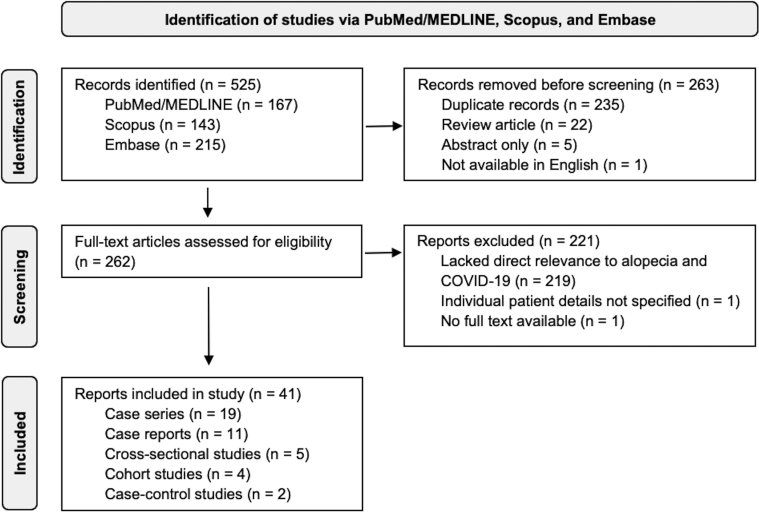
Methods: We searched PubMed/MEDLINE, Scopus, and Embase for articles published between November 2019 and August 2021 using the key words "alopecia" or "hair" and COVID-19-related search terms, identifying 41 original articles describing patients with alopecia and COVID-19.
Results: The current review included 1826 patients with alopecia and COVID-19 (mean age, 54.5 years; 54.3% male). The most common types of alopecia identified were AGA (30.7%, 86.4% male), TE (19.8%, 19.3% male), and AA (7.8%, 40.0% male). AGA preceded COVID-19 symptoms. TE was usually newly triggered by COVID-19 (93.6%). AA usually occurred in patients with preexisting disease (95.1%).
Limitations: Definitions of COVID-19 onset varied. Studies differed in methodology and were susceptible to reporting and sampling bias. Studies with large sample sizes may exert a disproportionate influence on data.
Conclusion: AGA may be a risk factor for severe COVID-19, whereas TE presents as a sequela of COVID-19. AA generally occurs as a relapse in patients with preexisting alopecia.
Keywords: AA, alopecia areata; ADT, androgen-deprivation therapy; AE, anagen effluvium; AGA, androgenetic alopecia; COVID-19; PA, pressure-induced alopecia; SARS-CoV-2; TE, telogen effluvium; alopecia; alopecia areata; anagen effluvium; androgenetic alopecia; coronavirus disease 2019; hair loss; telogen effluvium.
© 2022 by the American Academy of Dermatology, Inc. Published by Elsevier Inc.
Conflict of interest statement
Dr Tosti is a consultant for DS Laboratories, Monat Global, Almirall, Thirty Madison, Eli Lilly, Bristol Myers Squibb, P&G, Pfizer, and Myovant. Author Nguyen has no conflicts of interest to declare.
Figures
References
Publication types
LinkOut - more resources
Full Text Sources
Miscellaneous
