


Fixed Prosthetic Restorations and Periodontal Health: A Narrative Review
- PMID: 35225978
- PMCID: PMC8883934
- DOI: 10.3390/jfb13010015
Fixed Prosthetic Restorations and Periodontal Health: A Narrative Review
Abstract
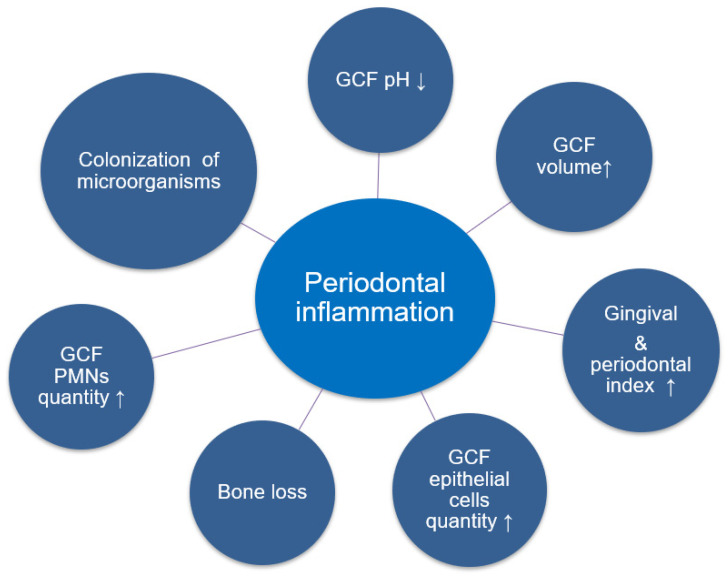
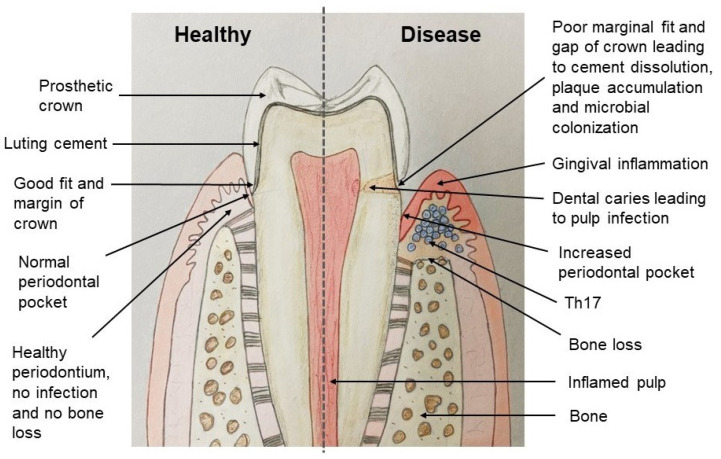
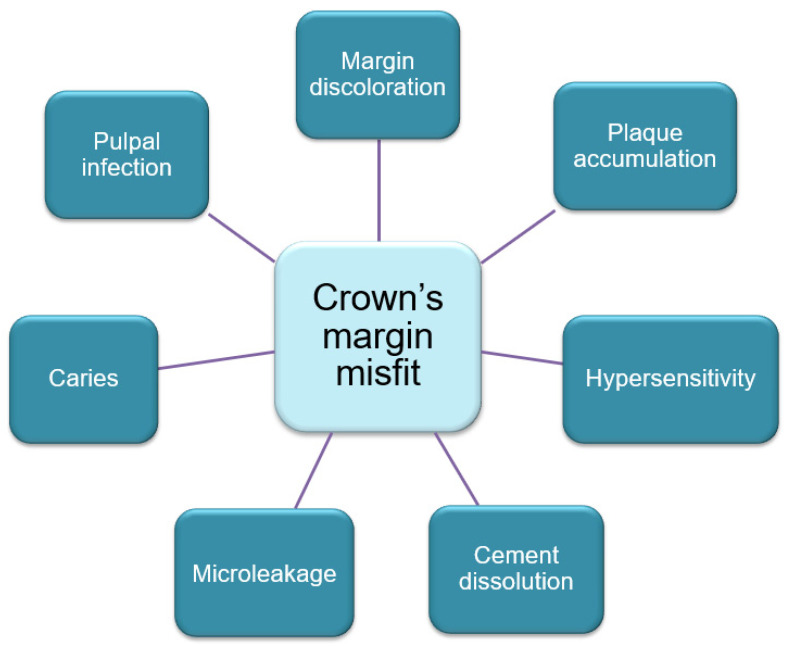
Periodontal health plays an important role in the longevity of prosthodontic restorations. The issues of comparative assessment of prosthetic constructions are complicated and not fully understood. The aim of this article is to review and present the current knowledge regarding the various technical, clinical, and molecular aspects of different prosthetic biomaterials and highlight the interactions between periodontal health and prosthetic restorations. Articles on periodontal health and fixed dental prostheses were searched using the keywords "zirconium", "CAD/CAM", "dental ceramics", "metal-ceramics", "margin fit", "crown", "fixed dental prostheses", "periodontium", and "margin gap" in PubMed/Medline, Scopus, Google Scholar, and Science Direct. Further search criteria included being published in English, and between January 1981 and September 2021. Then, relevant articles were selected, included, and critically analyzed in this review. The margin of discrepancy results in the enhanced accumulation of dental biofilm, microleakage, hypersensitivity, margin discoloration, increased gingival crevicular fluid flow (GCF), recurrent caries, pulp infection and, lastly, periodontal lesion and bone loss, which can lead to the failure of prosthetic treatment. Before starting prosthetic treatment, the condition of the periodontal tissues should be assessed for their oral hygiene status, and gingival and periodontal conditions. Zirconium-based restorations made from computer-aided design and computer-aided manufacturing (CAD/CAM) technology provide better results, in terms of marginal fit, inflammation reduction, maintenance, and the restoration of periodontal health and oral hygiene, compared to constructions made by conventional methods, and from other alloys. Compared to subgingival margins, supragingival margins offer better oral hygiene, which can be maintained and does not lead to secondary caries or periodontal disease.
Keywords: CAD/CAM; ceramics; cobalt-chromium; crown; fixed partial denture; gingival crevicular fluid; gingival health; gingival inflammation; margin fit; periodontium; zirconia.
Conflict of interest statement
The authors declare no conflict of interest.
Figures
References
-
- Muddugangadhar B.C., Siddhi T., Suchismita D. Prostho-perio-restorative interrelationship: A major junction. J. Adv. Oral Res. 2011;2:7–12. doi: 10.1177/2229411220110102. - DOI
-
- Mojon P., Rentsch A., Budtz-Jørgensen E. Relationship between prosthodontic status, caries, and periodontal disease in a geriatric population. Int. J. Prosthodont. 1995;8:564–571. - PubMed
-
- Hsu Y.-T., Huang N., Wang H.-L., Kuo Y.-w., Chen M., Liu T.-K., Lin H.-N., Kuo S.-L., Juan P.-K., Liao P.-B. Relationship between periodontics and prosthodontics: The two-way street. J. Prosthodont. Implantol. 2015;4:4–11.
Publication types
LinkOut - more resources
Full Text Sources
Miscellaneous
