Differential Electrographic Signatures Generated by Mechanistically-Diverse Seizurogenic Compounds in the Larval Zebrafish Brain
- PMID: 35228313
- PMCID: PMC8970338
- DOI: 10.1523/ENEURO.0337-21.2022
Differential Electrographic Signatures Generated by Mechanistically-Diverse Seizurogenic Compounds in the Larval Zebrafish Brain
Erratum in
-
Erratum: Pinion et al., "Differential Electrographic Signatures Generated by Mechanistically-Diverse Seizurogenic Compounds in the Larval Zebrafish Brain".eNeuro. 2022 Aug 4;9(4):ENEURO.0291-22.2022. doi: 10.1523/ENEURO.0291-22.2022. Print 2022 Jul-Aug. eNeuro. 2022. PMID: 35927003 Free PMC article. No abstract available.
Abstract
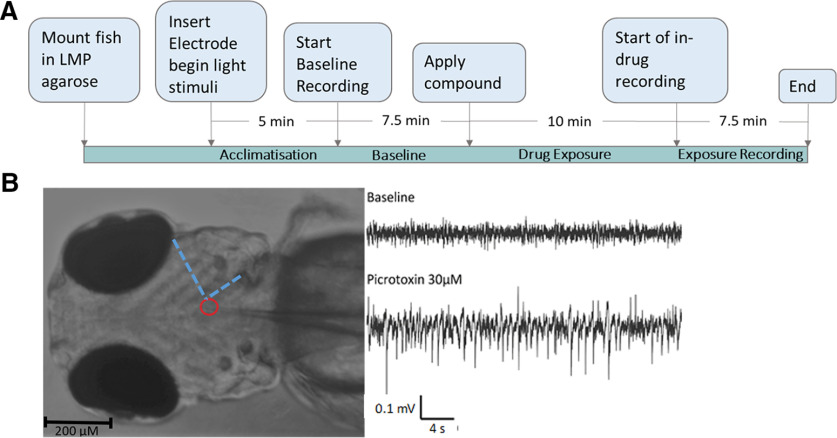
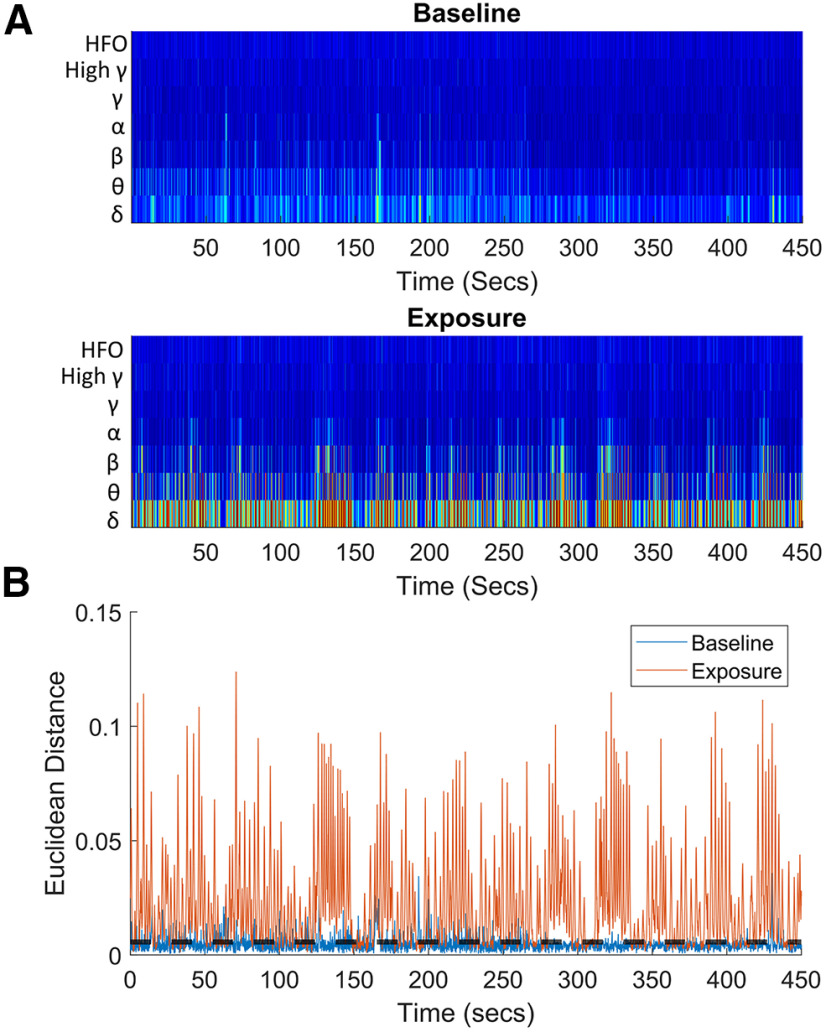
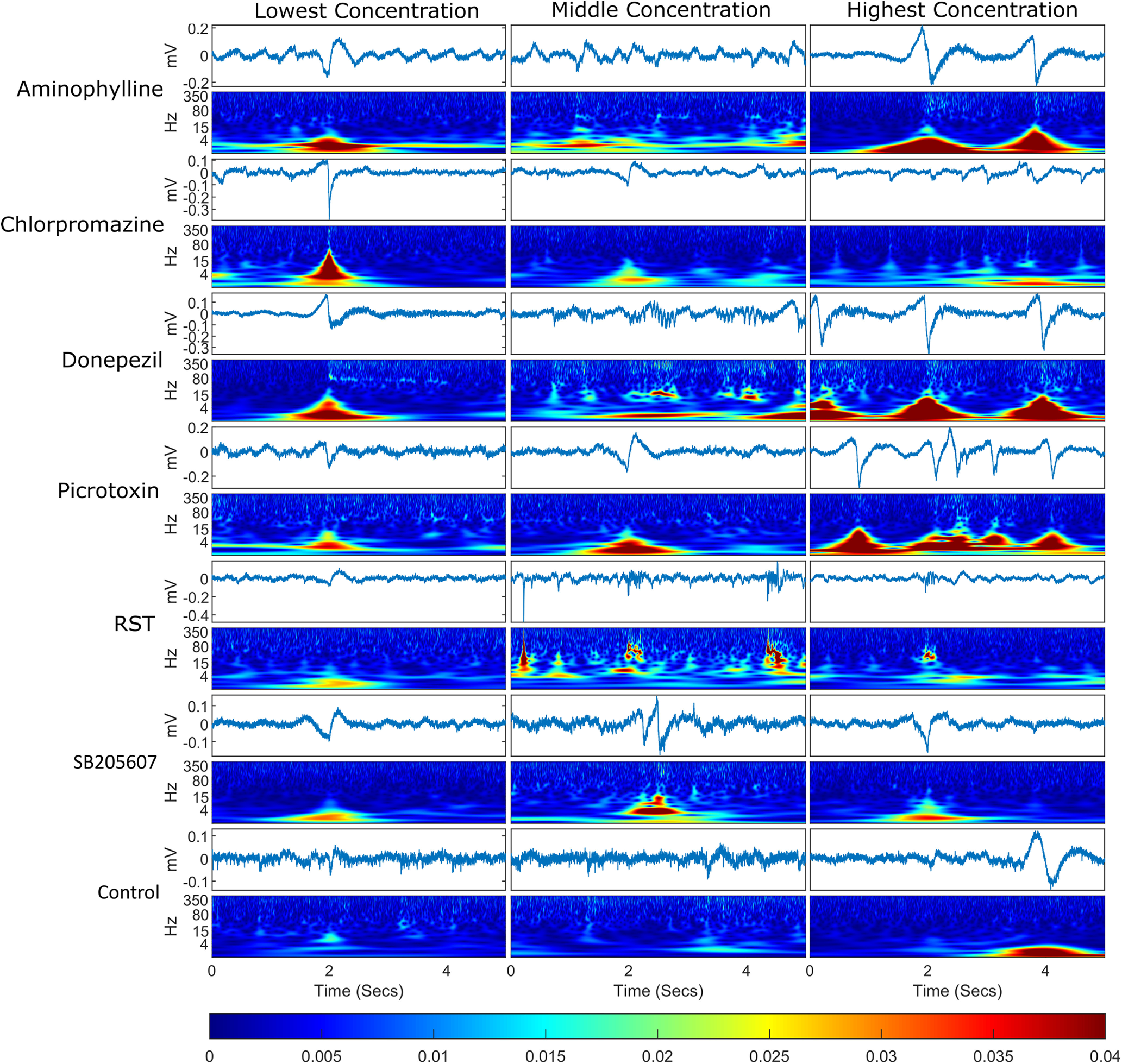
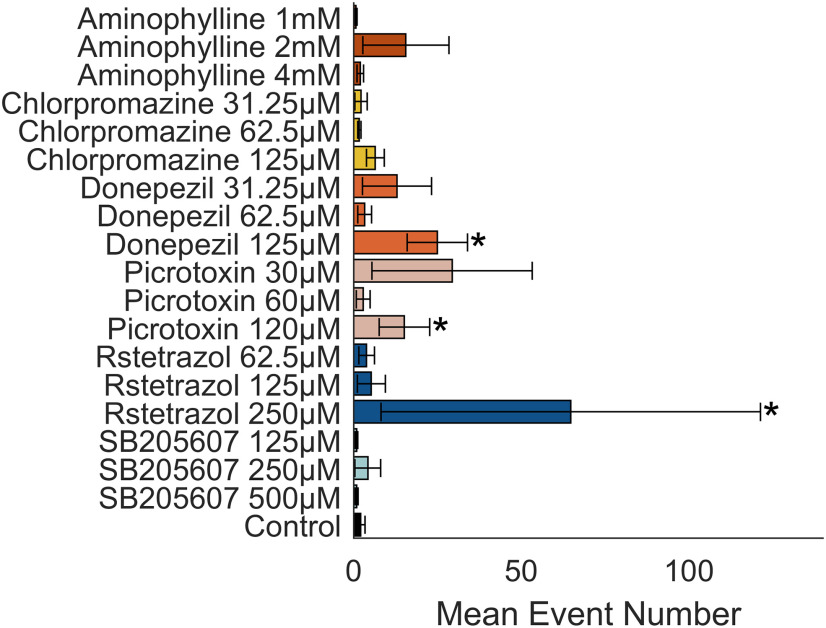
We assessed similarities and differences in the electrographic signatures of local field potentials (LFPs) evoked by different pharmacological agents in zebrafish larvae. We then compared and contrasted these characteristics with what is known from electrophysiological studies of seizures and epilepsy in mammals, including humans. Ultimately, our aim was to phenotype neurophysiological features of drug-induced seizures in larval zebrafish for expanding knowledge on the translational potential of this valuable alternative to mammalian models. LFPs were recorded from the midbrain of 4-d-old zebrafish larvae exposed to a pharmacologically diverse panel of seizurogenic compounds, and the outputs of these recordings were assessed using frequency domain analysis. This included analysis of changes occurring within various spectral frequency bands of relevance to mammalian CNS circuit pathophysiology. From these analyses, there were clear differences in the frequency spectra of drug-exposed LFPs, relative to controls, many of which shared notable similarities with the signatures exhibited by mammalian CNS circuits. These similarities included the presence of specific frequency components comparable to those observed in mammalian studies of seizures and epilepsy. Collectively, the data presented provide important information to support the value of larval zebrafish as an alternative model for the study of seizures and epilepsy. These data also provide further insight into the electrophysiological characteristics of seizures generated in nonmammalian species by the action of neuroactive drugs.
Keywords: 3Rs; drug discovery; electrophysiology; neuropharmacology; seizures; zebrafish.
Copyright © 2022 Pinion et al.
Figures
References
-
- Afrikanova T, Serruys A-SK, Buenafe OEM, Clinckers R, Smolders I, de Witte PAM, Crawford AD, Esguerra CV (2013) Validation of the zebrafish pentylenetetrazol seizure model: locomotor versus electrographic responses to antiepileptic drugs. PLoS One 8:e54166. 10.1371/journal.pone.0054166 - DOI - PMC - PubMed
Publication types
MeSH terms
Grants and funding
LinkOut - more resources
Full Text Sources
Medical
Molecular Biology Databases