


Medical Cannabis Use Reduces Opioid Prescriptions in Patients With Osteoarthritis
- PMID: 35228923
- PMCID: PMC8873278
- DOI: 10.7759/cureus.21564
Medical Cannabis Use Reduces Opioid Prescriptions in Patients With Osteoarthritis
Abstract
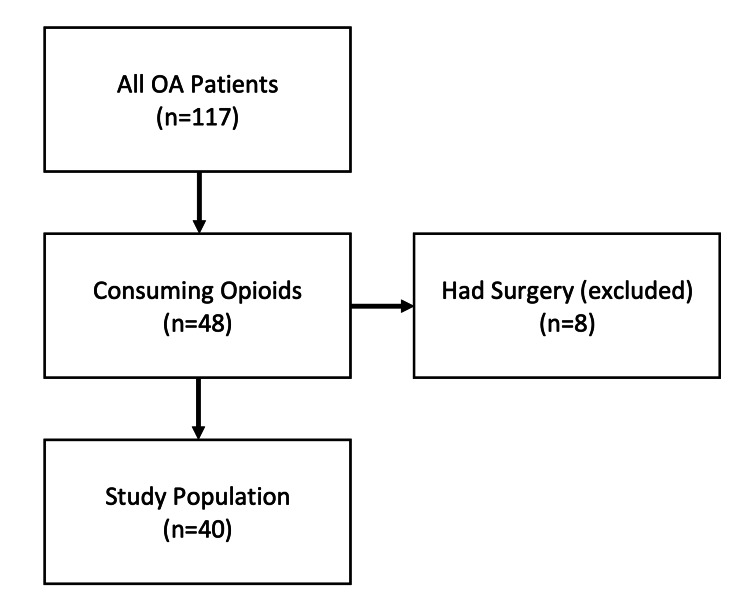
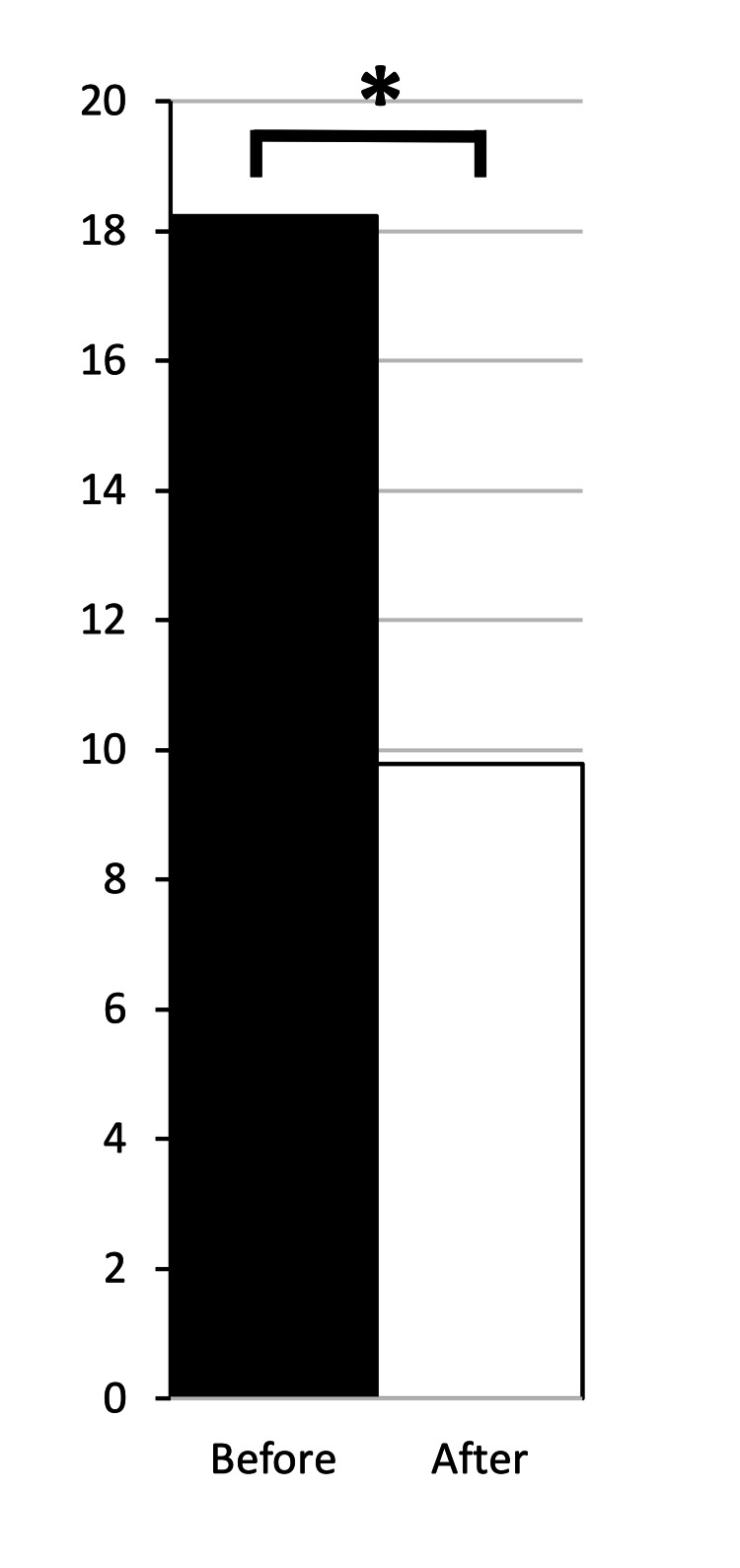
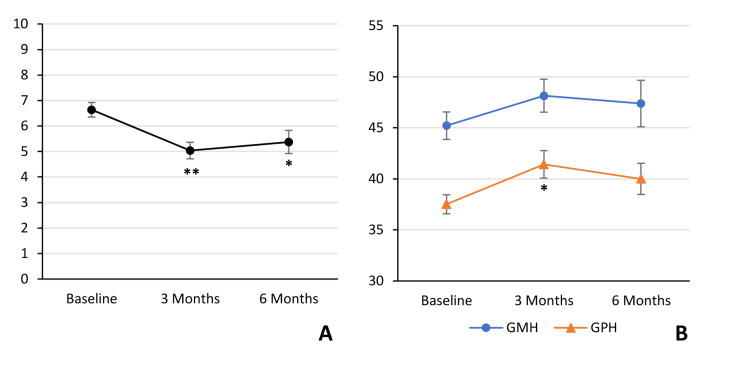
Background Osteoarthritis (OA) can result in significant pain, requiring pain management with opioids. Medical cannabis (MC) has the potential to be an alternative to opioids for chronic pain conditions. This study investigates whether MC used in the management of OA-related chronic pain can reduce opioid utilization. Methods Forty patients with chronic OA pain were certified for MC. Average morphine milligram equivalents (MME) per day of opioid prescriptions filled within the six months prior to MC certification was compared to that of the six months after. Visual analog scale (VAS) for pain and Global Health scores were measured at baseline, three, and six months post MC certification. Results Average MME/day decreased from 18.2 to 9.8 (n=40, p<0.05). The percentage of patients who dropped to 0 MME/day was 37.5%. VAS scores decreased significantly at three and six months, and Global Physical Health score increased significantly by three months. Conclusions MC reduces opioid prescription for patients with chronic OA pain and improves pain and quality of life.
Keywords: cannabis (marijuana); cannabis use; chronic pain management; opioid use; osteoarthritis (oa); prescription opioid.
Copyright © 2022, Renslo et al.
Conflict of interest statement
The authors have declared that no competing interests exist.
Figures
References
-
- Prescription opioid use, misuse, and use disorders in U.S. adults: 2015 National Survey on Drug Use and Health. Han B, Compton WM, Blanco C, Crane E, Lee J, Jones CM. Ann Intern Med. 2017;167:293–301. - PubMed
-
- Are we still prescribing opioids for osteoarthritis? DeMik DE, Bedard NA, Dowdle SB, Burnett RA, McHugh MA, Callaghan JJ. J Arthroplasty. 2017;32:3578–3582. - PubMed
-
- Efficacy, tolerability and safety of cannabinoids in chronic pain associated with rheumatic diseases (fibromyalgia syndrome, back pain, osteoarthritis, rheumatoid arthritis): a systematic review of randomized controlled trials. Fitzcharles MA, Baerwald C, Ablin J, Häuser W. Schmerz. 2016;30:47–61. - PubMed
-
- NCSL: State medical cannabis laws. [ Jan; 2022 ];https://www.ncsl.org/research/health/state-medical-marijuana-laws.aspx 2022
LinkOut - more resources
Full Text Sources
Miscellaneous