. 2022 Jun;44(3):1457-1477.
doi: 10.1007/s11357-022-00534-2. Epub 2022 Feb 28.

Long-term exercise pre-training attenuates Alzheimer's disease-related pathology in a transgenic rat model of Alzheimer's disease

Affiliations

Long-term exercise pre-training attenuates Alzheimer's disease-related pathology in a transgenic rat model of Alzheimer's disease

Luodan Yang et al. Geroscience. 2022 Jun.

Abstract

Alzheimer's disease (AD) is the most common form of dementia. Despite enormous efforts around the world, there remains no effective cure for AD. This study was performed to investigate the effects of long-term exercise pretreatment on the typical pathology of AD in a novel transgenic AD rat model. Male 2-month-old animals were divided into the following groups: wild-type (WT) rats, AD rats, and AD rats with treadmill exercise pretreatment (AD-Exe). After exercise pretreatment, the Barnes maze task, passive avoidance task, and cued fear conditioning test were performed to test learning and memory function. The elevated plus maze, open field test, sucrose preference test, and forced swim test were conducted to measure anxious-depressive-like behavior. Immunofluorescence staining, Golgi staining, transmission electron microscopy, Western blot analysis, F-Jade C staining, TUNEL staining, and related assay kits were conducted to measure Aβ plaques, tau hyperphosphorylation, neuronal damage, neuronal degeneration, dendritic spine density, synapses, synaptic vesicles, mitochondrial morphology, mitochondrial dynamic, oxidative stress, and neuroinflammation. Behavioral tests revealed that long-term exercise pretreatment significantly alleviated learning and memory dysfunction and anxious-depressive-like behaviors in AD animals. In addition, exercise pretreatment attenuated amyloid-β deposition and tau hyperphosphorylation and preserved spine density, synapses, and presynaptic vesicles. Exercise also inhibited neuronal damage, neuronal apoptosis, and neuronal degeneration. Additional studies revealed the imbalance of mitochondrial dynamics was significantly inhibited by exercise pretreatment accompanied by a remarkable suppression of oxidative stress and neuroinflammation. Our findings suggest that long-term exercise pretreatment alleviated behavioral deficits and typical pathologies of the AD rat model, supporting long-term exercise pretreatment as a potential approach to delay the progression of AD.

Keywords: Alzheimer’s disease; Amyloid-β deposition; Memory; Mitochondrial dynamics; TgF344-AD rats; Treadmill exercise.


Conflict of interest statement

The authors declare no competing interests.

Figures
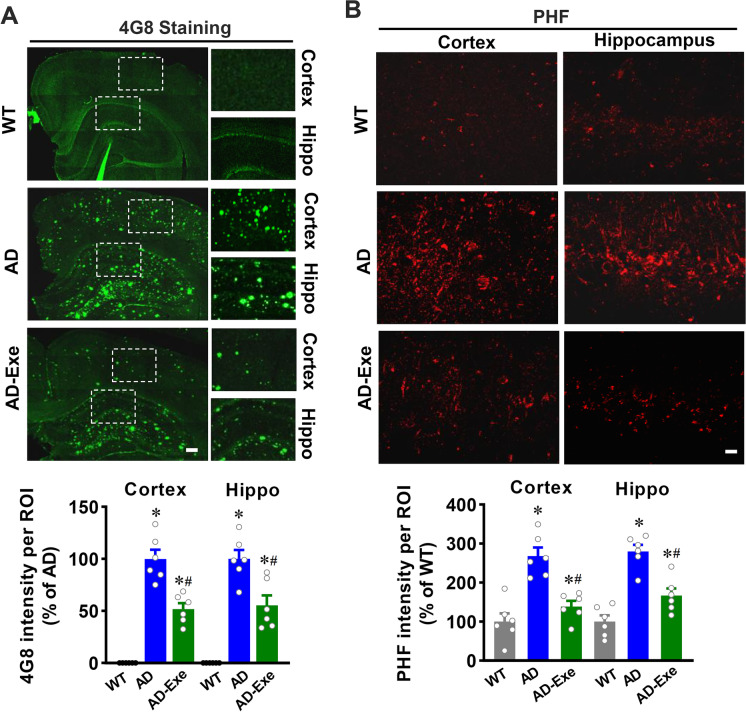
Fig. 1
Fig. 1
Long-term exercise training attenuates Aβ accumulation and tau hyperphosphorylation in TgF344-AD rats. A Representative confocal microscopy images of Aβ accumulation using Aβ 4G8 antibody. Scale bar = 200 μm. B Representative confocal microscopy images of phosphorylation of tau protein (PHF). Scale bar = 10 μm. All data are expressed as mean ± SEM (n = 6). *P < 0.05 versus WT group, #P < 0.05 versus AD group
Fig. 2
Fig. 2
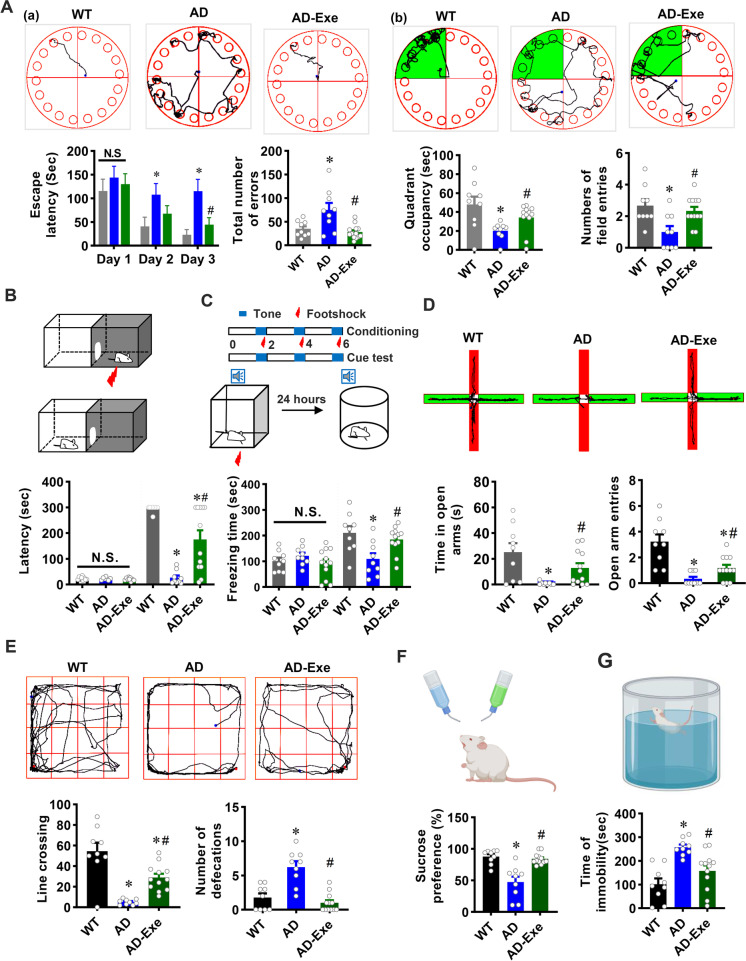
Long-term exercise training attenuates memory impairment and anxious-depressive–like behavior of TgF344-AD rats. A The Barnes maze task was performed to measure learning and memory function. (a) Representative tracking plots of rats and results of escape latency and the total number of errors before finding the target box on the training days. (b) Representative tracking plots of rats and results of quadrant occupancy and number of field entries on probe trial day. B The passive avoidance task was conducted to test fear memory. Latency from the lit compartment to the dark compartment. C Cued fear conditioning test was performed to assess associative fear learning and memory. Freezing times were recorded and analyzed. D The elevated plus maze was performed to detect anxiety-like behavior. The time each rat stayed in the open arms and the entries to the open arms were analyzed. E The open field test was performed to assess anxiety-related behavior. Line crossing and defecations in the open field were recorded and analyzed. F The sucrose preference test and G forced swimming test were performed to measure depressive-like behavior. All data are expressed as mean ± SEM (n = 9–12). *P < 0.05 versus WT group, #P < 0.05 versus AD group
Fig. 3
Fig. 3
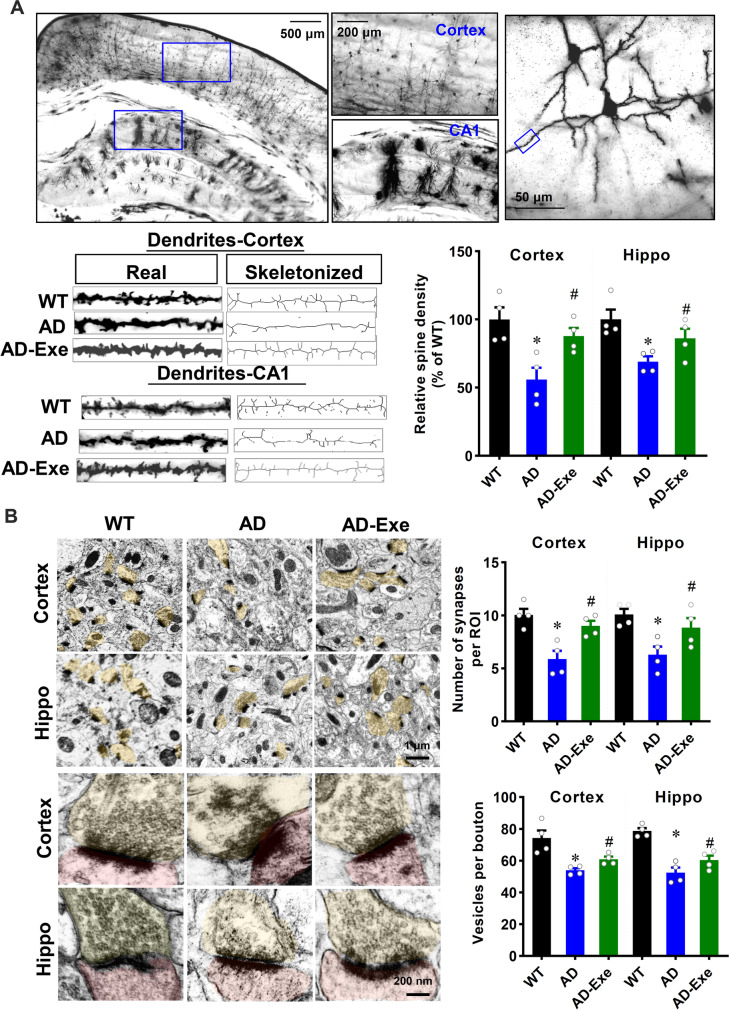
Long-term exercise training preserves dendritic spine density, synapses, and synaptic vesicles of TgF344-AD rats. A Representative images of Golgi staining of cortex and hippocampus. Selected dendritic segments from the cortex and hippocampus were skeletonized using ImageJ software and analyzed. B Representative images of synapses in cortex and hippocampus. The numbers of synapses and synaptic vesicles per pre-synaptic bouton were counted and analyzed. All data are expressed as mean ± SEM (n = 4). *P < 0.05 versus WT group, #P < 0.05 versus AD group
Fig. 4
Fig. 4
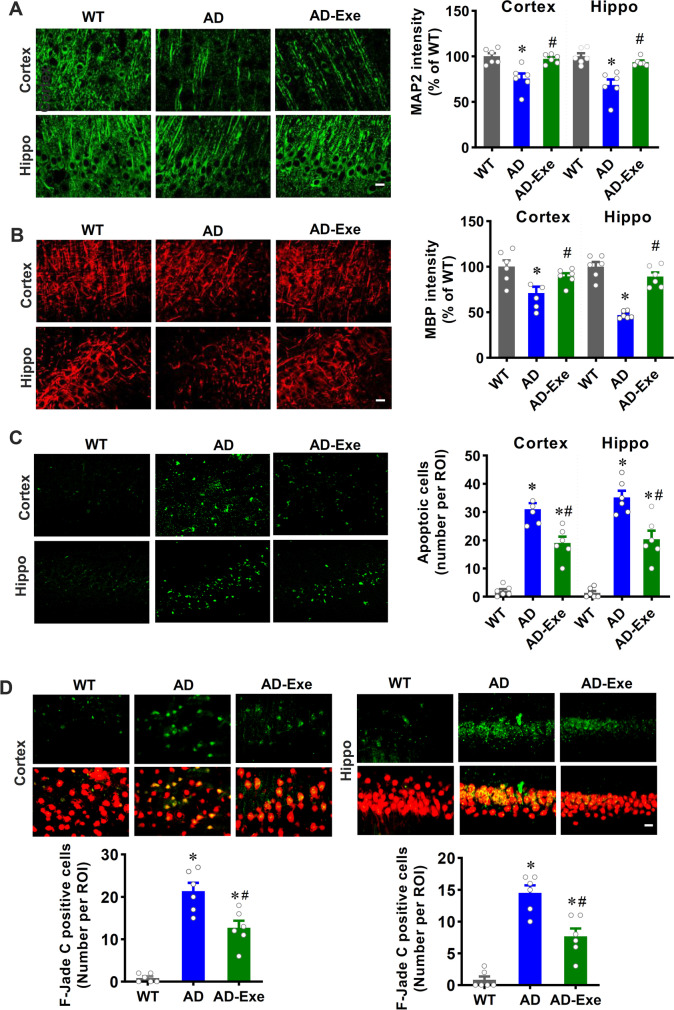
Long-term exercise training alleviates neuronal damage, apoptosis, and degeneration in TgF344-AD rats. Representative confocal microscopy images of MAP2 (A) and MBP (B) taken from the cortex and hippocampus. The intensity of the immunoreactivity associated with MAP2 was quantified. C The number of apoptotic cells as measured by TUNEL staining. D Neuronal degeneration was assessed by F-Jade C staining. Scale bar = 10 μm. All data are expressed as mean ± SEM (n = 6). *P < 0.05 versus WT group, #P < 0.05 versus AD group
Fig. 5
Fig. 5
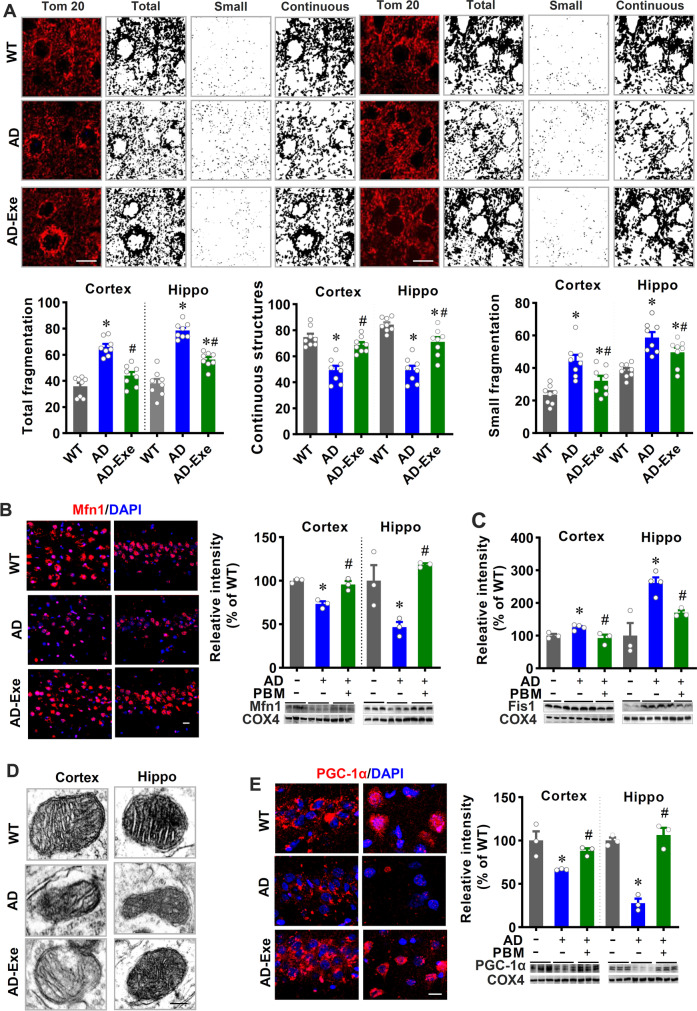
Long-term exercise training preserves mitochondrial dynamics and mitochondrial morphology in TgF344-AD rats. A Representative confocal microscopy images of Tom20 staining captured from the cortex and hippocampus. Images of Tom20 fluorescent staining were further processed by ImageJ software into images with total particles, small particles (size < 1.5 μm), and continuous structure (size > 2 μm). n = 8. Scale bar = 10 μm. B Representative confocal microscopy images and Western blot results of MFN1 in the cortex and hippocampus. n = 3. C Western blot analysis of Fis1 (n = 3–4). D Representative transmission electron micrograph of mitochondria. Scale bar = 50 nm. E Representative confocal microscopy images and Western blot results of PGC-1α in the cortex and hippocampus (n = 3). Scale bar = 10 μm. Data are presented as mean ± SEM. *P < 0.05 versus WT group, #P < 0.05 versus AD group
Fig. 6
Fig. 6
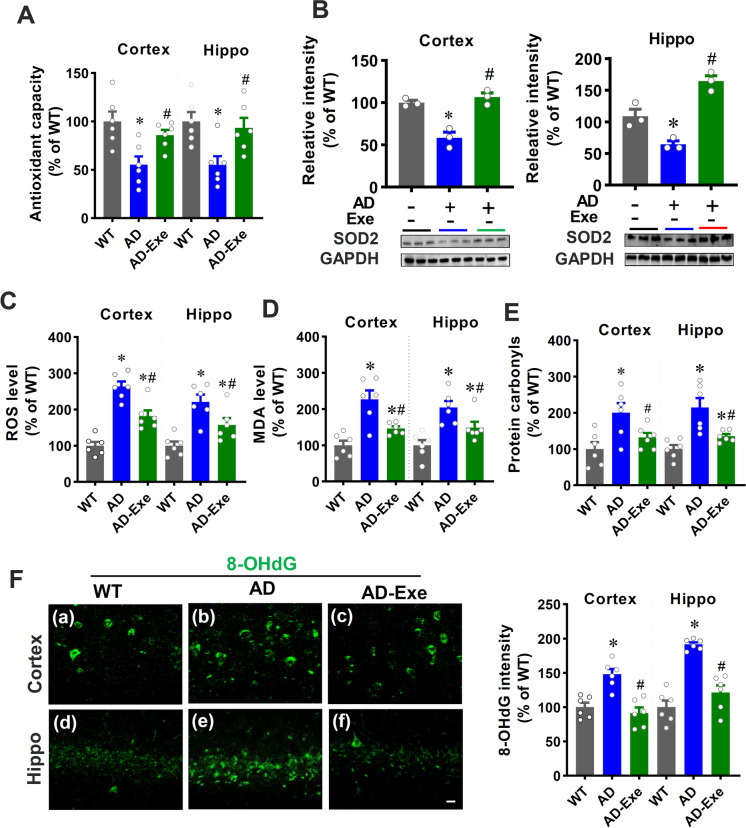
Long-term exercise training attenuates mitochondrial dysfunction-induced oxidative stress. A Total antioxidative capacity (n = 6). B Western blot results of SOD2 in cortex and hippocampus (n = 3). C ROS level, D MDA level, and E protein carbonyl levels in the cortex and hippocampus were measured using related assay kits (n = 6). F Oxidized DNA damage was measured by 8-OHdG staining (n = 6). Scale bar = 10 μm. Data are presented as mean ± SEM. *P < 0.05 versus WT group, #P < 0.05 versus AD group
Fig. 7
Fig. 7
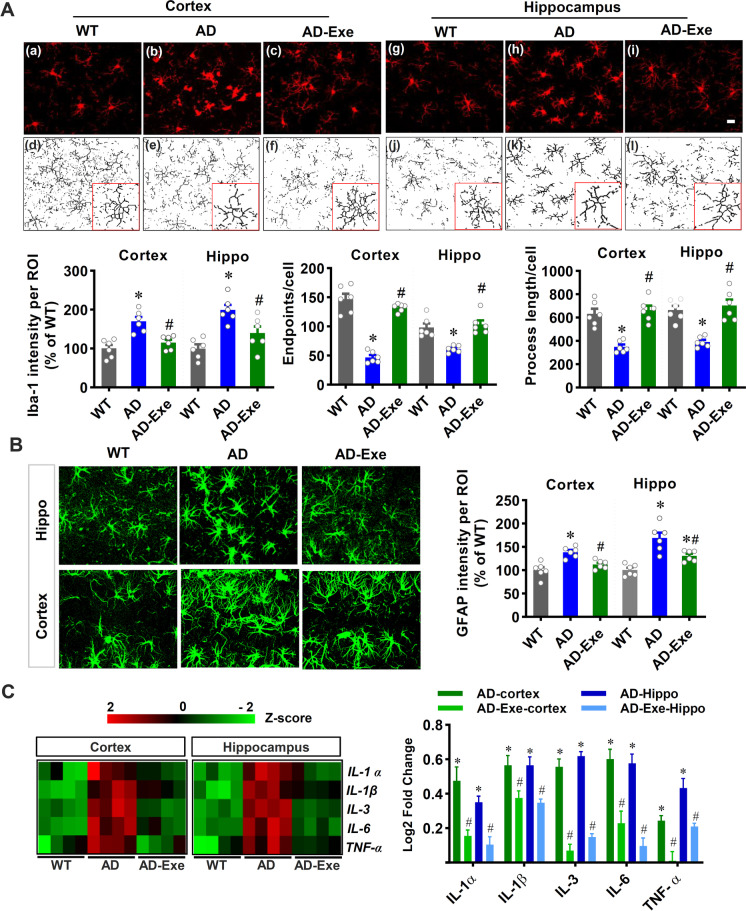
Long-term exercise training alleviates gliosis and suppresses neuroinflammation in TgF344-AD rats. A Representative confocal microscopy images of Iba-1 staining in the cortex and hippocampus. The microscopy images of Iba-1 were processed and analyzed by ImageJ software. Iba-1 intensity, endpoints, and processes per cell were analyzed. B The astrocyte marker GFAP was stained for the measurement of astrocyte activation. GFAP fluorescent intensity was analyzed. C Pro-inflammatory cytokines were measured in both the cortex and hippocampus using a rat cytokine array kit. Acquired values were transformed into z-scores and presented as a heat map for a better view. Log2 fold changes were calculated compared with the WT group. The Log2 fold changes of WT is zero and did not shown in the graph. Data are presented as mean ± SEM (n = 4–6). *P < 0.05 versus WT group, #P < 0.05 versus AD group

References

    1. Yang L, Youngblood H, Wu C, Zhang Q. Mitochondria as a target for neuroprotection: role of methylene blue and photobiomodulation. Transl Neurodegener. 2020;9:19. - PMC - PubMed
    1. Gallardo G, Holtzman DM. Amyloid-beta and tau at the crossroads of Alzheimer's disease. Adv Exp Med Biol. 2019;1184:187–203. - PubMed
    1. Wu C, Yang L, Tucker D, Dong Y, Zhu L, Duan R, Liu TC, Zhang Q. Beneficial effects of exercise pretreatment in a sporadic Alzheimer's Rat model. Med Sci Sports Exerc. 2018;50:945–956. - PMC - PubMed
    1. 2020 Alzheimer’s disease facts and figures. Alzheimers Dement 2020. - PubMed
    1. Wu C, Yang L, Li Y, Dong Y, Yang B, Tucker LD, Zong X, Zhang Q. Effects of exercise training on anxious-depressive-like behavior in Alzheimer Rat. Med Sci Sports Exerc. 2020;52:1456–1469. - PMC - PubMed

Publication types

Substances