


Prevalence of (Epi)genetic Predisposing Factors in a 5-Year Unselected National Wilms Tumor Cohort: A Comprehensive Clinical and Genomic Characterization
- PMID: 35230882
- PMCID: PMC9177240
- DOI: 10.1200/JCO.21.02510
Prevalence of (Epi)genetic Predisposing Factors in a 5-Year Unselected National Wilms Tumor Cohort: A Comprehensive Clinical and Genomic Characterization
Abstract
Purpose: Wilms tumor (WT) is associated with (epi)genetic predisposing factors affecting a growing number of WT predisposing genes and loci, including those causing Beckwith-Wiedemann spectrum (BWSp) or WT1-related syndromes. To guide genetic counseling and testing, we need insight into the prevalence of WT predisposing (epi)genetic factors.
Patients and methods: All children diagnosed with WT in the Netherlands between 2015 and 2020 were referred to a clinical geneticist. Phenotypic data, disease characteristics, and diagnostic test results were collected. If no genetic predisposition was identified by targeted diagnostic testing, germline (trio-)whole-exome sequencing and BWSp testing on normal kidney-derived DNA were offered.
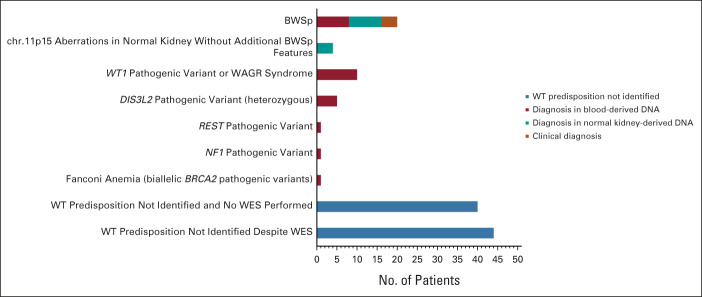
Results: A total of 126 cases were analyzed of 128 identified patients. (Epi)genetic predisposing factors were present in 42 of 126 patients (33.3%) on the basis of a molecular diagnosis in blood-derived DNA (n = 26), normal kidney-derived DNA (n = 12), or solely a clinical diagnosis of BWSp (n = 4). Constitutional, heterozygous DIS3L2 variants were identified as a recurrent predisposing factor in five patients (4%), with a second somatic hit in 4 of 5 tumors. Twenty patients (16%) were diagnosed with BWSp while four additional patients without BWSp features harbored chromosome 11p15 methylation defects in normal kidney tissue. Remaining findings included WT1-related syndromes (n = 10), Fanconi anemia (n = 1), neurofibromatosis type 1 (n = 1), and a pathogenic REST variant (n = 1). In addition, (likely) pathogenic variants in adult-onset cancer predisposition genes (BRCA2, PMS2, CHEK2, and MUTYH) were identified in 5 of 56 (8.9%) patients with available whole-exome sequencing data. Several candidate WT predisposition genes were identified, which require further validation.
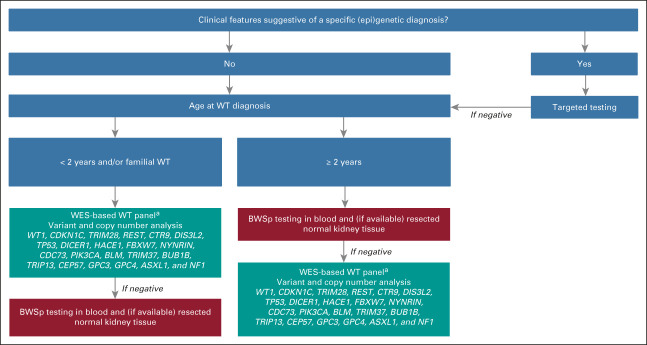
Conclusion: (Epi)genetic WT predisposing factors, including mosaic aberrations and recurrent heterozygous DIS3L2 variants, were present in at least 33.3% of patients with WT. On the basis of these results, we encourage standard genetic testing after counseling by a clinical geneticist.
Conflict of interest statement
Figures
References
-
- Miller RW, Fraumeni JF, Jr, Manning MD: Association of Wilms's tumor with aniridia, hemihypertrophy and other congenital malformations. N Engl J Med 270:922-927, 1964 - PubMed
Publication types
MeSH terms
LinkOut - more resources
Full Text Sources
Medical
Research Materials
Miscellaneous
