Epidemiology and Antimicrobial Resistance Profiles of the Nocardia Species in China, 2009 to 2021
- PMID: 35234511
- PMCID: PMC9045199
- DOI: 10.1128/spectrum.01560-21
Epidemiology and Antimicrobial Resistance Profiles of the Nocardia Species in China, 2009 to 2021
Abstract
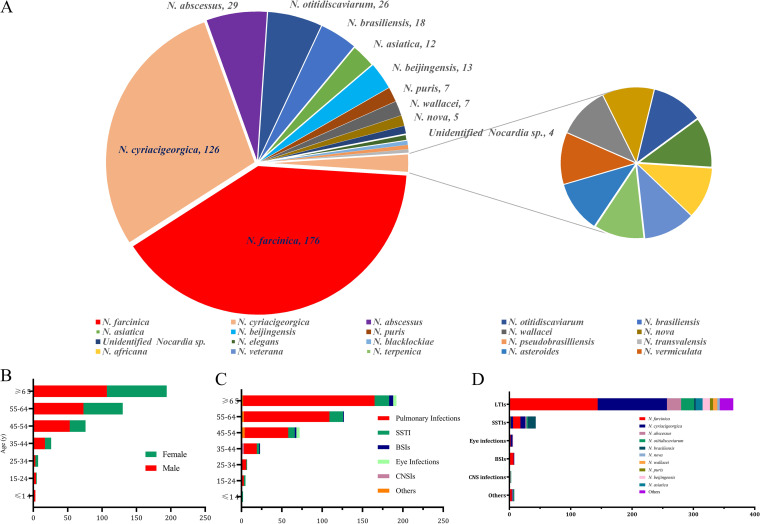
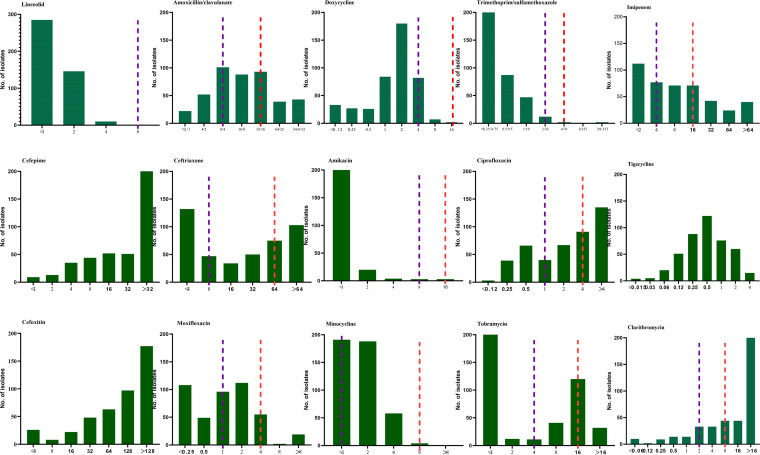
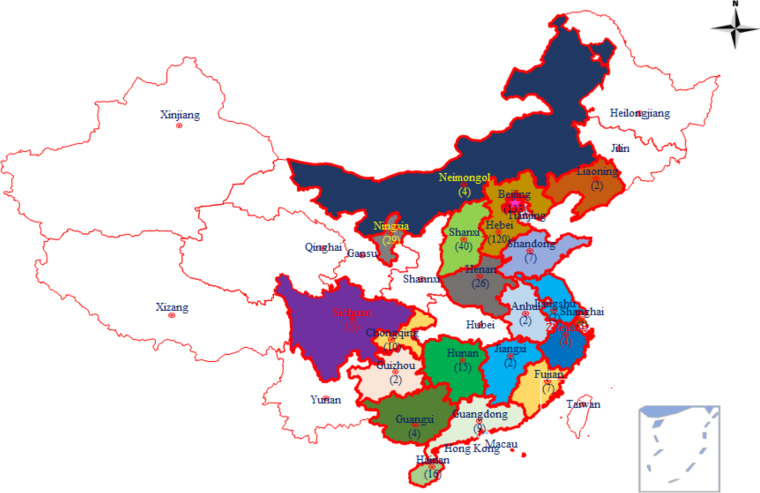
The genus Nocardia includes ubiquitous environmental saprophytes and the most frequently isolated aerobic actinomycete human pathogen responsible for localized or disseminated infection. Herein, the species distribution and antimicrobial susceptibility profiles of 441 nonrepetitive Nocardia strains are reported, collected from 21 provinces/cities in China over 13 years (from 2009 to 2021). These isolates were identified to species level by mass spectrometry or targeted DNA sequencing. The susceptibility profiles of Nocardia species for 15 antibiotics were determined by the broth microdilution method. Among these Nocardia isolates, Nocardia farcinica was the most commonly isolated species (39.9%, 176 of 441), followed by Nocardia cyriacigeorgica (28.6%, 126), Nocardia abscessus (6.6%, 29), and Nocardia otitidiscaviarum (5.9%, 26). Furthermore, 361 Nocardia strains (81.9%) were collected from lower respiratory tract (sputum, lung tissue, and bronchoalveolar lavage fluid), 50 (11.3%) were collected from skin and soft tissues, 9 were collected from blood, 9 were collected from eye, 4 were collected from cerebrospinal fluid and brain abscesses, and 2 were collected from pleural effusion. All of the Nocardia strains were susceptible to linezolid, followed by amikacin (99.3%) and trimethoprim-sulfamethoxazole (TMP-SMX) (99.1%). The antibiotic resistance profiles of other antibiotics varied tremendously among different Nocardia species. This demonstrated that accurate species identification and/or antibiotic susceptibility testing should be performed before the usage of these antibiotics. In summary, this is the largest study on the species and antibiotic resistance profiles of the genus Nocardia circulating in China, and our data will contribute to a better understanding of clinical nocardiosis. IMPORTANCE The genus Nocardia has the potential to cause nocardiosis, which might be underrecognized and underdiagnosed. Herein, the demographical features of 441 nonrepetitive nocardiosis cases and species distribution of their Nocardia strains in China, 2009 to 2021, are summarized. The susceptibility profiles for 15 antibiotics against all of the above Nocardia strains were also determined by the broth microdilution method. To date, this is the largest study on the genus Nocardia contributing to nocardiosis in China. Our study will be helpful for understanding the species diversity of Nocardia isolates distributed in China and for decision-making in the context of nocardiosis diagnosis and treatment.
Keywords: Nocardia; genetic diversity; nocardiosis; species distribution; trimethoprim-sulfamethoxazole.
Conflict of interest statement
The authors declare no conflict of interest.
Figures
References
-
- Valdezate S, Garrido N, Carrasco G, Medina-Pascual MJ, Villalon P, Navarro AM, Saez-Nieto JA. 2017. Epidemiology and susceptibility to antimicrobial agents of the main Nocardia species in Spain. J Antimicrob Chemother 72:754–761. - PubMed
Publication types
MeSH terms
Substances
LinkOut - more resources
Full Text Sources
Molecular Biology Databases