Review
. 2022 Feb 14:13:806470.
doi: 10.3389/fphar.2022.806470. eCollection 2022.

Dietary Polyphenols and Their Role in Oxidative Stress-Induced Human Diseases: Insights Into Protective Effects, Antioxidant Potentials and Mechanism(s) of Action

Affiliations
Review

Dietary Polyphenols and Their Role in Oxidative Stress-Induced Human Diseases: Insights Into Protective Effects, Antioxidant Potentials and Mechanism(s) of Action

Mithun Rudrapal et al. Front Pharmacol. .

Abstract

Dietary polyphenols including phenolic acids, flavonoids, catechins, tannins, lignans, stilbenes, and anthocyanidins are widely found in grains, cereals, pulses, vegetables, spices, fruits, chocolates, and beverages like fruit juices, tea, coffee and wine. In recent years, dietary polyphenols have gained significant interest among researchers due to their potential chemopreventive/protective functions in the maintenance of human health and diseases. It is believed that dietary polyphenols/flavonoids exert powerful antioxidant action for protection against reactive oxygen species (ROS)/cellular oxidative stress (OS) towards the prevention of OS-related pathological conditions or diseases. Pre-clinical and clinical evidence strongly suggest that long term consumption of diets rich in polyphenols offer protection against the development of various chronic diseases such as neurodegenerative diseases, cardiovascular diseases (CVDs), cancer, diabetes, inflammatory disorders and infectious illness. Increased intake of foods containing polyphenols (for example, quercetin, epigallocatechin-3-gallate, resveratrol, cyanidin etc.) has been claimed to reduce the extent of a majority of chronic oxidative cellular damage, DNA damage, tissue inflammations, viral/bacterial infections, and neurodegenerative diseases. It has been suggested that the antioxidant activity of dietary polyphenols plays a pivotal role in the prevention of OS-induced human diseases. In this narrative review, the biological/pharmacological significance of dietary polyphenols in the prevention of and/or protection against OS-induced major human diseases such as cancers, neurodegenerative diseases, CVDs, diabetes mellitus, cancer, inflammatory disorders and infectious diseases have been delineated. This review specifically focuses a current understanding on the dietary sources of polyphenols and their protective effects including mechanisms of action against various major human diseases.

Keywords: antioxidant; biomarkers; cellular signaling; dietary polyphenols; flavonoids; mechanism of action; oxidative Stress; protective function.


Conflict of interest statement

The authors declare that the research was conducted in the absence of any commercial or financial relationships that could be construed as a potential conflict of interest.

Figures
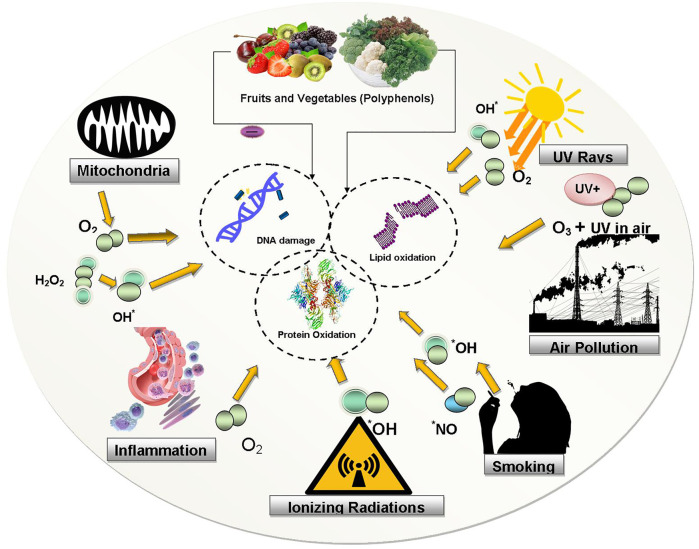
FIGURE 1
FIGURE 1
Deleterious effects of OS/ROS on biomolecules. ROS generated from various sources (environmental/biological) cause oxidations of lipid, protein and DNA molecules. Abbreviations: UV: ultraviolet rays, OH: hydroxyl, NO: nitrogen oxide, O2: oxygen, O3: Ozone, H2O2: hydrogen peroxide.
FIGURE 2
FIGURE 2
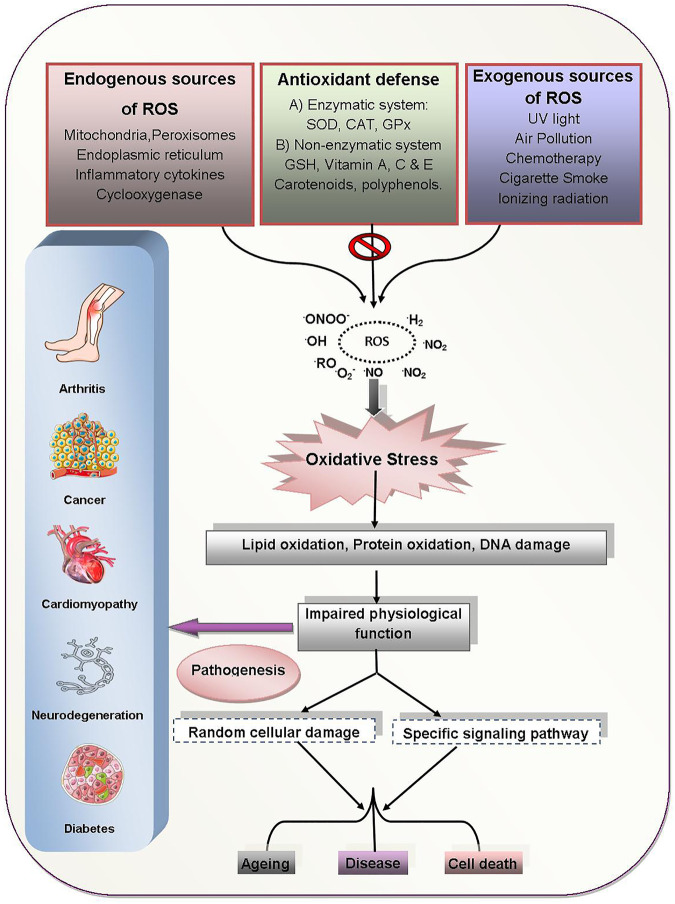
OS induced human diseases and their pathogenesis. ROS generated from exogenous/endogenous sources induce OS which results in the pathogenesis of various human diseases through impaired physiological functions, cellular damages and specific signaling dysfunctions. Abbreviations: ROO: alkoxyl radical, ROO: peroxyl radical, ONOO: perooxynitrite, NO2 : nitrogen dioxide radical, O2 •−: superoxide radical, ROS: reactive oxygen species, SOD: superoxide dismutase, CAT: catalase, GPx: glutathione peroxidase, GSH: glutathione.
FIGURE 3
FIGURE 3
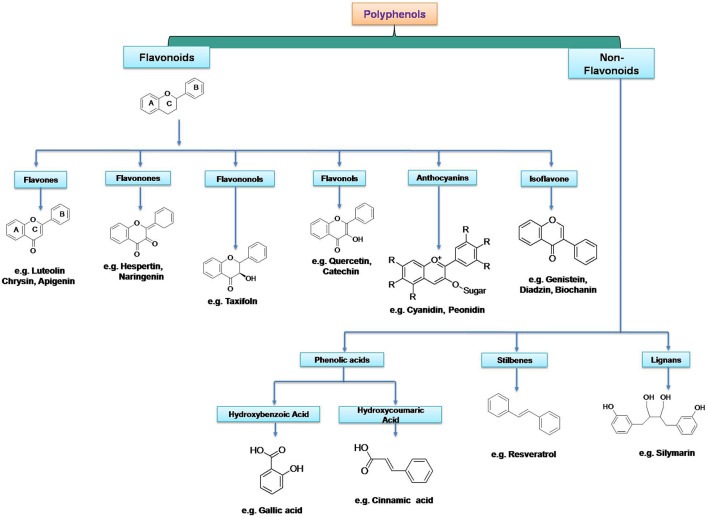
Different classes of plant polyphenols with their basic structural scaffolds. Structural scaffolds represent the chemistry behind various classes of polyphenolic substances.
FIGURE 4
FIGURE 4
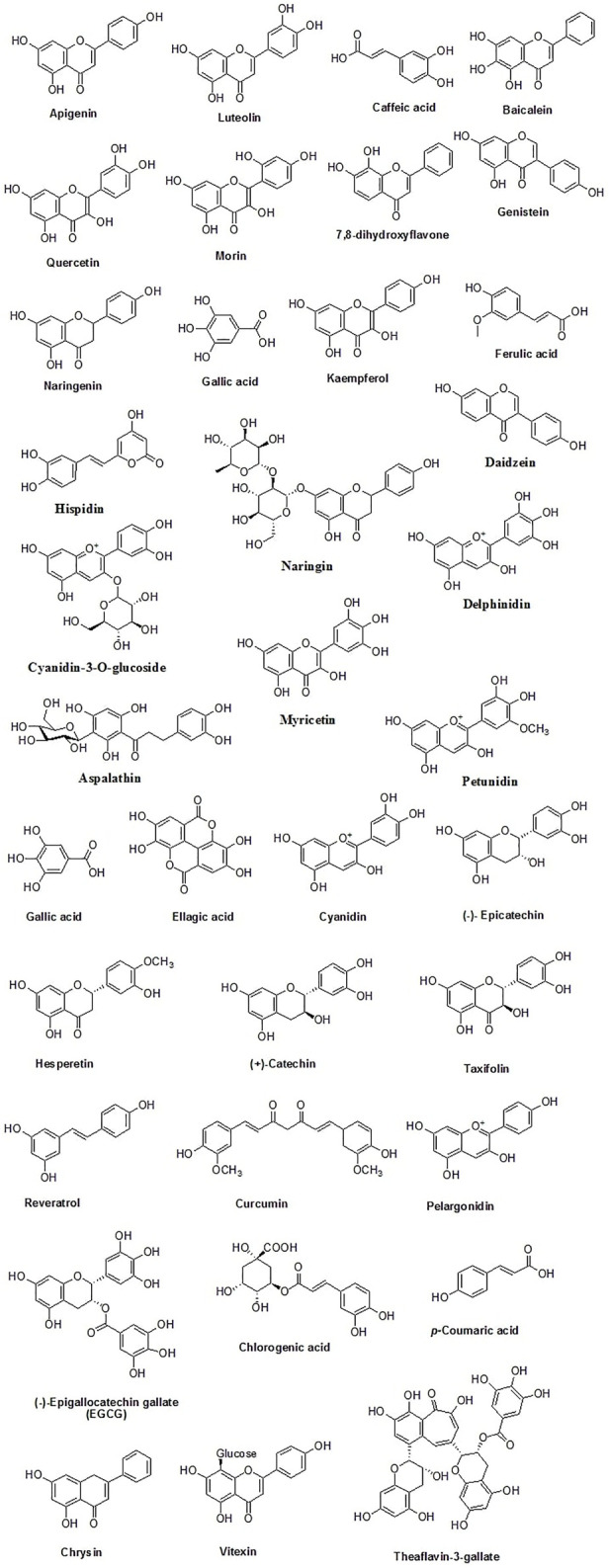
Chemical structures of some common dietary polyphenols of medicinal importance.
FIGURE 5
FIGURE 5
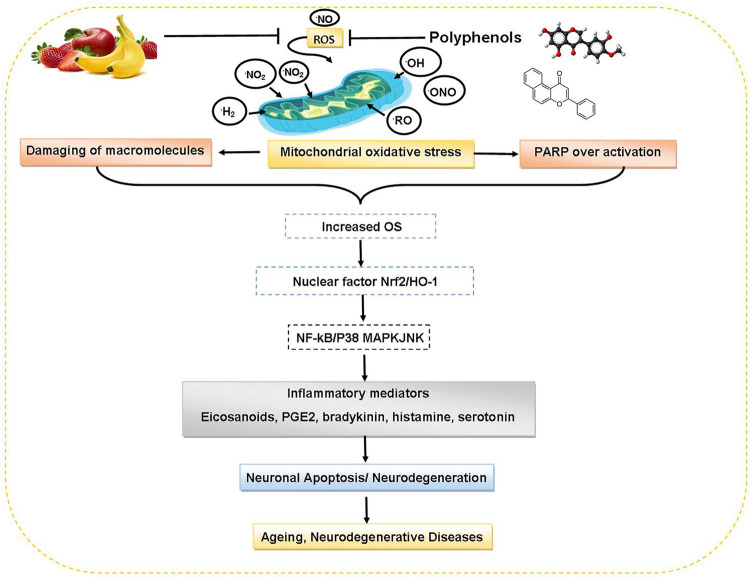
Protective roles of dietary polyphenols against aging and neurodegenerative disorders. Abbreviations: Nrf 2: nuclear factor erythroid 2, HO-1: heme oxygenase-1, NF-kB: nuclear factor kappa-light-chain-enhancer of activated B cells, P38 MAPK: protein 38 mitogen-activated protein kinase, JNK: Jun N-terminal kinase, PGE2: prostaglandin E2.
FIGURE 6
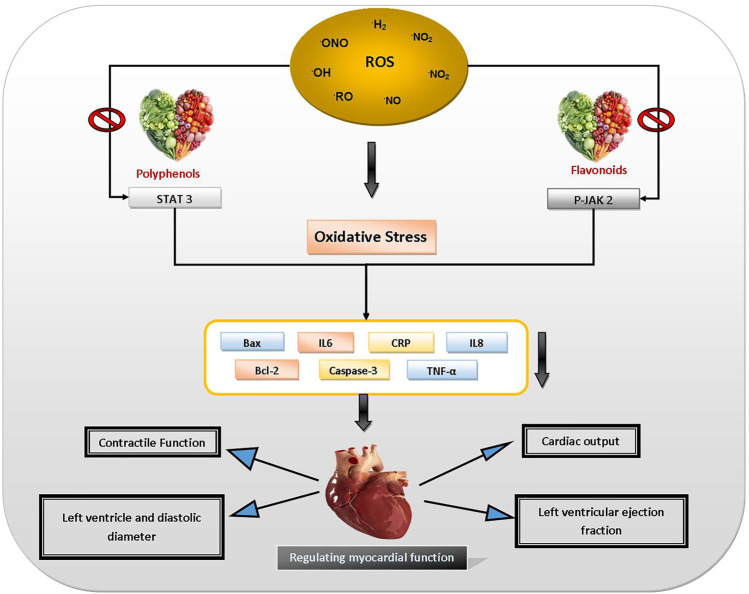
FIGURE 6
Protective effects of dietary polyphenols against CVDs. Abbreviations: Bax: BCL2 associated X apoptosis regulator, IL6: interleukin 6, CRP: C-reactive protein, IL8: interleukin 8, Bcl-2: B-cell lymphoma 2, Caspase-3: cysteine-aspartic acid protease 3, TNF-alpha: tumour necrosis factor - alpha, P-JAK 2: protein Janus kinase 2, STAT 3: signal transducer and activator of transcription 3
FIGURE 7
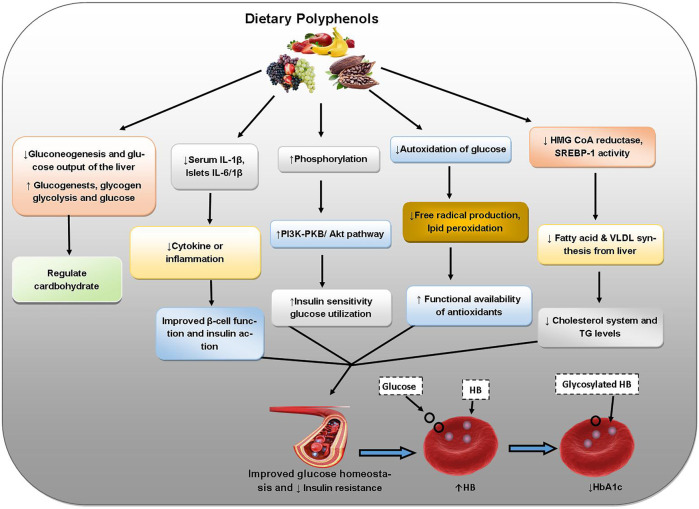
FIGURE 7
Protective roles of dietary polyphenols against diabetes. Abbreviations: IL-1 beta: interleukin-1β, IL-6/1B: interleukin-6, P13K-PKB: phosphoinositide-3-kinase–protein kinase B, Akt: AK strain transforming, HMG CoA reductase: β-hydroxy-β-methylglutaryl-CoA reductase, SREBP-1: sterol regulatory element-binding protein 1, VLDL: very low density lipoproteins, TG: Triglycerides, HB: Hemoglobin.
FIGURE 8
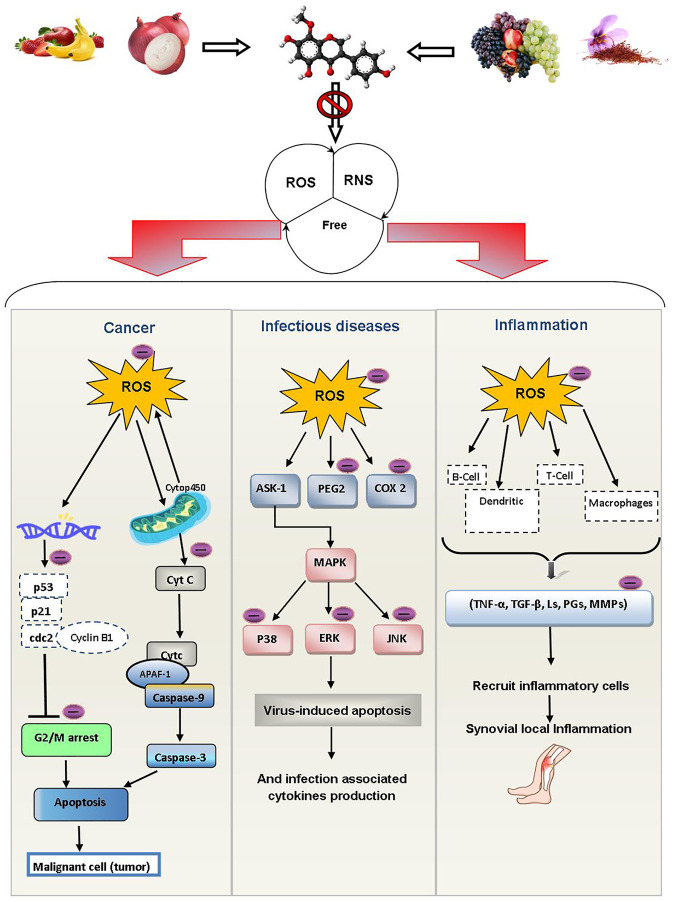
FIGURE 8
Protective effects of dietary polyphenols against cancer, infectious illness and inflammatory diseases. Abbreviations: ROS: reactive oxygen species, RNS: reactive nitrogen species, P53: tumor protein 53, P21: tumor protein 21, CDC2: cell division control 2, CASPASE-9: cysteine-dependent aspartate-directed protease-9, APAF-1: apoptotic protease activating factor-1, Cyt c: cytochrome c, Cytp450: cytochrome P450, G2/M arrest: cell cycle “gap2” mitotic phase arrest, ASK-1: apoptosis signal-regulating kinase-1, PEG 2: polyethylene glycol 2, COX 2: cyclooxygenase 2, MAPK: mitogen-activated protein kinase, P38: mitogen-activated protein kinase protein 38, ERK: extracellular signal-regulated kinase, JNK: Jun N-terminal kinase, B-cells: B lymphocytes cells, TNF-alpha: Tumor necrosis factor - alpha, TGF-β: transforming growth factor beta, Ls: lipid hydro-peroxides, MMPs: matrix metalloproteinases, PGs: prostaglandins.

References

    1. Abba Y., Hassim H., Hamzah H., Noordin M. M. (2015). Antiviral Activity of Resveratrol against Human and Animal Viruses. Adv. Virol. 2015, 184241. 10.1155/2015/184241 - DOI - PMC - PubMed
    1. Abotaleb M., Liskova A., Kubatka P., Büsselberg D. (2020). Therapeutic Potential of Plant Phenolic Acids in the Treatment of Cancer. Biomolecules 10 (2), 221. 10.3390/biom10020221 - DOI - PMC - PubMed
    1. Aguiar P. H., Furtado C., Repolês B. M., Ribeiro G. A., Mendes I. C., Peloso E. F., et al. (2013). Oxidative Stress and DNA Lesions: The Role of 8-Oxoguanine Lesions in Trypanosoma Cruzi Cell Viability. Plos Negl. Trop. Dis. 7 (6), e2279. 10.1371/journal.pntd.0002279 - DOI - PMC - PubMed
    1. Ahmed S., Pakozdi A., Koch A. E. (2006). Regulation of Interleukin-1beta-Induced Chemokine Production and Matrix Metalloproteinase 2 Activation by Epigallocatechin-3-Gallate in Rheumatoid Arthritis Synovial Fibroblasts. Arthritis Rheum. 54 (8), 2393–2401. 10.1002/art.22023 - DOI - PubMed
    1. Apel K., Hirt H. (2004). Reactive Oxygen Species: Metabolism, Oxidative Stress, and Signal Transduction. Annu. Rev. Plant Biol. 55 (1), 373–399. 10.1146/annurev.arplant.55.031903.141701 - DOI - PubMed

LinkOut - more resources