


Comment
doi: 10.1113/JP282581.
Epub 2022 Mar 20.
Could angiotensin-II induced T-cell senescence exacerbate age-related vascular dysfunction?
Affiliations
- PMID: 35238408
- PMCID: PMC9012694
- DOI: 10.1113/JP282581
Item in Clipboard
Comment
Could angiotensin-II induced T-cell senescence exacerbate age-related vascular dysfunction?
J Physiol.
2022 Apr.
No abstract available
Keywords: T-cells; ageing; angiotensin II; arterial stiffness; cellular senescence; endothelial dysfunction; vascular ageing.
Figures
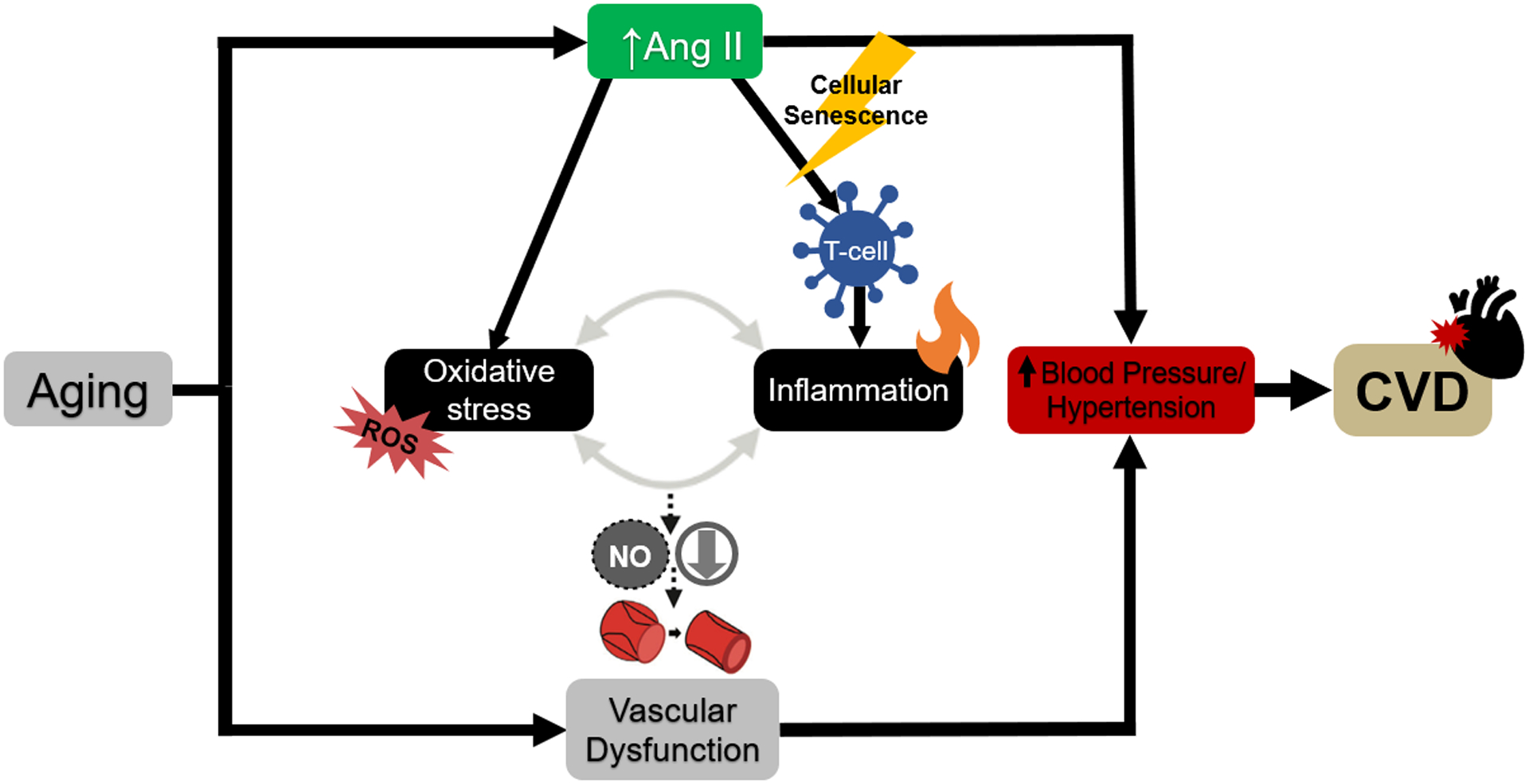
The findings by Trott et al. (2021) demonstrate that dysfunctional T-cells in old mice are involved in inducing vascular inflammation and associated vascular dysfunction. These age-related changes may be caused by Angiotensin II (Ang II)-induced cellular senescence of T-cells. Age-related increases in Ang II and senescent T-cells may be upstream mechanisms stimulating excess reactive oxygen species (ROS)-induced oxidative stress and chronic inflammation which amplify each other to reduce nitric oxide (NO) bioavailability, ultimately causing vascular dysfunction. Reduction in NO bioavailability is linked to impaired vascular function and increased blood pressure and hypertension risk. Taken together, suppressing potentially senescent T-cells may be a novel therapeutic approach to ameliorate inflammation and oxidative stress to favorably impact vascular function and reduce cardiovascular disease (CVD) risk with aging.
Comment on
-
T cells mediate cell non-autonomous arterial ageing in mice.J Physiol. 2021 Aug;599(16):3973-3991. doi: 10.1113/JP281698. J Physiol. 2021. PMID: 34164826 Free PMC article.
References
Publication types
MeSH terms
Substances
Grants and funding
LinkOut - more resources
Full Text Sources
