


Adolescent girls' recommendations for the design of a human papillomavirus vaccination program in Sindh, Pakistan: a qualitative study
- PMID: 35240928
- PMCID: PMC9196803
- DOI: 10.1080/21645515.2022.2045856
Adolescent girls' recommendations for the design of a human papillomavirus vaccination program in Sindh, Pakistan: a qualitative study
Abstract
Purpose: Vaccination of adolescent girls against human papillomavirus (HPV) significantly reduces the incidence of cervical cancer. HPV vaccines are available in Pakistan but plans to develop HPV vaccination program are at a nascent stage. We conducted a formative study to explore adolescent girls' knowledge and perspectives on HPV and cervical cancer and collect their recommendations for implementing an HPV vaccination program in their community.
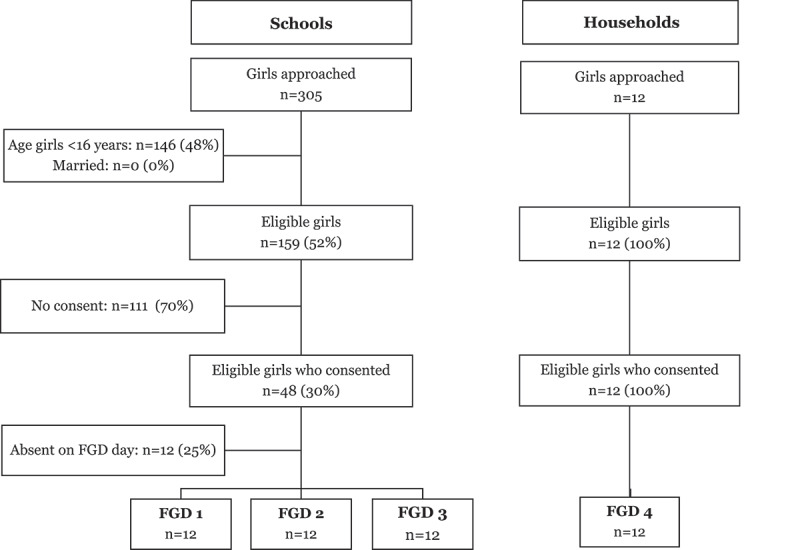
Methods: Using qualitative exploratory study design, we conducted four focus group discussions (FGDs) with 12 adolescent girls per group in District West, Karachi. We recruited unmarried girls aged 16-19 years from schools and community settings between May-December 2020. Data analysis was done using NVivo.
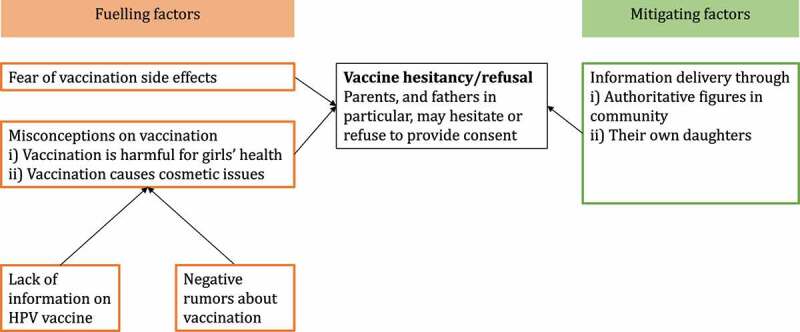
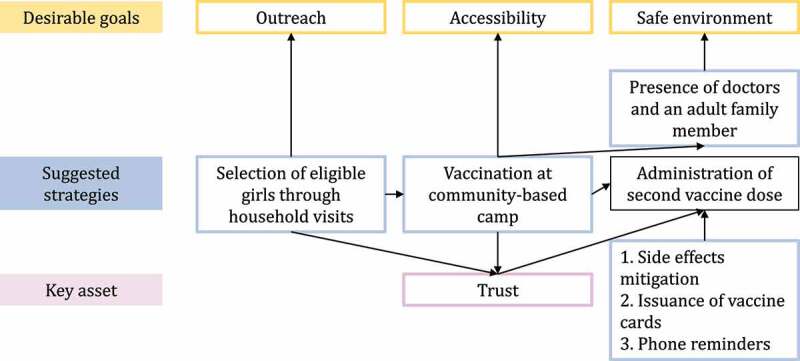
Results: Overall, participants displayed a positive attitude toward HPV vaccine. However, they were unfamiliar with basic concepts related to female reproductive health. Female relatives were indicated as girls' preferred point of contact for discussions on HPV and cervical cancer, but fathers were portrayed as decision-making authority on vaccination. Participants indicated vaccine hesitancy among parents may affect HPV vaccination uptake. Girls suggested individual household visits and community-based camps as strategies for successful implementation of HPV vaccination program. A solid foundation of trust between girls' families, program managers, and other stakeholders emerged as a key asset for the program's success.
Conclusion: Adolescent girls' suggestions of informing key decision-makers in the family (particularly fathers) of the benefits of HPV vaccination, establishing trust with vaccine providers, and increasing accessibility of vaccinations should be explored for successful implementation of an HPV vaccination program in Pakistan.
Keywords: HPV; Human papilloma virus; adolescents; cervical cancer; vaccination programs; vaccine hesitancy.
Conflict of interest statement
No potential conflict of interest was reported by the author(s).
Figures
References
-
- Torgovnik J. Cervical Cancer. World Health Organization. Geneva (Switzerland): World Health Organization; 2021. Feb 18 [accessed 2021 Dec 10]. https://www.who.int/health-topics/cervical-cancer#tab=tab.
-
- Immunization , Vaccines and biologicals. Human papillomavirus vaccines (HPV). World Health Organization. Geneva (Switzerland): World Health Organization; 2021. Feb 16 [accessed 2021 Dec 10]. https://www.who.int/teams/immunization-vaccines-and-biologicals/diseases....
-
- International Agency for Research on Cancer . CANCER TODAY: data visualization tools for exploring the global cancer burden in 2020. World Health Organization; 2021. Feb 16 [accessed 2021 Dec 10]. https://www.who.int/teams/immunization-vaccines-and-biologicals/diseases....
-
- Albero G, Bosch FX, Bruni L, Collado JJ, de Sanjosé S, Gómez D, Mena M, Muñoz J, Serrano B. Human papillomavirus and related diseases report in Pakistan. Barcelona (Spain): ICO/IARC Information Centre on HPV and Cancer (HPV Information Centre); 2019. [accessed 2021 Dec 10]. https://hpvcentre.net/statistics/reports/XWX.pdf.
-
- Raza SA, Franceschi S, Pallardy S, Malik FR, Avan BI, Zafar A, Ali SH, Pervez S, Serajuddaula S, Snijders PJF, et al. Human papillomavirus infection in women with and without cervical cancer in Karachi, Pakistan.Br. J Cancer. 2010;102(11):1657–9. PMID: 20407442. doi: 10.1038/sj.bjc.6605664. - DOI - PMC - PubMed
Publication types
MeSH terms
Substances
LinkOut - more resources
Full Text Sources
Medical
