


Long-term follow-up of acute porphyria in female patients: Update of clinical outcome and life expectancy
- PMID: 35242573
- PMCID: PMC8856918
- DOI: 10.1016/j.ymgmr.2022.100842
Long-term follow-up of acute porphyria in female patients: Update of clinical outcome and life expectancy
Abstract
Background: Acute hepatic porphyria includes four inherited disorders caused by partial deficiencies of enzymes related to the heme biosynthesis. Clinical manifestations include acute attacks, occurring mainly among female patients. This study describes the diversity of acute symptoms, changes in triggering factors and life expectancy among female patients during the past five decades.
Methods: 107 Finnish female patients were enrolled into a retrospective, longitudinal study during 2015. Clinical, biochemical and genetic data was obtained from the medical reports, registry data and a questionnaire designed for the study. Causes of death were studied in additional 32 female patients.
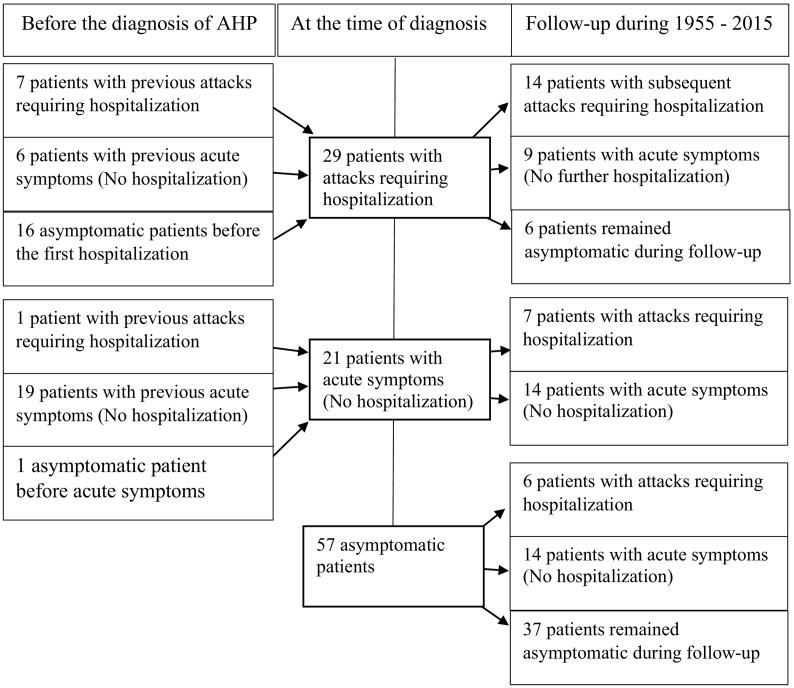
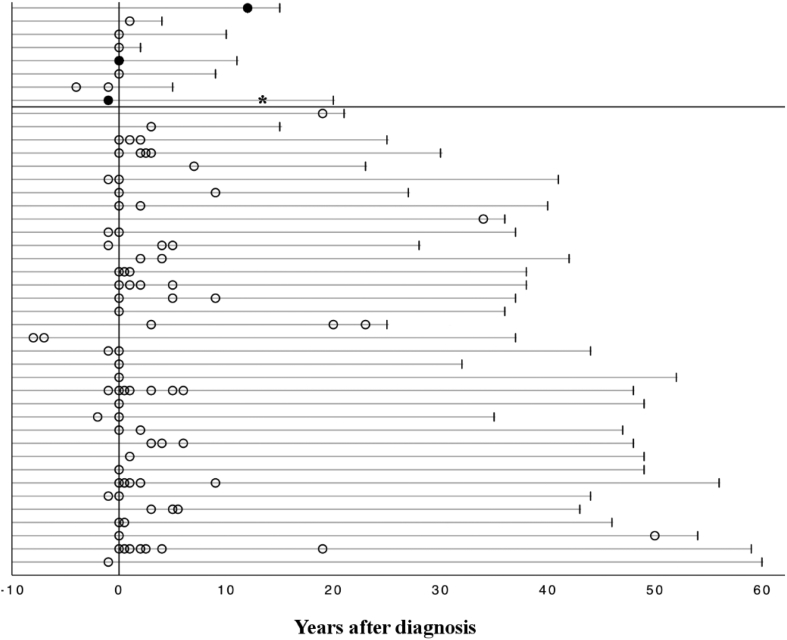
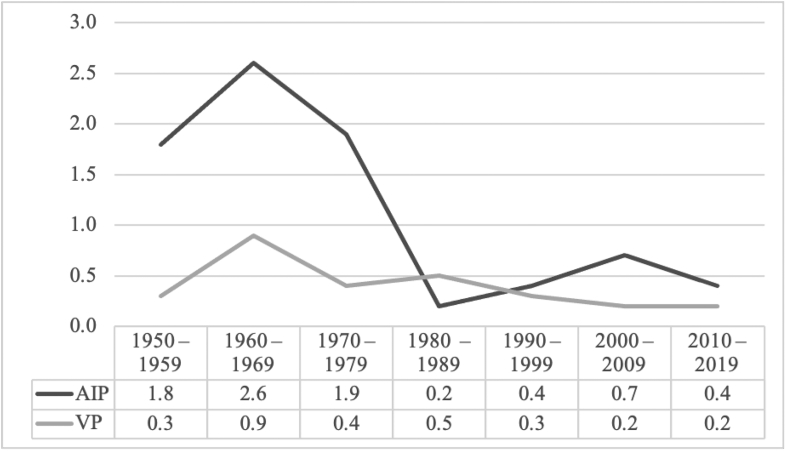
Results: Of the 43 patients with hospitalization, 33% had non-complicated, 35% prolonged and 28% severe attacks with no correlation with the disease-causing mutation. Of the deceased patients, 31% died of an acute attack during 1957-1979. Thereafter the incidence and severity of acute attacks have decreased substantially. 55% of the subjects reported acute symptoms (dysautonomia and mental symptoms) without hospitalization, 29% had porphyria symptoms >10 times, and 23% within the last year. Despite 22% of the female patients had died of primary liver cancer, the life expectancy increased more than 10 years during the follow-up, and did not differ from the normal population at present.
Conclusions: The incidence of acute attacks requiring hospitalization has decreased, but more than half of the female patients reported acute symptoms affecting their well-being. Symptoms are currently triggered by hormonal changes and weight loss emphasizing the importance of early recognition and active management to avoid disease exacerbation. Death due to primary liver cancer is common and should be screened regularly.
Keywords: Acute attack; Acute hepatic porphyria; Acute intermittent porphyria; Hereditary coproporphyria; Primary liver cancer; Variegate porphyria.
© 2022 The Authors.
Figures
References
-
- Gandhi Mehta R.K., Caress J.B., Rudnick S.R., Bonkovsky H.L. Porphyric neuropathy. Muscle Nerve. 2021;64(2):140–152. - PubMed
-
- Pischik E., Kauppinen R. Neurological manifestations of acute intermittent porphyria. Cell. Mol. Biol. (Noisy-le-grand). 2009;55(1):72–83. - PubMed
-
- Ahangari A., Backstrom T., Innala E., Andersson C., Turkmen S. Acute intermittent porphyria symptoms during the menstrual cycle. Intern. Med. J. 2015;45(7):725–731. - PubMed
LinkOut - more resources
Full Text Sources
Miscellaneous
