Importance of bitewing radiographs for the early detection of interproximal carious lesions and the impact on healthcare expenditure in Japan
- PMID: 35242847
- PMCID: PMC8825540
- DOI: 10.21037/atm-21-2197
Importance of bitewing radiographs for the early detection of interproximal carious lesions and the impact on healthcare expenditure in Japan
Abstract
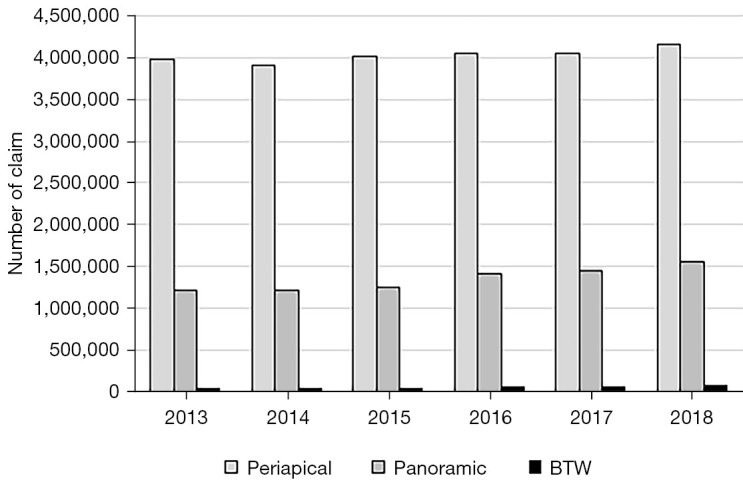
Background: Globally, the direct cost of dental caries is approximately $298B yearly, consuming 5-10% of national healthcare budgets. Bitewing radiographs (BWR) are the standard method of diagnosing interproximal dental caries. In Japan, bitewing radiographs are rarely used. This retrospective observational study was conducted to measure the potential economic impact of carious lesions left undiagnosed and untreated due to this omission of bitewing radiographs.
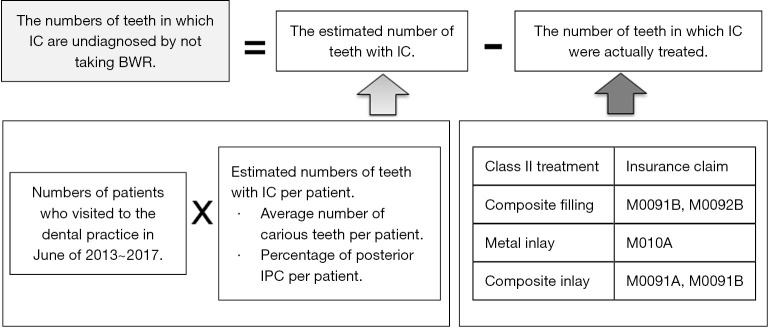
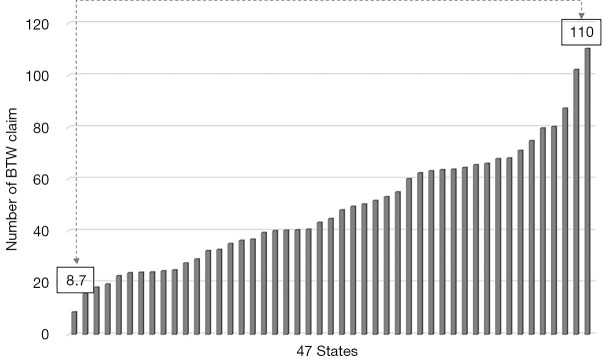
Methods: The total number of existing carious lesions, the number of undiagnosed lesions, and costs of treating these lesions were calculated from the national database of Ministry of Health, Labor and Wellness in Japan between June 2013 and 2017. The number of affected teeth was estimated using prevalence data and undiagnosed lesions were estimated. The expense associated with treating progressed lesions was calculated using the standard Japanese fee structure. BWR trends were assessed, and analyses were performed to understand the differences between states and populations over time.
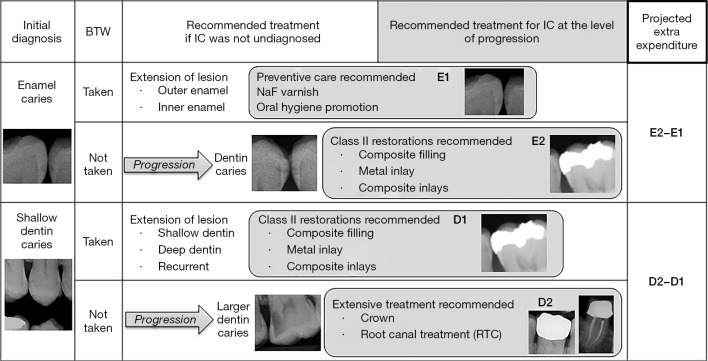
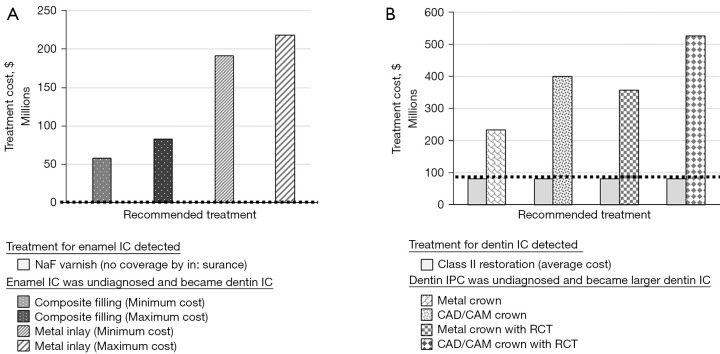
Results: The average number of BWR taken monthly per office was 48.3±1.1 (average ± SD). It was calculated that an average of 6,429,155 lesions went undiagnosed per month, 93.5 teeth per practice, and 1.6 teeth per patient. The cost of treating lesions that went undiagnosed and then progressed into more invasive restorations was estimated to be between $57M-$218M more (difference between NaF varnish and class II restorations), and $150M-$443M more (difference between Class II restoration and crown or crown with RCT).
Conclusions: BWRs are crucial in diagnosing a significant number of carious lesions. There is considerable impact on health and cost to the national health system due to undiagnosed lesions. Practitioners need to be educated on reading and understanding BWR, and policy should be changed to cover BWR.
Keywords: Bitewings; cariology; health expenditures; prevention.
2022 Annals of Translational Medicine. All rights reserved.
Conflict of interest statement
Conflicts of Interest: All authors have completed the ICMJE uniform disclosure form (available at https://dx.doi.org/10.21037/atm-21-2197). The authors have no conflicts of interest to declare.
Figures
References
-
- WHO. Sugars and dental caries [cited 2021 March 23]. Available online: https://www.who.int/news-room/fact-sheets/detail/sugars-and-dental-caries.
-
- Fleming E, Afful J. Prevalence of Total and Untreated Dental Caries Among Youth: United States, 2015-2016. NCHS Data Brief 2018;(307):1-8. - PubMed
-
- Spending on health: A global overview [cited 2021 March 23]. Available online: https://www.who.int/news-room/fact-sheets/detail/spending-on-health-a-gl....
-
- statement A. New CDC Statistics Show Need for Increased Access to Dental Care, with a Greater Emphasis on Preventing Disease [cited 2021 March 9]. Available online: https://www.ada.org/en/press-room/news-releases/2015-archive/may/new-cdc....
LinkOut - more resources
Full Text Sources