


Characteristics and birth outcomes of pregnant adolescents compared to older women: An analysis of individual level data from 140,000 mothers from 20 RCTs
- PMID: 35243274
- PMCID: PMC8885463
- DOI: 10.1016/j.eclinm.2022.101309
Characteristics and birth outcomes of pregnant adolescents compared to older women: An analysis of individual level data from 140,000 mothers from 20 RCTs
Abstract
Background: Adolescence is a critical period of maturation when nutrient needs are high, especially among adolescents entering pregnancy. Using individual-level data from 140,000 participants, we examined socioeconomic, nutrition, and pregnancy and birth outcomes for adolescent mothers (10-19 years) compared to older mothers in low and middle-income countries.
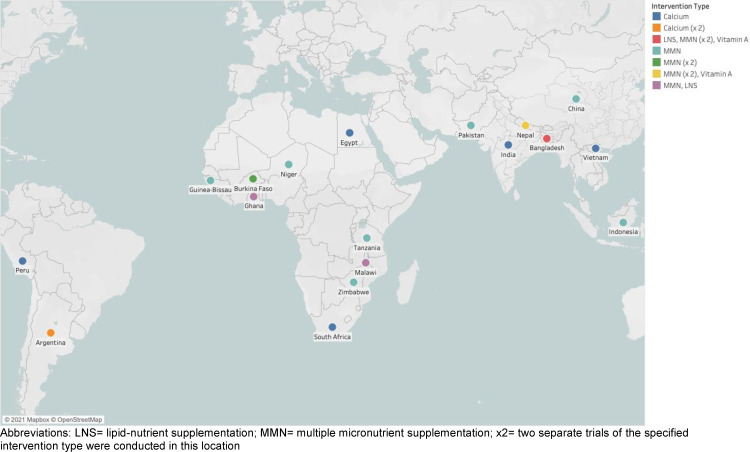
Methods: This study was conducted between March 16, 2018 and May 25, 2021. Data were obtained from 20 randomised controlled trials of micronutrient supplementation in pregnancy. Stratified analyses were conducted by age (10-14 years, 15-17 years, 18-19 years, 20-29 years, 30-39 years, 40+ years) and geographical region (Africa, Asia). Crude and confounder-adjusted means, prevalence and relative risks of pregnancy, nutrition and birth outcomes were estimated using multivariable linear and log-binomial regression models with 95% confidence intervals.
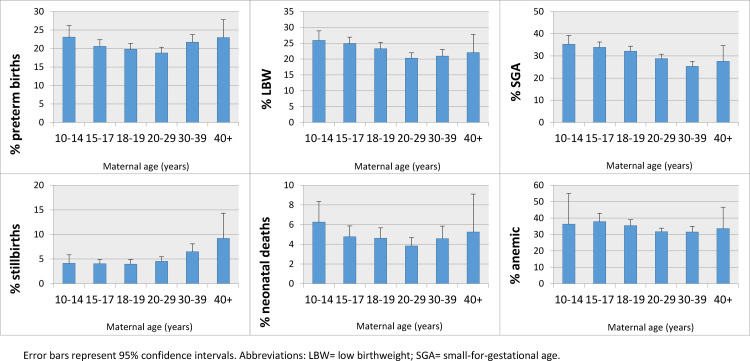
Findings: Adolescent mothers comprised 31.6% of our data. Preterm birth, small-for-gestational age (SGA), low birthweight (LBW) and newborn mortality followed a U-shaped trend in which prevalence was highest among the youngest mothers (10-14 years) and then reduced gradually, but increased again for older mothers (40+ years). When compared to mothers aged 20-29 years, there was a 23% increased risk of preterm birth, a 60% increased risk of perinatal mortality, a 63% increased risk of neonatal mortality, a 28% increased risk of LBW, and a 22% increased risk of SGA among mothers 10-14 years. Mothers 40+ years experienced a 22% increased risk of preterm birth and a 103% increased risk of stillbirth when compared to the 20-29 year group.
Interpretation: The youngest and oldest mothers suffer most from adverse pregnancy and birth outcomes. Policy and programming agendas should consider both biological and socioeconomic/environmental factors when targeting these populations.
Funding: Bill and Melinda Gates Foundation (Grant No: OP1137750).
Keywords: Adolescence; Age; Birth outcomes; Determinants; Pregnancy.
© 2022 The Author(s).
Conflict of interest statement
We declare no competing interests.
Figures
References
-
- UNICEF. Adolescents overview. October 2019. Retrieved https://data.unicef.org/topic/adolescents/overview/. Accessed November 2, 2021.
-
- Darroch J.E., Woog V., Bankole A., Ashford L.S. Guttmacher Institute; 2016. Adding It up: Costs and Benefits of Meeting Contraceptive Needs of Adolescents.
