


The ascension of nanosponges as a drug delivery carrier: preparation, characterization, and applications
- PMID: 35244808
- PMCID: PMC8897344
- DOI: 10.1007/s10856-022-06652-9
The ascension of nanosponges as a drug delivery carrier: preparation, characterization, and applications
Abstract
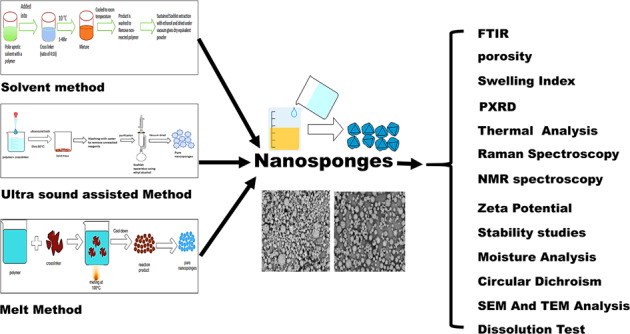
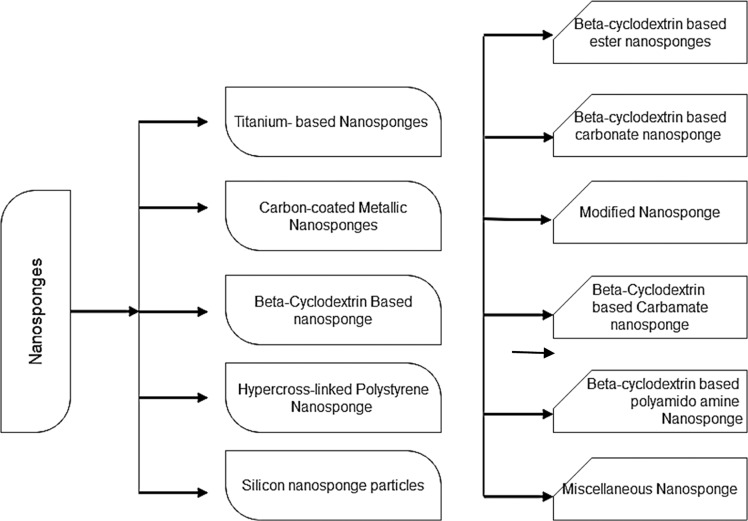
Nanosponges are nanosized drug carriers with a three-dimensional structure created by crosslinking polymers. They have the advantage of being able to hold a wide range of drugs of various sizes. Nanosponges come in a variety of shapes and sizes. They are distinguished by the research method used, the type of polymer used, and the type of drug they may contain. Nanosponges are superior to other delivery systems because they can provide a controlled drug release pattern with targeted drug delivery. The period of action, as well as the drug's residence time, may be regulated. Since it is made of biodegradable materials, it has a low toxicity and is safe to use. The efficiency of drug encapsulation is determined by the size of the drug molecule and the amount of void space available. Cancer, enzyme and biocatalyst carrier, oxygen delivery, solubility enhancement, enzyme immobilization, and poison absorbent are some of the applications for nanosponges. The method of preparation, characterization, factors affecting nanosponge development, drug loading and release mechanism, recent developments in this area, and patents filed in the area of nanosponges are all highlighted in this study. Graphical abstract.
© 2022. The Author(s).
Conflict of interest statement
The authors declare no competing interests.
Figures

References
-
- Mali AD, Bathe R, Patil M. An updated review on transdermal drug delivery systems. Int J Adv Sci Res. 2015;1:244. doi: 10.7439/ijasr.v1i6.2243. - DOI
-
- Soares PIP, Romão J, Matos R, Silva JC, Borges JP. Design and engineering of magneto-responsive devices for cancer theranostics: Nano to macro perspective. Prog Mater Sci. 2021;116:100742. doi: 10.1016/j.pmatsci.2020.100742. - DOI
-
- Nanotechnology in Textiles: theory and application - Rajesh Mishra, Jiri Militky - Google Books p.80, n.d. https://books.google.co.in/books?hl=en&lr=&id=4WR6DwAAQBAJ&oi=fnd&pg=PA1.... Accessed 19 Feb 2021
-
- Wei T, Torkelson JM. Molecular weight dependence of the glass transition temperature (Tg)-confinement effect in well-dispersed poly(2-vinyl pyridine)-silica nanocomposites: comparison of interfacial layer tgand matrix Tg. Macromolecules. 2020;53:8725–36. doi: 10.1021/acs.macromol.0c01577. - DOI
Publication types
MeSH terms
Substances
LinkOut - more resources
Full Text Sources
