


Disparities in breast cancer survival between women with and without HIV across sub-Saharan Africa (ABC-DO): a prospective, cohort study
- PMID: 35245508
- PMCID: PMC9031563
- DOI: 10.1016/S2352-3018(21)00326-X
Disparities in breast cancer survival between women with and without HIV across sub-Saharan Africa (ABC-DO): a prospective, cohort study
Abstract
Background: Studies have shown increased mortality among women living with HIV diagnosed with breast cancer compared with HIV-negative women with breast cancer. We aimed to examine how this HIV differential varies by patient or breast tumour characteristics.
Methods: The African Breast Cancer-Disparities in Outcomes (ABC-DO) study is a prospective cohort of women (aged ≥18 years) with incident breast cancer recruited consecutively at diagnosis (2014-17) from hospitals in Namibia, Nigeria, South Africa, Uganda, and Zambia. Detailed clinical and epidemiological data, including self-reported or tested HIV status, were collected at baseline. Participants were actively followed up via telephone calls every 3 months. The primary outcome was all-cause mortality, assessed in all women who had at least one updated vital status after baseline interview. Using Cox regression, we examined differences in overall survival by HIV status in the cohort, and across country and patient subgroups, adjusted for age, tumour grade, and tumour stage at cancer diagnosis.
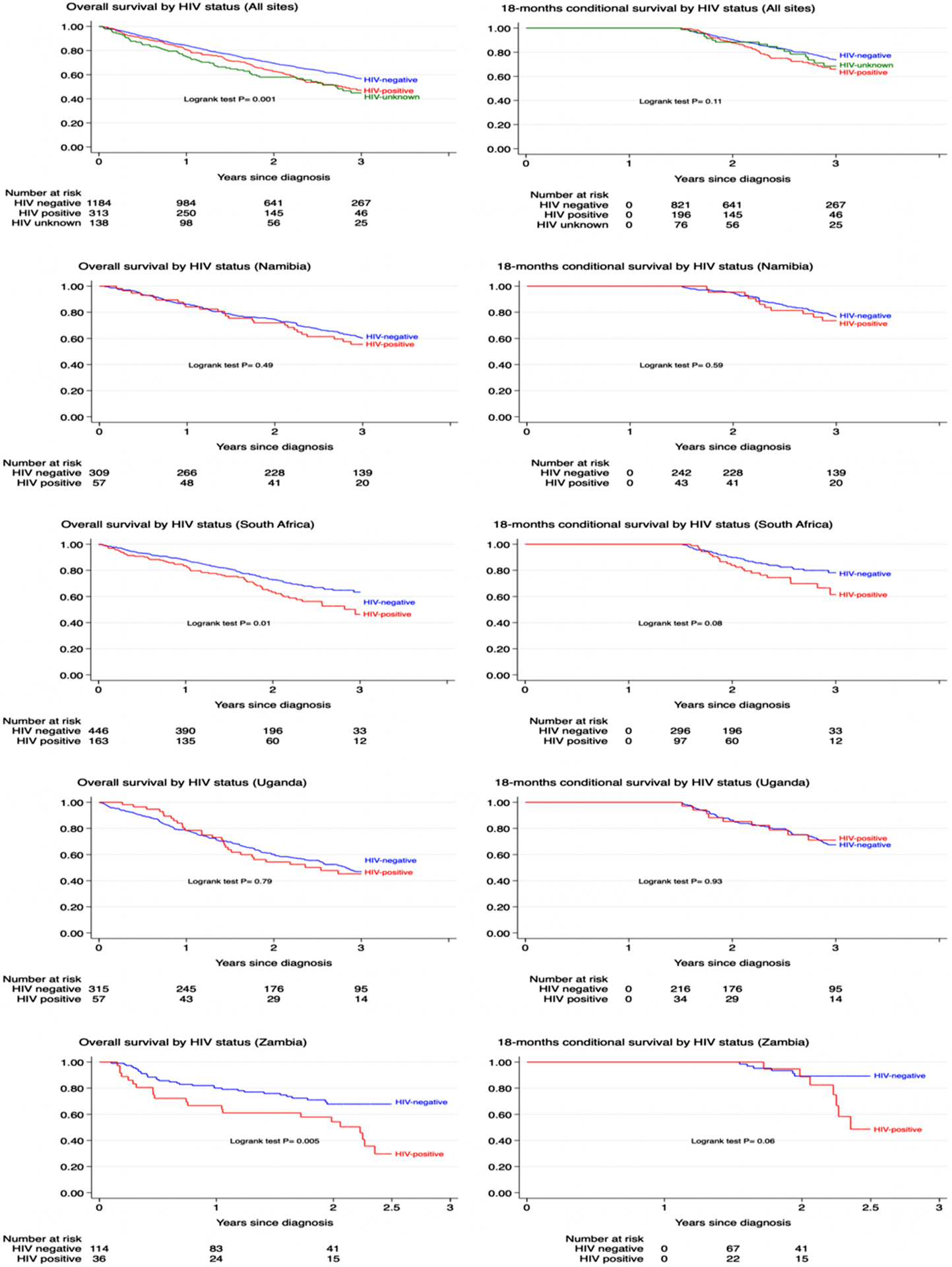
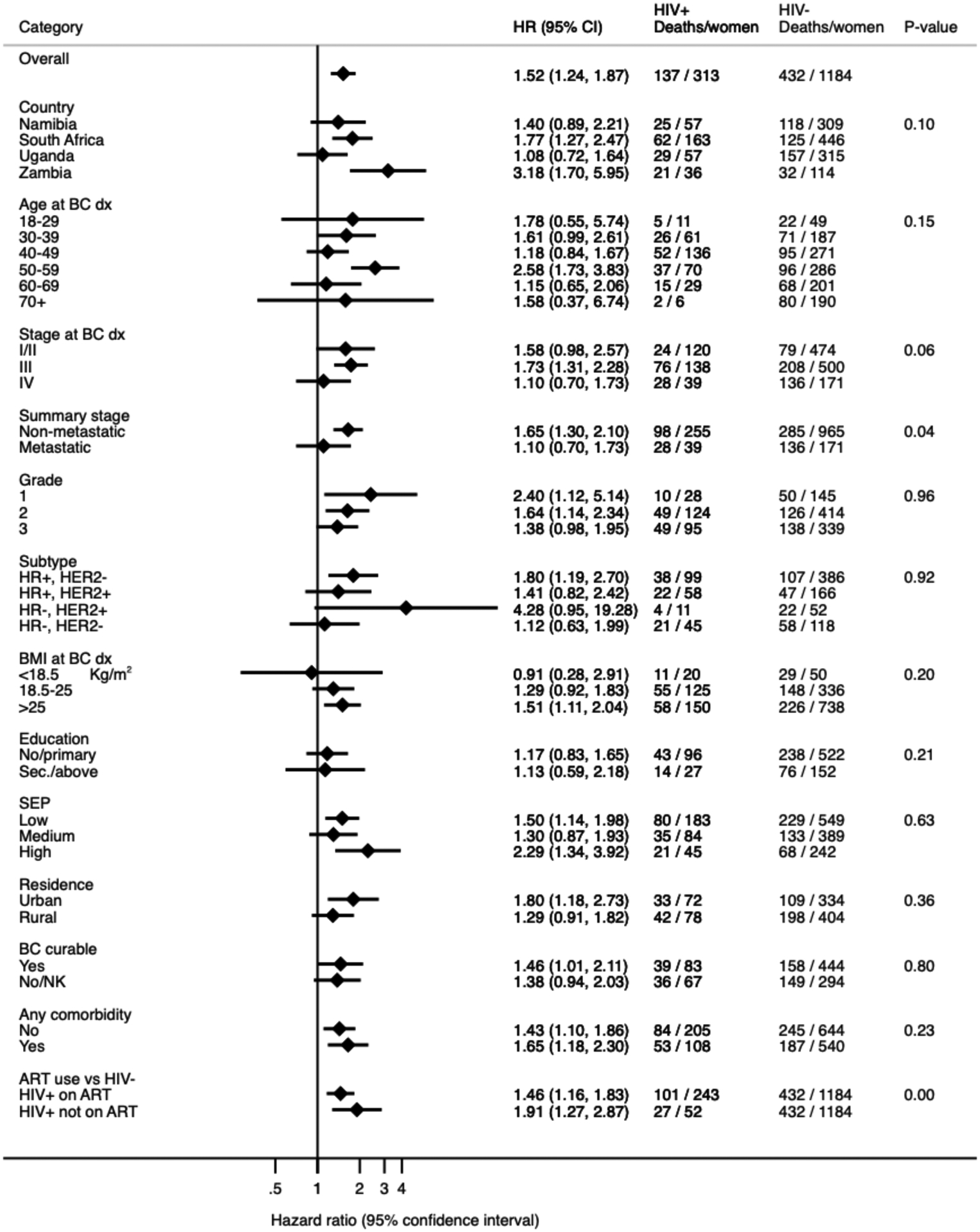
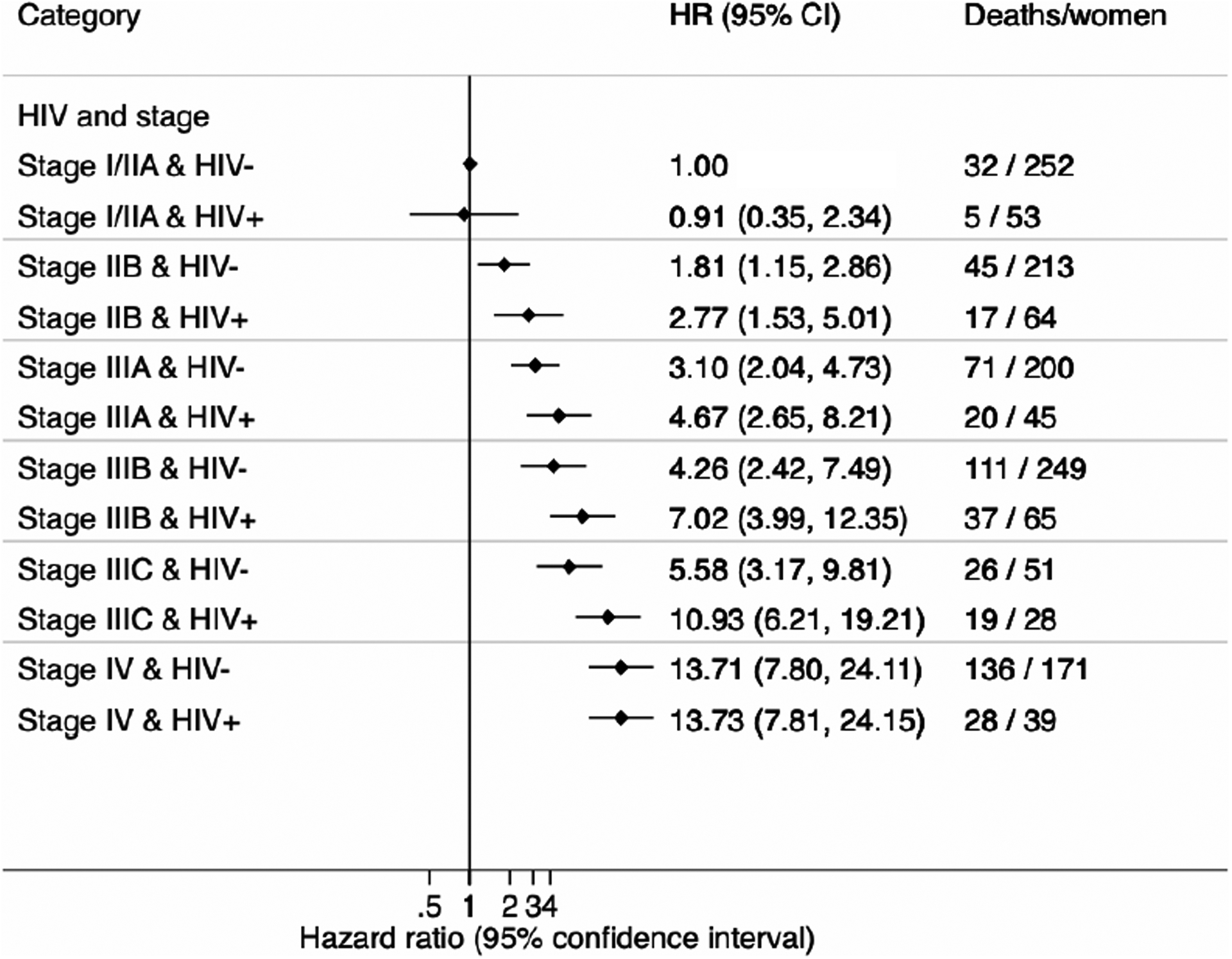
Findings: Between Sept 8, 2014, and Dec 31, 2017, we recruited 2154 women with primary breast cancer, 519 of whom were excluded due to their countries having small numbers of women with HIV for comparison. Among the remaining 1635 women, 313 (19%) were living with HIV, 1184 (72%) were HIV negative, and 138 (9%) had unknown HIV status. At breast cancer diagnosis, women with HIV were younger and had lower body-mass index (BMI) than their HIV-negative counterparts, but had similar tumour stage, grade, and receptor subtypes. At the end of the follow-up (Jan 1, 2019), a higher proportion of women with HIV (137 [44%] of 313) had died than had HIV-negative women (432 [37%] of 1184). Crude 3-year survival was 9% lower for women with HIV (46% [95% CI 40-53]) than for HIV-negative women (55% [52-59]; hazard ratio (HR) 1·41 [1·15-1·74]). The HIV survival differential did not differ by age, BMI, tumour subtype, or tumour grade, but was stronger in women with non-metastatic disease (3-year survival 52% HIV-positive vs 63% HIV-negative women, adjusted HR 1·65 [1·30-2·10]), whereas women with metastatic cancer had low survival, regardless of HIV status.
Interpretation: The larger survival deficit among women with HIV with non-metastatic breast cancer calls for a better understanding of the reasons underlying this differential (eg, biological mechanisms, health behaviours, detrimental HIV-breast cancer treatment interactions, or higher HIV background mortality) to inform strategies for reducing mortality among this patient group.
Funding: Susan G Komen, International Agency for Research on Cancer, National Cancer Institute, and UK-Commonwealth Scholarships.
World Health Organization; licensee Elsevier. This is an Open Access article published under the CC BY-NC-ND 3.0 IGO license which permits users to download and share the article for non-commercial purposes, so long as the article is reproduced in the whole without changes, and provided the original source is properly cited. This article shall not be used or reproduced in association with the promotion of commercial products, services, or any entity. There should be no suggestion that WHO endorses any specific organisation, products or services. The use of the WHO logo is not permitted. This notice should be preserved along with the article's original URL.
Conflict of interest statement
Declaration of interests We declare no competing interests.
Figures
Comment in
-
Breast cancer survival in women living with HIV.Lancet HIV. 2022 Mar;9(3):e141-e142. doi: 10.1016/S2352-3018(22)00010-8. Lancet HIV. 2022. PMID: 35245505 No abstract available.
References
-
- Ferlay J, Soerjomataram I, Dikshit R, et al. Cancer incidence and mortality worldwide: sources, methods and major patterns in GLOBOCAN 2012. Int J Cancer 2015; 136: E359–86. - PubMed
-
- McCormack VA, Febvey-Combes O, Ginsburg O, Dos-Santos-Silva I. Breast cancer in women living with HIV: a first global estimate. Int J Cancer 2018; 143: 2732–40. - PubMed
Publication types
MeSH terms
Grants and funding
LinkOut - more resources
Full Text Sources
Medical
Research Materials
