


Xylazine spreads across the US: A growing component of the increasingly synthetic and polysubstance overdose crisis
- PMID: 35247724
- PMCID: PMC9128597
- DOI: 10.1016/j.drugalcdep.2022.109380
Xylazine spreads across the US: A growing component of the increasingly synthetic and polysubstance overdose crisis
Abstract
Background: Sharp exacerbations of the US overdose crisis are linked to polysubstance use of synthetic compounds. Xylazine is a veterinary tranquilizer, long noted in the street opioid supply of Puerto Rico, and more recently Philadelphia. Yet its national trends, geographic distribution, and health risks are poorly characterized.
Methods: In this sequential mixed-methods study, xylazine was increasingly observed by ethnographers in Philadelphia among drug-sellers and people who inject drugs (PWID). Subsequently, we systematically searched for records describing xylazine-present overdose mortality across the US and assessed time trends and overlap with other drugs.
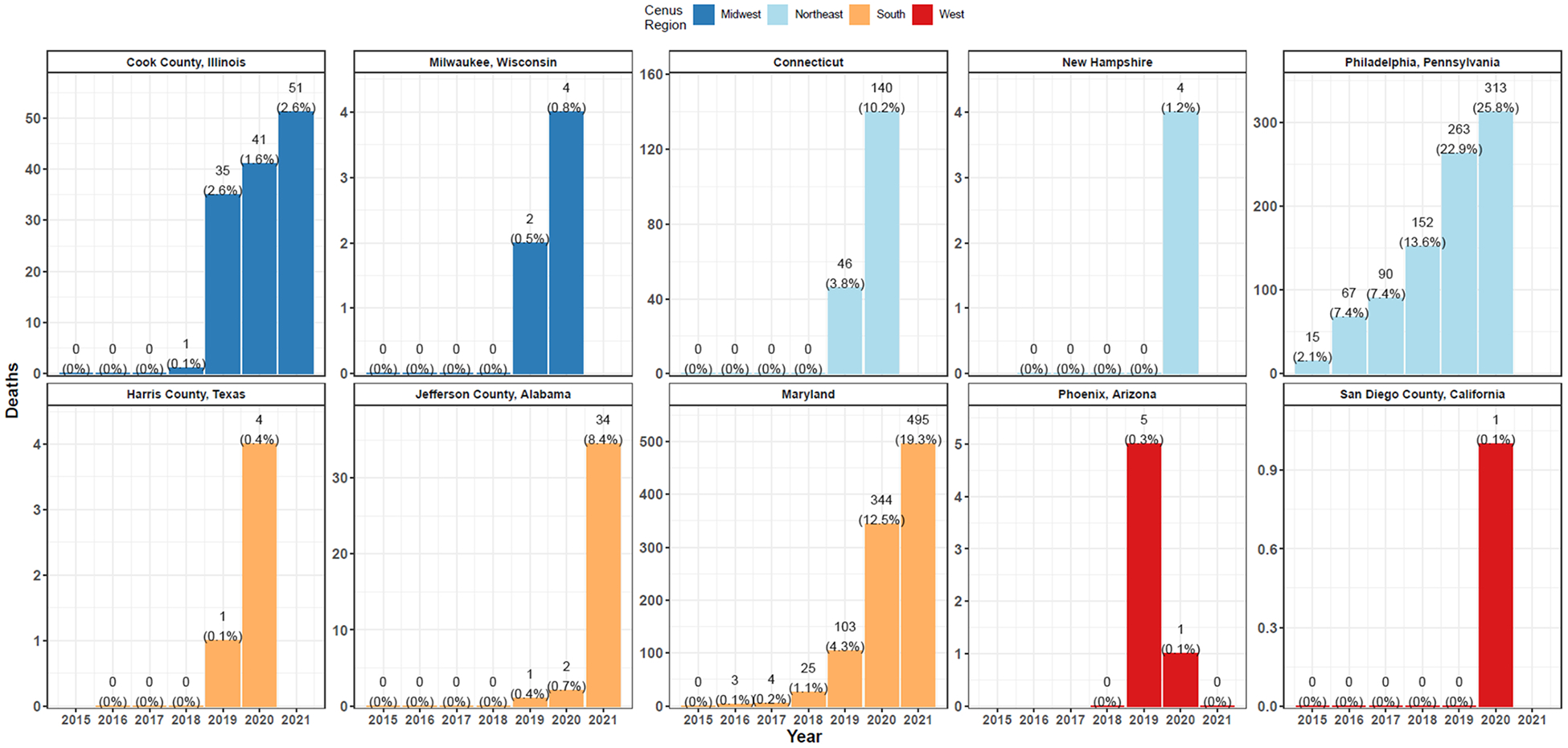
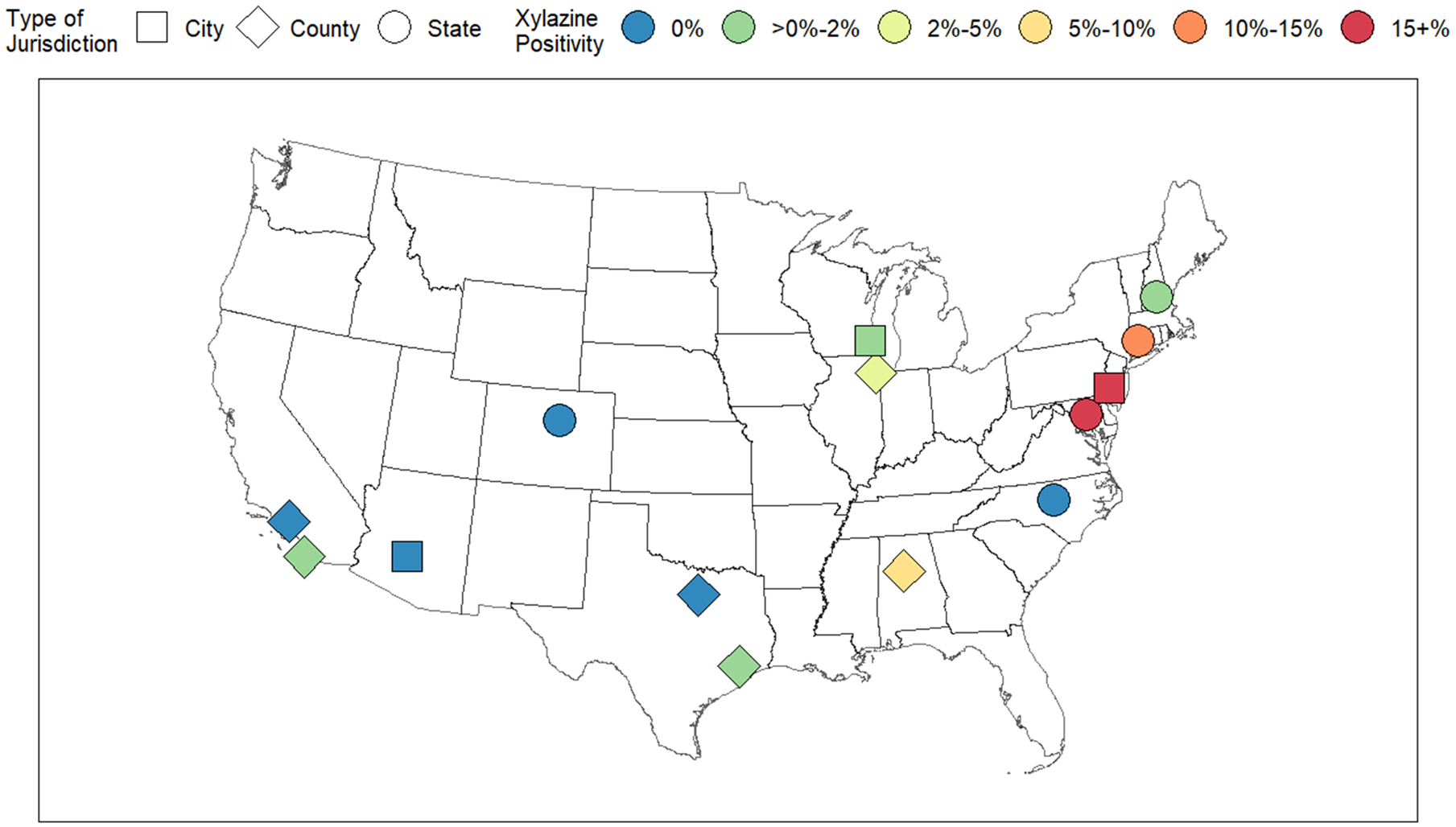
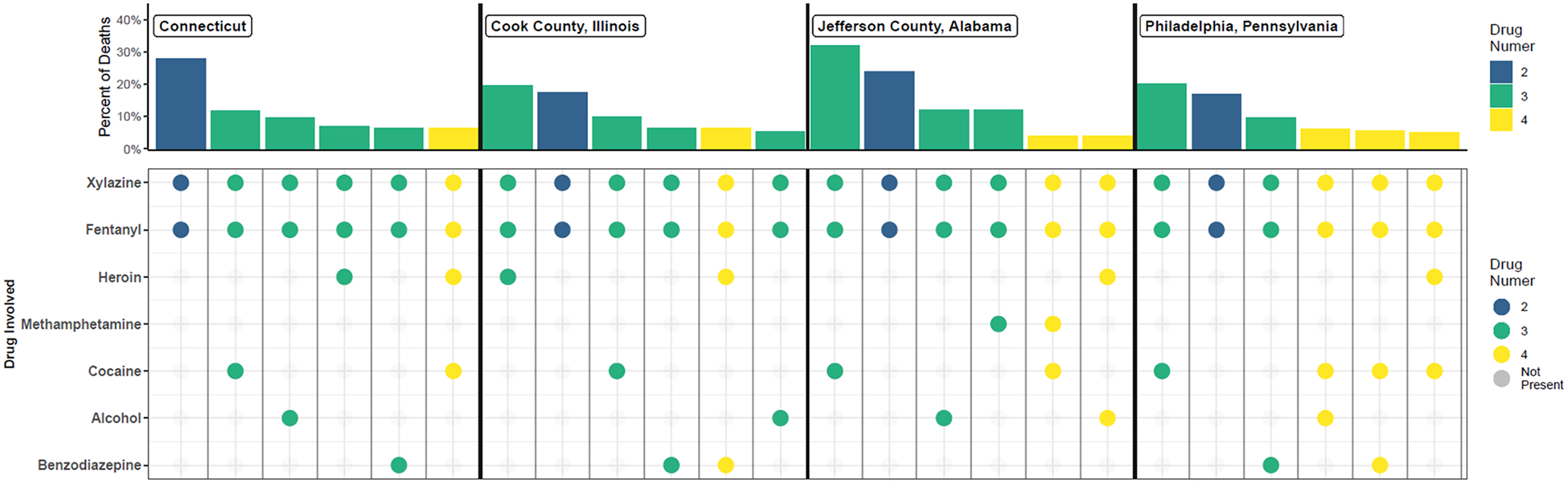
Results: In 10 jurisdictions - representing all four US Census Regions - xylazine was increasingly present in overdose deaths, rising from 0.36% of deaths in 015m 6.7% in 2020. The highest xylazine prevalence data was observed in Philadelphia, (25.8% of deaths), followed by Maryland (19.3%) and Connecticut (10.2%). Illicitly-manufactured-fentanyls were present in 98.4% of xylazine-present-overdose-deaths - suggesting a strong ecological link - as well as cocaine (45.4%), benzodiazepines (28.4%), heroin (23.3%), and alcohol (19.7%). PWID in Philadelphia described xylazine as a sought-after adulterant that lengthens the short duration of fentanyl injections. They also linked it to increased risk of soft tissue infection and naloxone-resistant overdose.
Conclusions: Xylazine is increasingly present in overdose deaths, linked to the proliferation of illicitly-manufactured-fentanyls. Ethnographic accounts associate it with profound risks for PWID. Nevertheless, many jurisdictions do not routinely test for xylazine, and it is not comprehensively tracked nationally. Further efforts are needed to provide PWID with services that can help minimize additional risks associated with a shifting drug supply.
Keywords: Drug Surveillance; Ethnography; Mixed methods; Overdose; Xylazine.
Copyright © 2022 Elsevier B.V. All rights reserved.
Conflict of interest statement
Declaration of Competing Interest
The authors declare that they have no known competing financial interests or personal relationships that could have appeared to influence the work reported in this paper.
Figures
References
-
- Bourgois P, 2003. In Search of Respect: Selling Crack in El Barrio. Cambridge University Press.
-
- Bourgois P, Schonberg J, 2009. Righteous Dopefiend. University of California Press.
-
- Bourgois P, Hart LK, Castrillo FM, Karandinos G, 2019. The political and emotional economy of violence in the US inner city narcotics markets. Ritual, Emotion, Violence: Studies on the Micro-Sociology of Randall Collins. Routledge, p. 32.
