


Global Neighborhoods' Contribution to Declining Residential Segregation
- PMID: 35250037
- PMCID: PMC8896562
Global Neighborhoods' Contribution to Declining Residential Segregation
Abstract
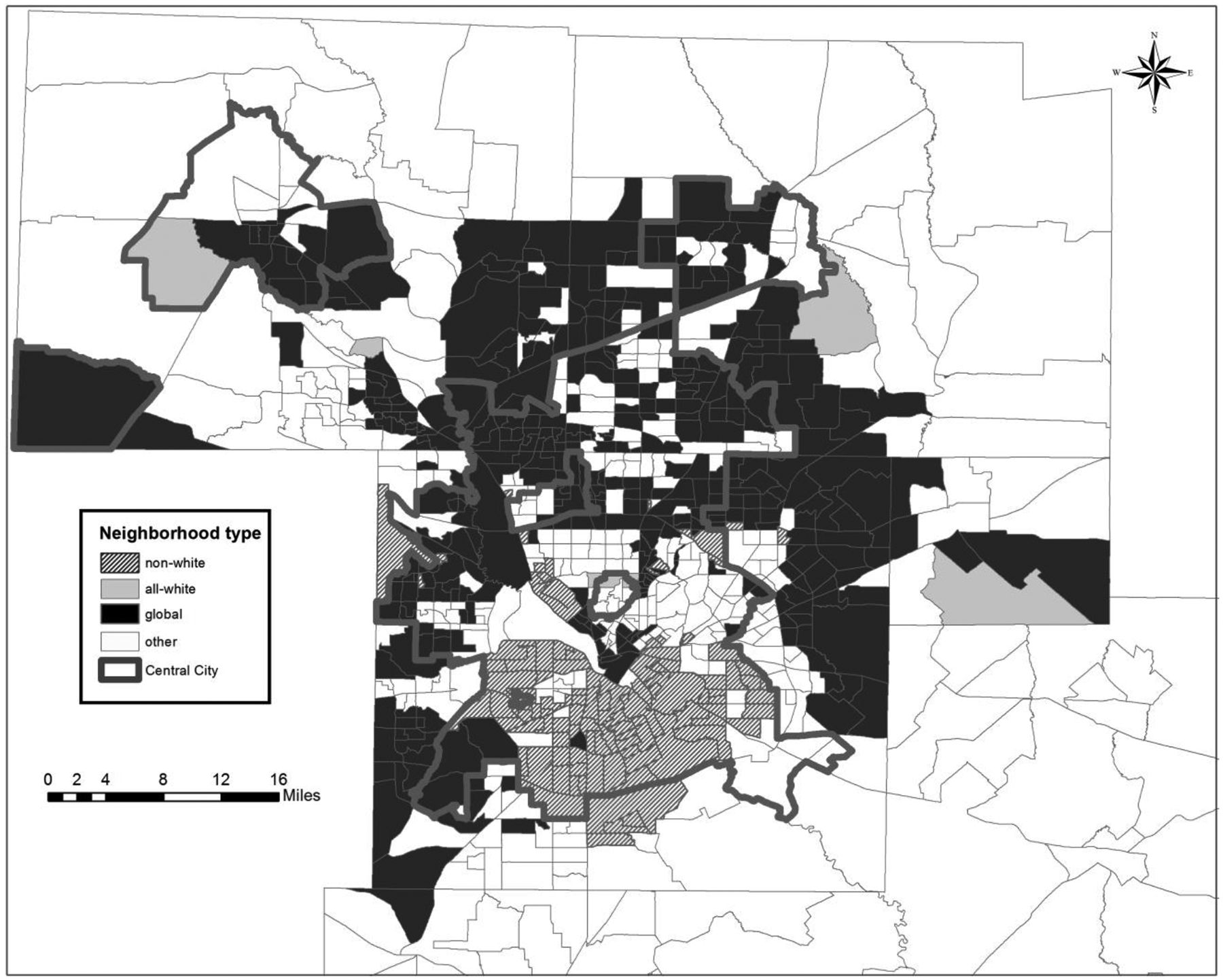
Legal and policy analysts focus on the variety of efforts to reduce racial and ethnic segregation and their impact. This study shows that independent population shifts, responding to the increasing diversity of the metropolitan population, are having large impacts that need to be taken into account. Neighborhoods where blacks and whites live in integrated settings alongside Hispanics and Asians represent a major and growing phenomenon in the United States. These "global neighborhoods" serve as an important counterweight to persisting segregation and white flight from diverse neighborhoods. In all parts of the country we show that there have substantial reductions between 1980 and 2010 in the numbers of all-white neighborhoods and corresponding growth in diverse neighborhood types.
Figures


References
-
- Bader Michael D. M. and Warkentien Siri. 2016. “The Fragmented Evolution of Racial Integration since the Civil Rights Movement.” Sociological Science 3: 135–166.
-
- Belkin Lisa. 1999. Show Me a Hero. Boston: Little, Brown.
-
- Brown Lawrence A., and Sharma Madhuri. 2010. “Metropolitan Context and Racial/Ethnic Intermixing in Residential Space: US Metropolitan Statistical Areas, 1990–2000.” Urban Geography 31.1: 1–28.
-
- Denton Nancy A. and Massey Douglas S.. 1988. “Residential Segregation of Blacks, Hispanics, and Asians by Socioeconomic Status and Generation.” Social Science Quarterly 69:797–817.
-
- Duncan OD and Duncan Beverly. 1957. The Negro Population of Chicago. Chicago: University of Chicago Press.
Grants and funding
LinkOut - more resources
Full Text Sources