Delayed Granulomas as a Complication Secondary to Lip Augmentation with Dermal Fillers: A Systematic Review
- PMID: 35252562
- PMCID: PMC8894086
- DOI: 10.1055/s-0042-1743524
Delayed Granulomas as a Complication Secondary to Lip Augmentation with Dermal Fillers: A Systematic Review
Abstract
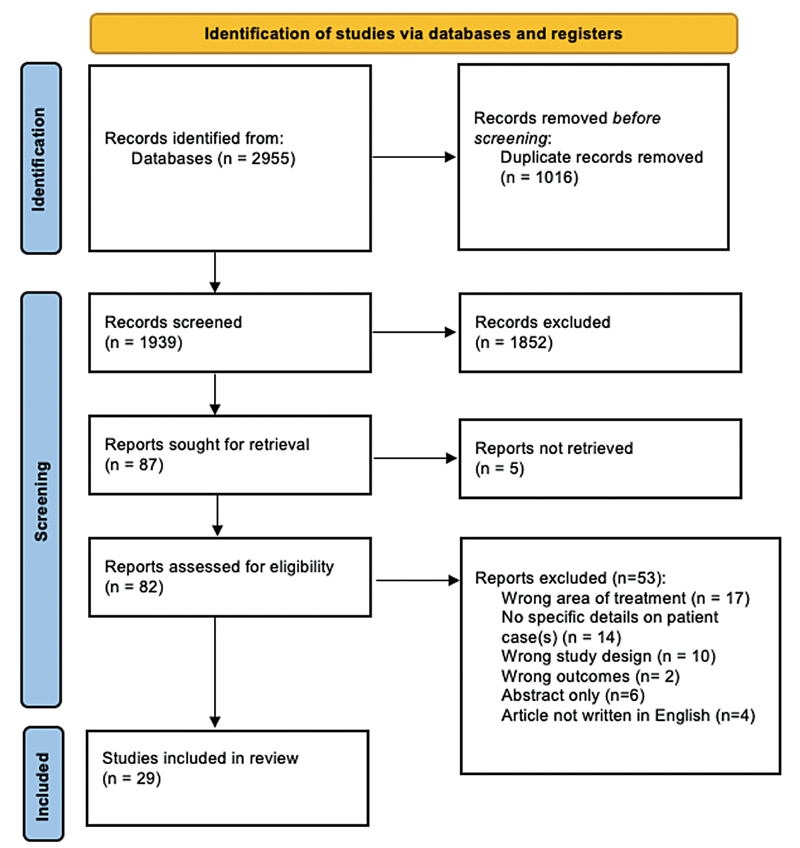
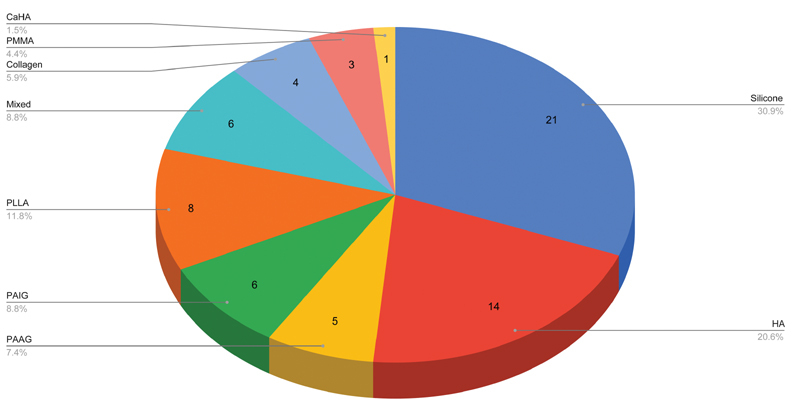
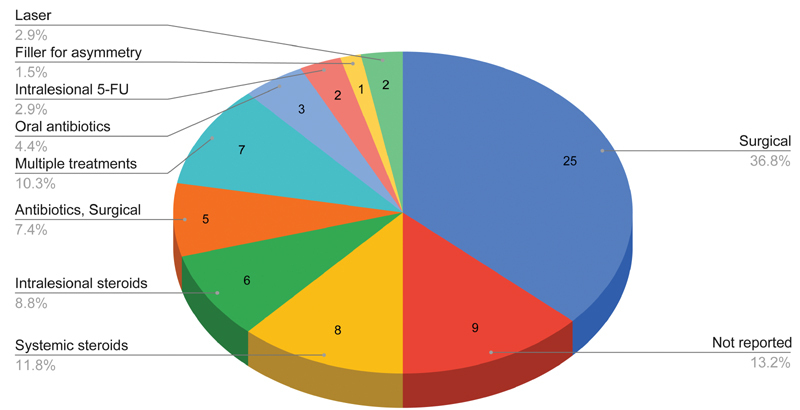
Introduction Lip augmentation with dermal filler is rising in popularity. There are generally minimal side effects that are mild and transient. However, long-term complications may occur and include lumps, bumps, nodules, or granulomas. To better understand this uncommon but challenging outcome, we aim to perform a thorough systematic review of the published literature related to nodule or granuloma formation after cosmetic soft tissue augmentation of the lips. Methods A search of published literature was conducted in accordance with PRISMA (Preferred Reporting Items for Systematic Reviews and Meta-Analyses) guidelines in April 2021 and included PubMed, ScienceDirect, Embase, Google Scholar, and Cochrane databases. The Medical Subject Headings (MeSH) terms used included the following terms: "lip filler," "hyaluronic acid," "lip injection," "lip augmentation," "silicone," "poly-L-lactic acid," "calcium hydroxyapatite," "polymethylmethacrylate," "complications," "reaction," "granuloma," and "nodule." All studies were reviewed by two independent reviewers. Any discrepancies were resolved by a third reviewer. Results The initial search for filler-related nodules or granulomas yielded 2,954 articles and 28 were included in the final analysis containing 66 individual cases of lip nodules. All but one patient was female. The mean age was 50 years. Nodules presented on average 35.2 months or 2.9 years after initial treatment. Thirty-seven nodules underwent histological analysis, the majority of which identified the presence of a foreign-body granuloma. Silicone was the most reported filler used followed by hyaluronic acid. Most cases resolved following multiple treatments including oral antibiotics or steroids followed by surgical excision. Conclusion Understanding the sequelae of lip augmentation with filler products allows clinicians to provide safe and effective treatment. Nodules that present months to years following dermal treatment may represent a foreign-body granuloma. A combination of oral antibiotics, intralesional or oral steroids, and surgical excision successfully treated the majority of cases in our study.
Keywords: fillers; granulomas; lip augmentation; nodules; systematic review.
The Author(s). This is an open access article published by Thieme under the terms of the Creative Commons Attribution License, permitting unrestricted use, distribution, and reproduction so long as the original work is properly cited. ( https://creativecommons.org/licenses/by/4.0/ ).
Conflict of interest statement
Conflict of Interest None.
Figures
References
-
- Hotta T A. Lip enhancement: physical assessment, injection techniques, and potential adverse events. Plast Surg Nurs. 2018;38(01):7–16. - PubMed
-
- Gupta A, Miller P J. Management of lip complications. Facial Plast Surg Clin North Am. 2019;27(04):565–570. - PubMed
-
- Sadeghpour M, Quatrano N A, Bonati L M, Arndt K A, Dover J S, Kaminer M S. Delayed-onset nodules to differentially crosslinked hyaluronic acids: comparative incidence and risk assessment. Dermatol Surg. 2019;45(08):1085–1094. - PubMed
LinkOut - more resources
Full Text Sources
Miscellaneous