


Motion characteristics of subclinical tremors in Parkinson's disease and normal subjects
- PMID: 35256707
- PMCID: PMC8901710
- DOI: 10.1038/s41598-022-07957-z
Motion characteristics of subclinical tremors in Parkinson's disease and normal subjects
Abstract
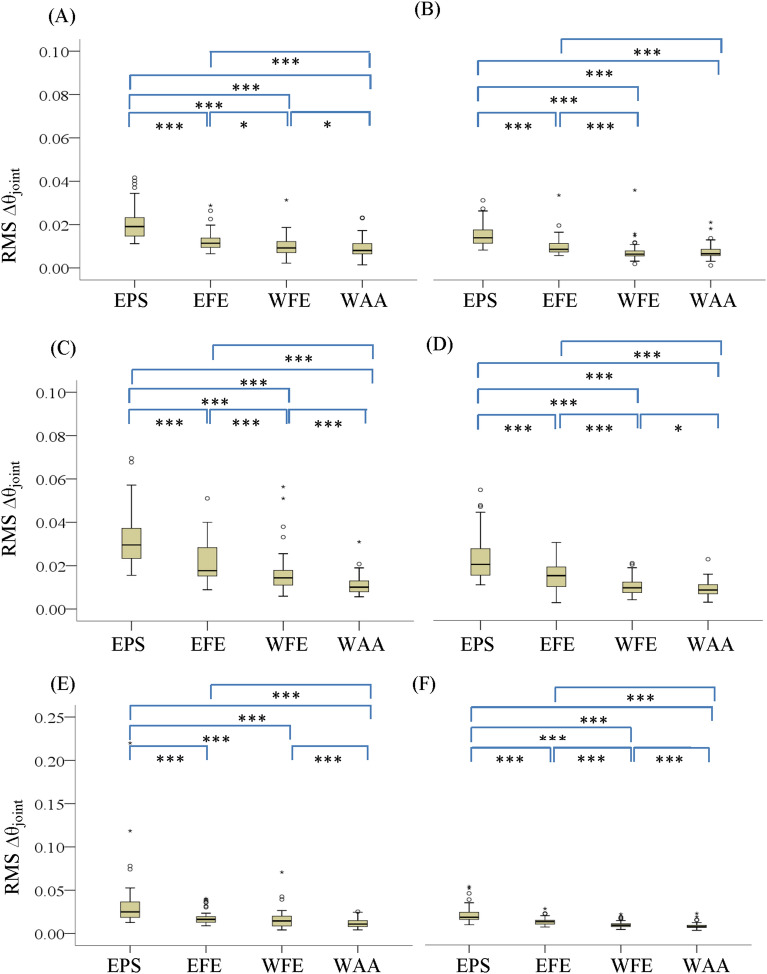
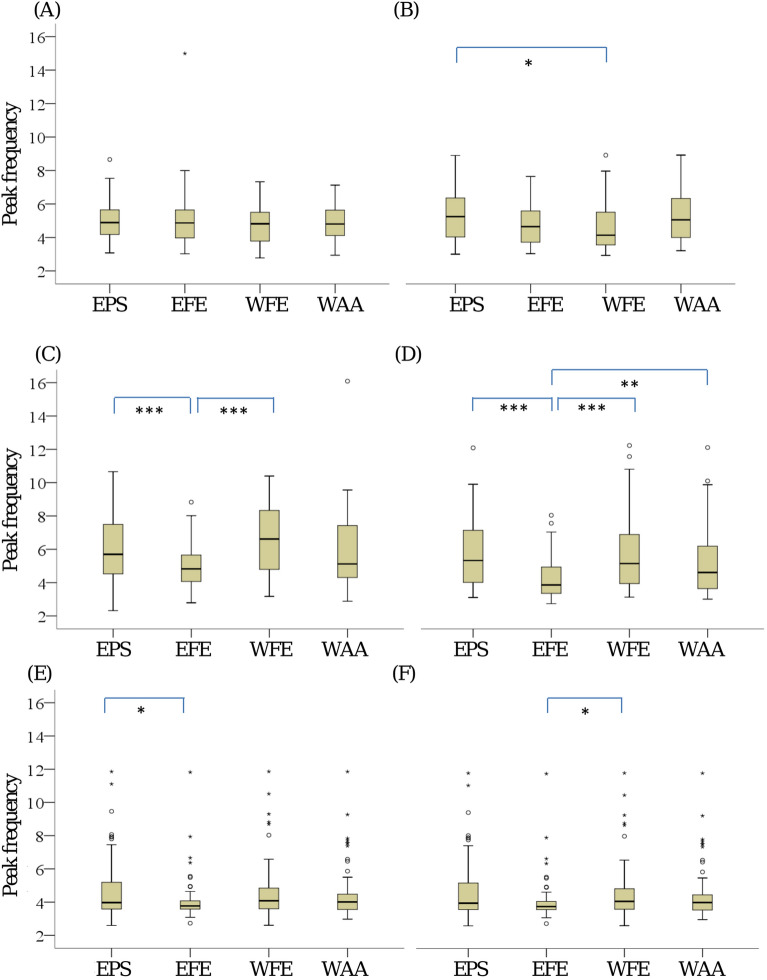
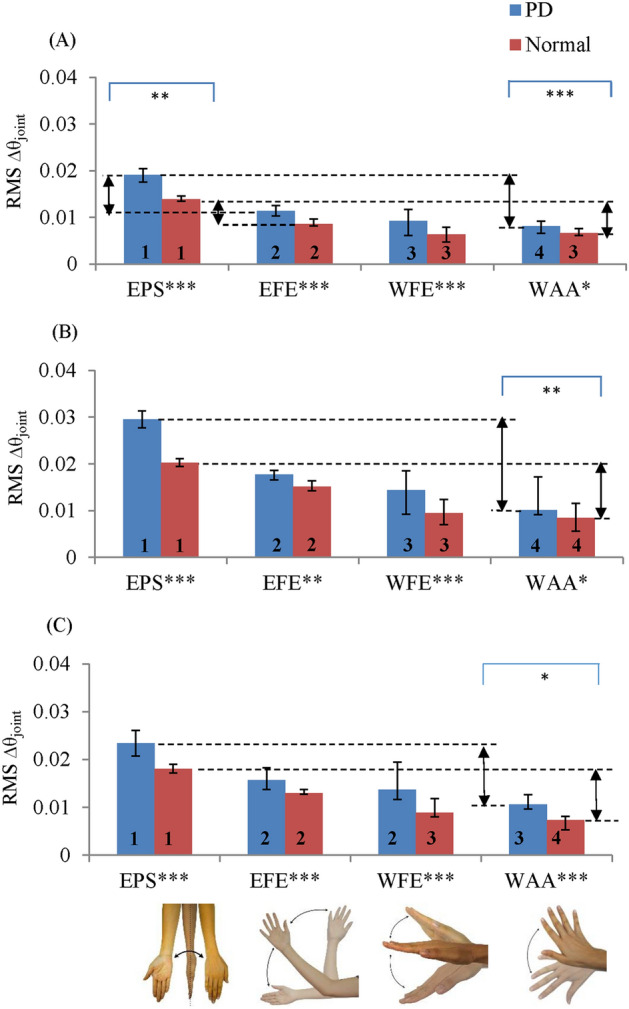
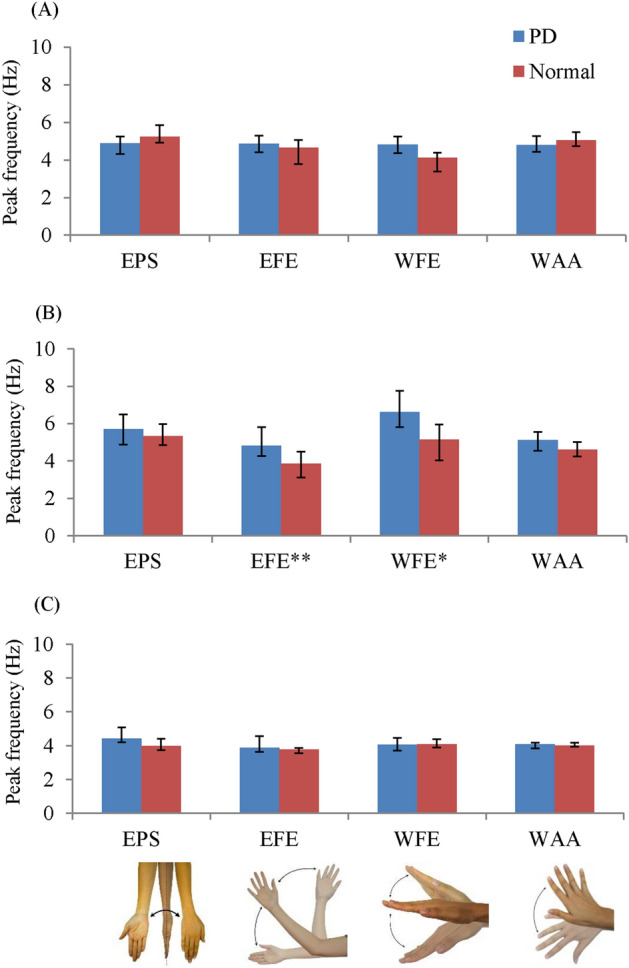
The characteristics of the Parkinson's disease tremor reported previously are not applicable to the full spectrum of severity. The characteristics of high- and low-amplitude tremors differ in signal regularity and frequency dispersion, a phenomenon that indicates characterisation should be studied separately based on the severity. The subclinical tremor of Parkinson's disease is close to physiological tremor in terms of amplitude and frequency, and their distinctive features are still undetermined. We aimed to determine joint motion characteristics that are unique to subclinical Parkinson's disease tremors. The tremors were characterised by four hand-arm motions based on displacement and peak frequencies. The rest and postural tremors of 63 patients with Parkinson's disease and 62 normal subjects were measured with inertial sensors. The baseline was established from normal tremors, and the joint motions were compared within and between the two subject groups. Displacement analysis showed that pronation-supination and wrist abduction-adduction are the most and least predominant tremor motions for both Parkinson's disease and normal tremors, respectively. However, the subclinical Parkinson's disease tremor has significant greater amplitude and peak frequency in specific predominant motions compared with the normal tremor. The flexion-extension of normal postural tremor increases in frequency from the proximal to distal segment, a phenomenon that is explainable by mechanical oscillation. This characteristic is also observed in patients with Parkinson's disease but with amplification in wrist and elbow joints. The contributed distinctive characteristics of subclinical tremors provide clues on the physiological manifestation that is a result of the neuromuscular mechanism of Parkinson's disease.
© 2022. The Author(s).
Conflict of interest statement
The authors declare no competing interests.
Figures
References
Publication types
MeSH terms
LinkOut - more resources
Full Text Sources
Medical
