


Impact behaviour of 3D printed cellular structures for mouthguard applications
- PMID: 35256721
- PMCID: PMC8901696
- DOI: 10.1038/s41598-022-08018-1
Impact behaviour of 3D printed cellular structures for mouthguard applications
Abstract
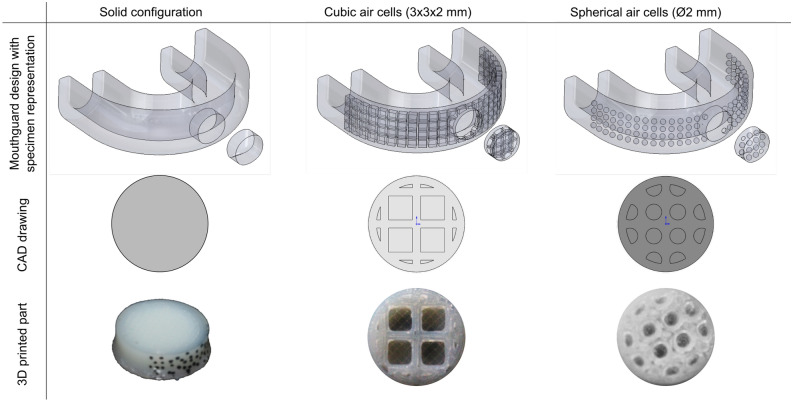
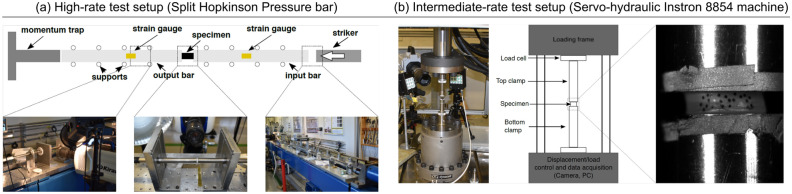
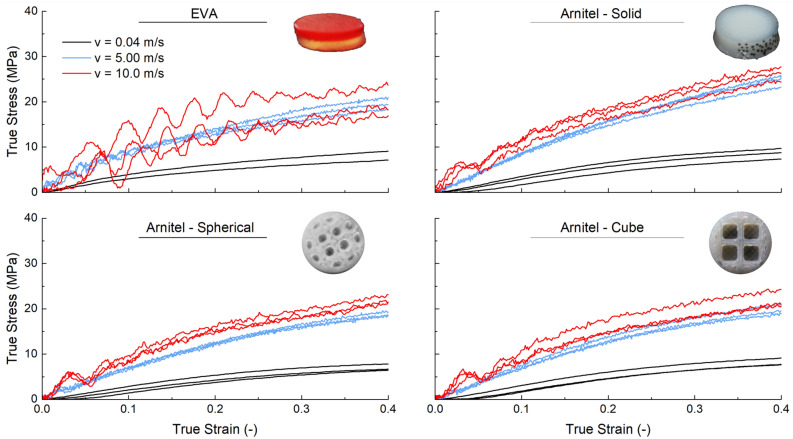
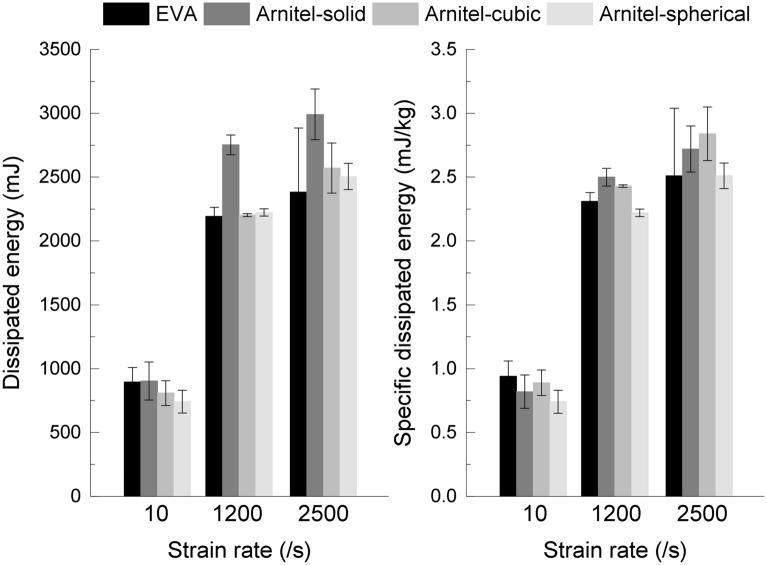
Ethylene-Vinyl Acetate (EVA) is the most popular material for manufacturing mouthguards. However, EVA mouthguards are problematic, for example inconsistent thicknesses across the mouthguard. Additive manufacturing provides a promising solution to this problem, as it can manufacture mouthguards with a greater precision. This paper compares the energy dissipation of EVA, the current material used for mouthguards, to various designs of a 3D printed material, some of which contain air cells. Impact testing was carried out at three different strain rates. The Split-Hopkinson bar was used for medium and high strain rate tests, and an Instron test rig was used for low strain rate testing. The best performing design dissipated 25% more energy than EVA in the medium and high strain rate testing respectively while the low strain rate testing was inconclusive. This research has shown that additive manufacturing provides a viable method of manufacturing mouthguards. This opens up the opportunity for embedding electronics/sensors into additive manufactured mouthguards.
© 2022. The Author(s).
Conflict of interest statement
The authors declare no competing interests.
Figures
References
-
- Booth AJ, Djavadkhani Y, Marshall NS. A critical review of the treatment options available for obstructive sleep apnoea: An overview of the current literature available on treatment methods for obstructive sleep apnoea and future research directions. Biosci. Horizons. 2014;7:hzu011. doi: 10.1093/biohorizons/hzu011. - DOI
MeSH terms
LinkOut - more resources
Full Text Sources
