


Nephrologists' Perspectives on Gender Disparities in CKD and Dialysis
- PMID: 35257055
- PMCID: PMC8897691
- DOI: 10.1016/j.ekir.2021.10.022
Nephrologists' Perspectives on Gender Disparities in CKD and Dialysis
Abstract
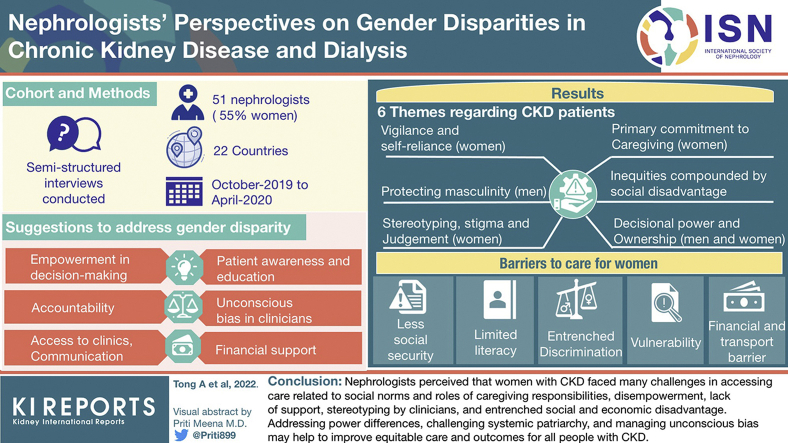
Introduction: Globally, there are more women with chronic kidney disease (CKD), yet they comprise only 40% of patients receiving kidney replacement therapy by dialysis. We aimed to describe the perspectives of nephrologists on gender disparities in access to care and outcomes in CKD and dialysis.
Methods: We conducted semistructured interviews with 51 nephrologists (28, 55% women) from 22 countries from October 2019 to April 2020. Transcripts were analyzed thematically.
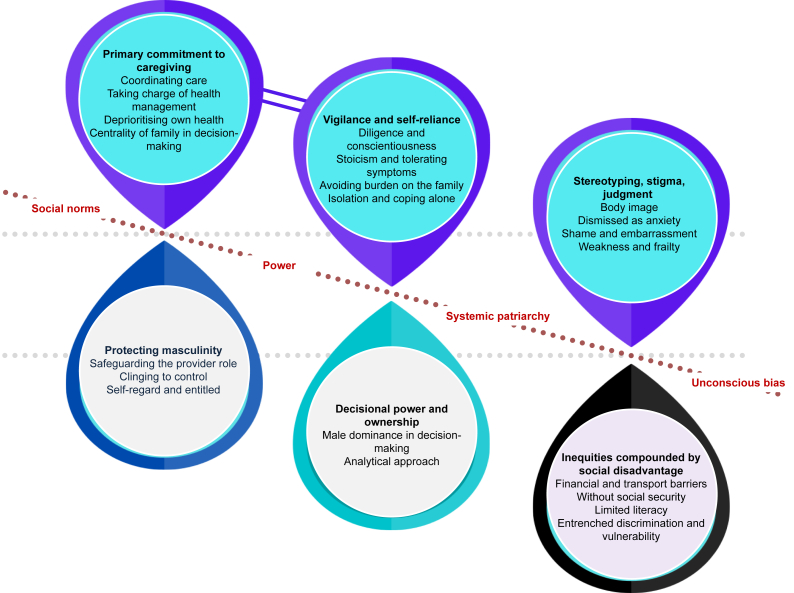
Results: We identified 6 themes. Related to women were primary commitment to caregiving (with subthemes of coordinating care, taking charge of health management, deprioritizing own health, centrality of family in decision-making); vigilance and self-reliance (diligence and conscientiousness, stoicism and tolerating symptoms, avoiding burden on family, isolation and coping alone); and stereotyping, stigma, and judgment (body image, dismissed as anxiety, shame and embarrassment, weakness and frailty). Related to men was protecting masculinity (safeguarding the provider role, clinging to control, self-regard, and entitled). Decisional power and ownership included men's dominance in decision-making and women's analytical approach in treatment decisions. Inequities compounded by social disadvantage (financial and transport barriers, without social security, limited literacy, entrenched discrimination, vulnerability) were barriers to care for women, particularly in socioeconomically disadvantaged communities.
Conclusion: Nephrologists perceived that women with CKD faced many challenges in accessing care related to social norms and roles of caregiving responsibilities, disempowerment, lack of support, stereotyping by clinicians, and entrenched social and economic disadvantage. Addressing power differences, challenging systemic patriarchy, and managing unconscious bias may help to improve equitable care and outcomes for all people with CKD.
Keywords: chronic kidney disease; disparities; gendering; kidney replacement therapy initiation; nephrologists; perspectives.
© 2021 International Society of Nephrology. Published by Elsevier Inc.
Figures
Comment in
-
CKD-Where Have All the Women Gone?Kidney Int Rep. 2021 Dec 6;7(3):375-377. doi: 10.1016/j.ekir.2021.11.032. eCollection 2022 Mar. Kidney Int Rep. 2021. PMID: 35258512 Free PMC article. No abstract available.
References
Grants and funding
LinkOut - more resources
Full Text Sources
Miscellaneous
