


Immune regulation of the ocular surface
- PMID: 35257715
- PMCID: PMC9050918
- DOI: 10.1016/j.exer.2022.109007
Immune regulation of the ocular surface
Abstract
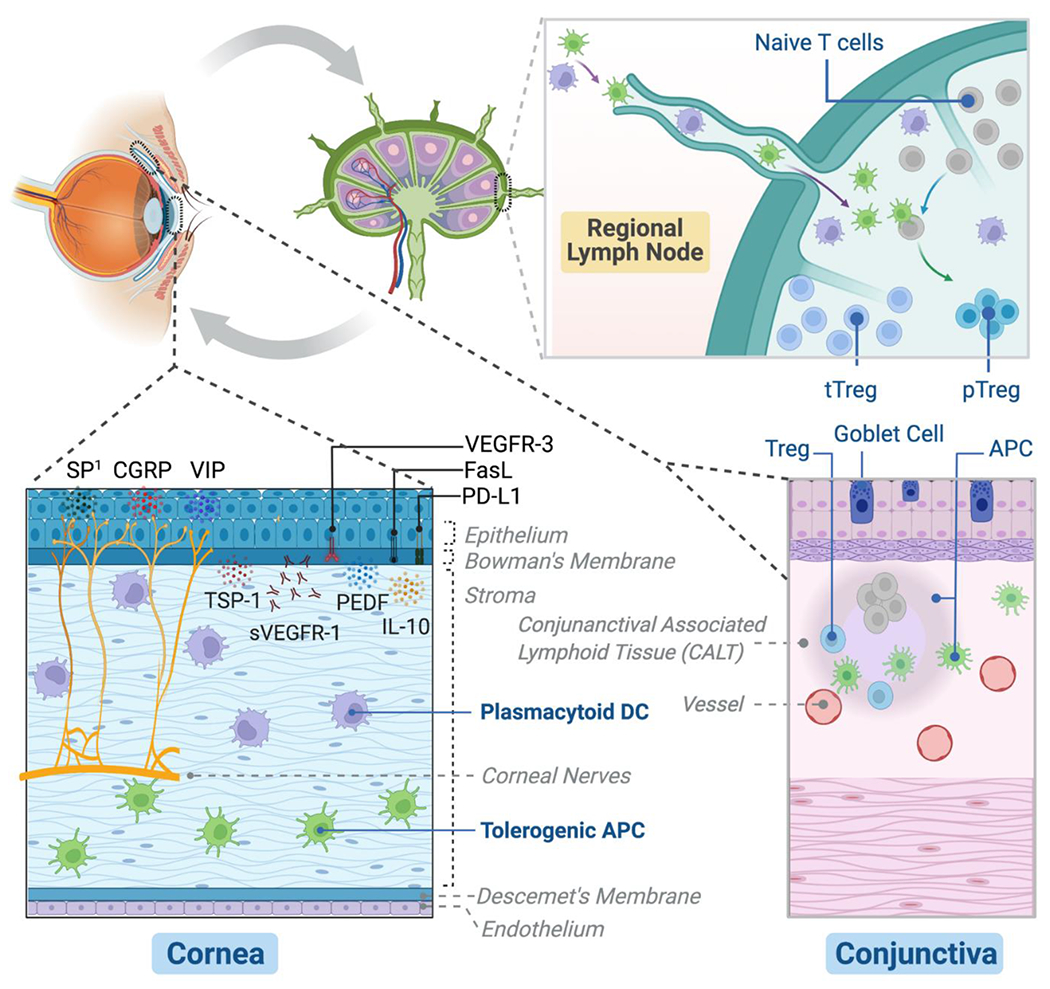
Despite constant exposure to various environmental stimuli, the ocular surface remains intact and uninflamed while maintaining the transparency of the cornea and its visual function. This 'immune privilege' of the ocular surface is not simply a result of the physical barrier function of the mucosal lining but, more importantly, is actively maintained through a variety of immunoregulatory mechanisms that prevent the disruption of immune homeostasis. In this review, we focus on essential molecular and cellular players that promote immune quiescence in steady-state conditions and suppress inflammation in disease-states. Specifically, we examine the interactions between the ocular surface and its local draining lymphoid compartment, by encompassing the corneal epithelium, corneal nerves and cornea-resident myeloid cells, conjunctival goblet cells, and regulatory T cells (Treg) in the context of ocular surface autoimmune inflammation (dry eye disease) and alloimmunity (corneal transplantation). A better understanding of the immunoregulatory mechanisms will facilitate the development of novel, targeted immunomodulatory strategies for a broad range of ocular surface inflammatory disorders.
Keywords: Alloimmunity; Autoimmunity; Immune regulation; Inflammation; Ocular surface.
Copyright © 2022 Elsevier Ltd. All rights reserved.
Conflict of interest statement
Conflict of interest:
R.D. is consultant to Novartis, GSK, and Kala and holds equity in Claris Biotherapeutics, Aramis Biosciences, GelMEDIX, and Kera Therapeutics. Massachusetts Eye and Ear owns intellectual property related to blockade of substance P in ocular immunoinflammatory diseases.
Figures
References
Publication types
MeSH terms
Grants and funding
LinkOut - more resources
Full Text Sources
