


Characteristics and impact of Long Covid: Findings from an online survey
- PMID: 35259179
- PMCID: PMC8903286
- DOI: 10.1371/journal.pone.0264331
Characteristics and impact of Long Covid: Findings from an online survey
Abstract
Background: Long Covid is a public health concern that needs defining, quantifying, and describing. We aimed to explore the initial and ongoing symptoms of Long Covid following SARS-CoV-2 infection and describe its impact on daily life.
Methods: We collected self-reported data through an online survey using convenience non-probability sampling. The survey enrolled adults who reported lab-confirmed (PCR or antibody) or suspected COVID-19 who were not hospitalised in the first two weeks of illness. This analysis was restricted to those with self-reported Long Covid. Univariate comparisons between those with and without confirmed COVID-19 infection were carried out and agglomerative hierarchical clustering was used to identify specific symptom clusters, and their demographic and functional correlates.
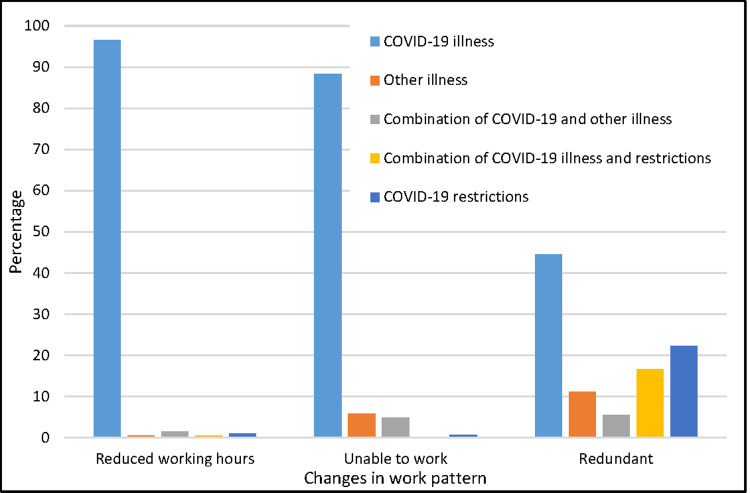
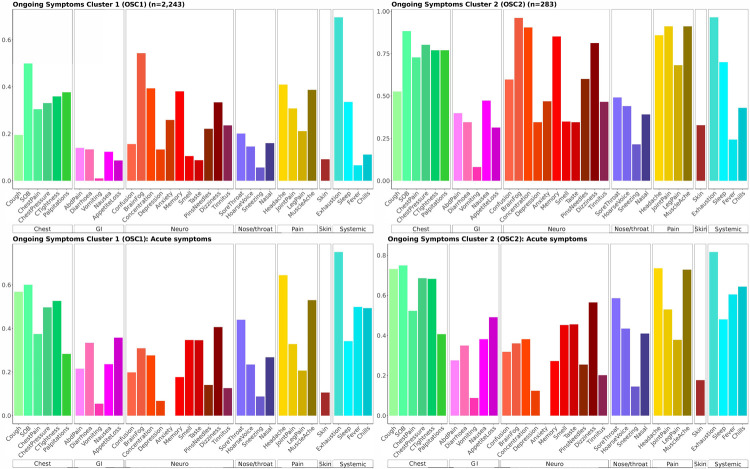
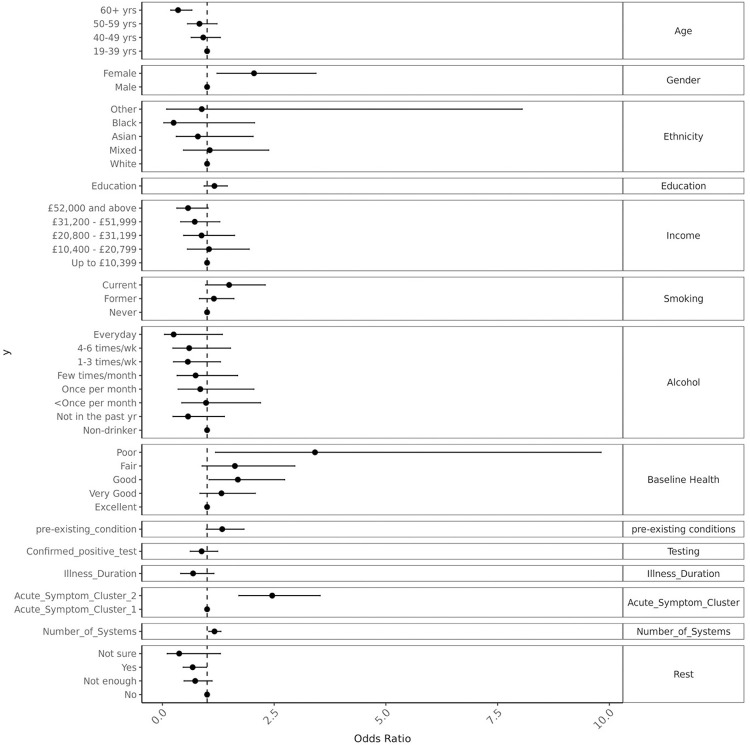
Results: We analysed data from 2550 participants with a median duration of illness of 7.6 months (interquartile range (IQR) 7.1-7.9). 26.5% reported lab-confirmation of infection. The mean age was 46.5 years (standard deviation 11 years) with 82.8% females and 79.9% of participants based in the UK. 89.5% described their health as good, very good or excellent before COVID-19. The most common initial symptoms that persisted were exhaustion, chest pressure/tightness, shortness of breath and headache. Cognitive dysfunction and palpitations became more prevalent later in the illness. Most participants described fluctuating (57.7%) or relapsing symptoms (17.6%). Physical activity, stress, and sleep disturbance commonly triggered symptoms. A third (32%) reported they were unable to live alone without any assistance at six weeks from start of illness. 16.9% reported being unable to work solely due to COVID-19 illness. 37.0% reported loss of income due to illness, and 64.4% said they were unable to perform usual activities/duties. Acute systems clustered broadly into two groups: a majority cluster (n = 2235, 88%) with cardiopulmonary predominant symptoms, and a minority cluster (n = 305, 12%) with multisystem symptoms. Similarly, ongoing symptoms broadly clustered in two groups; a majority cluster (n = 2243, 88.8%) exhibiting mainly cardiopulmonary, cognitive symptoms and exhaustion, and a minority cluster (n = 283, 11.2%) exhibiting more multisystem symptoms. Belonging to the more severe multisystem cluster was associated with more severe functional impact, lower income, younger age, being female, worse baseline health, and inadequate rest in the first two weeks of the illness, with no major differences in the cluster patterns when restricting analysis to the lab-confirmed subgroup.
Conclusion: This is an exploratory survey of Long Covid characteristics. Whilst this is a non-representative population sample, it highlights the heterogeneity of persistent symptoms, and the significant functional impact of prolonged illness following confirmed or suspected SARS-CoV-2 infection. To study prevalence, predictors and prognosis, research is needed in a representative population sample using standardised case definitions.
Conflict of interest statement
The authors have no potentially competing interests to declare.
Figures

References
-
- Perego E, Callard F, Stras L, Melville-Jóhannesson B, Pope R, Alwan NA. Why the Patient-Made Term “Long Covid” is needed. Wellcome Open Res. 2020;5:224. doi: 10.12688/wellcomeopenres.16307.1 - DOI
MeSH terms
Grants and funding
LinkOut - more resources
Full Text Sources
Medical
Miscellaneous
