Review
. 2022 Apr:178:106162.
doi: 10.1016/j.phrs.2022.106162. Epub 2022 Mar 5.

Cell cycle checkpoints and beyond: Exploiting the ATR/CHK1/WEE1 pathway for the treatment of PARP inhibitor-resistant cancer

Affiliations
Review

Cell cycle checkpoints and beyond: Exploiting the ATR/CHK1/WEE1 pathway for the treatment of PARP inhibitor-resistant cancer

Nitasha Gupta et al. Pharmacol Res. 2022 Apr.

Abstract

Poly (ADP-ribose) polymerase (PARP) inhibitors (PARPis) have become a mainstay of therapy in ovarian cancer and other malignancies, including BRCA-mutant breast, prostate, and pancreatic cancers. However, a growing number of patients develop resistance to PARPis, highlighting the need to further understand the mechanisms of PARPi resistance and develop effective treatment strategies. Targeting cell cycle checkpoint protein kinases, e.g., ATR, CHK1, and WEE1, which are upregulated in response to replication stress, represents one such therapeutic approach for PARPi-resistant cancers. Mechanistically, activated cell cycle checkpoints promote cell cycle arrest, replication fork stabilization, and DNA repair, demonstrating the interplay of DNA repair proteins with replication stress in the development of PARPi resistance. Inhibitors of these cell cycle checkpoints are under investigation in PARPi-resistant ovarian and other cancers. In this review, we discuss the cell cycle checkpoints and their roles beyond mere cell cycle regulation as part of the arsenal to overcome PARPi-resistant cancers. We also address the current status and recent advancements as well as limitations of cell cycle checkpoint inhibitors in clinical trials.

Keywords: ATR/CHK1/WEE1 pathway; Cell cycle checkpoint; DNA damage response; Ovarian cancer; PARP inhibitor resistance; Replication stress.


Conflict of interest statement

Conflicts of Interest:

The authors declare no potential conflicts of interest.

Figures
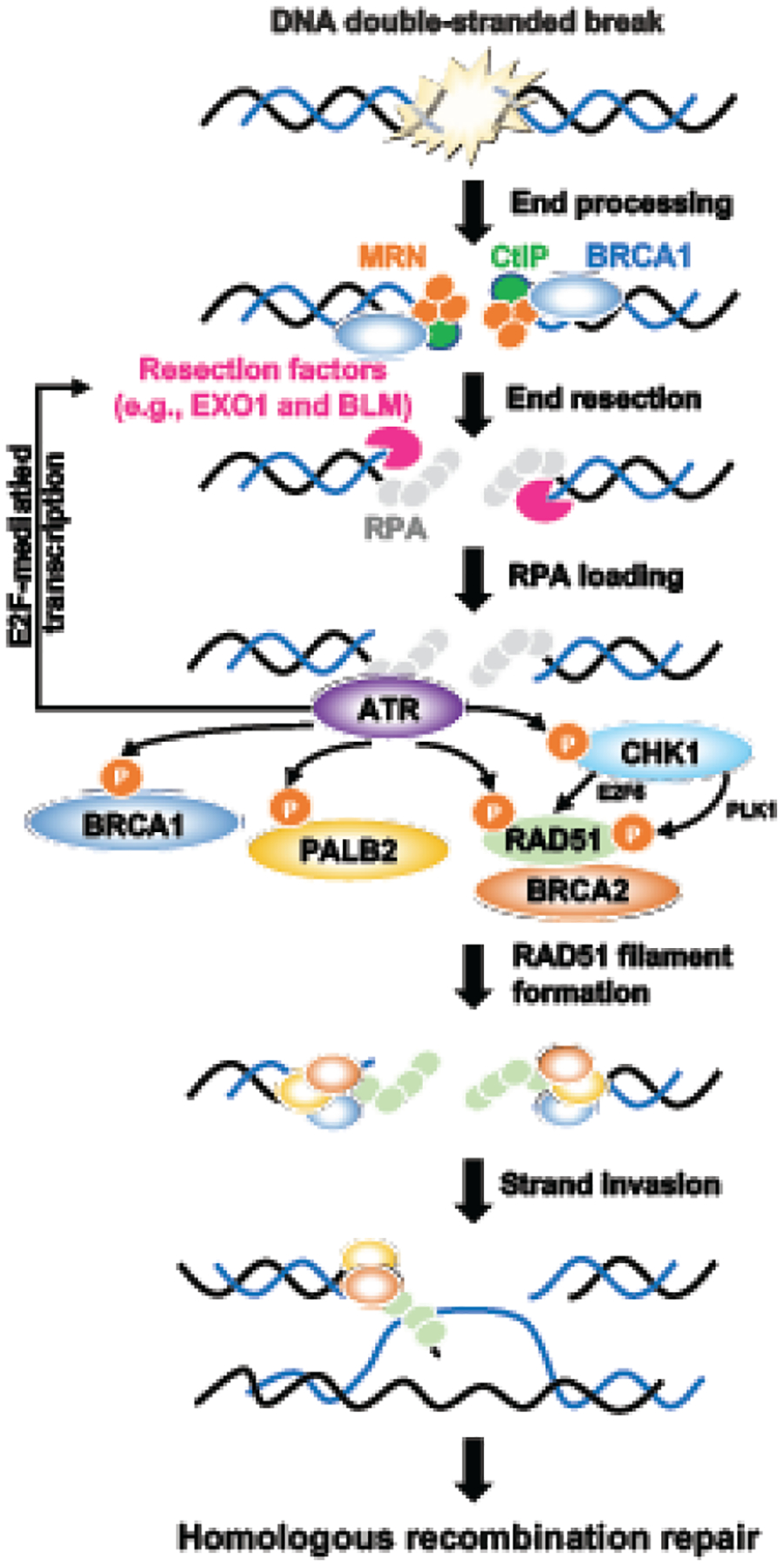
Figure 1.
Figure 1.. Role of ATR/CHK1 pathway in homologous recombination repair.
During homologous recombination repair, the double-stranded break is recognized by the MRE11-RAD50-NBS1 (MRN) complex, CtIP, and BRCA1, which resects DNA with EXO1 and BLM helicase to create 3’-overhang single-stranded DNAs. The single-stranded DNAs will be protected by RPA, which further activates the ATR/CHK1 pathway. ATR promotes HR repair by phosphorylating key HR proteins, including BRCA1, PALB2, and RAD51. ATR also maintains the pool of resection factors by promoting E2F-mediated transcription. CHK1 mainly assists HR repair by phosphorylating RAD51 via PLK1 or promoting E2F6-mediated RAD51 transcription. The BRCA1-PALB2-BRCA2 complex then mediates the replacement of RPA by RAD51. RAD51 filaments further invade the complementary DNA template, leading to branch migration, resolution, and faithful DNA repair.
Figure 2.
Figure 2.. Role of the ATR/CHK1/WEE1 pathway in replication fork protection.
In response to replication stress, the replication fork stalls at the site of damage. Stalled replication forks are unstable structures that can cause the fork to collapse and generate DNA double-stranded breaks. After fork stalling, single-stranded DNAs are coated by RPA, which activates ATR. ATR further phosphorylates the replication fork remodeler SMARCAL1 and RAD51 for replication fork reversal. The reversed forks are protected by several fork protectors from deleterious nuclease-mediated fork degradation that can destabilize stalled forks. During DNA replication, the ATR/CHK1/WEE1 pathway protects stalled replication forks by phosphorylating RAD51 and other fork protectors (e.g., BRCA2 and FANCD2) as well as inhibiting nucleases (e.g., EXO1, MUS81, and MRE11) that degrade stalled replication forks.
Figure 3.
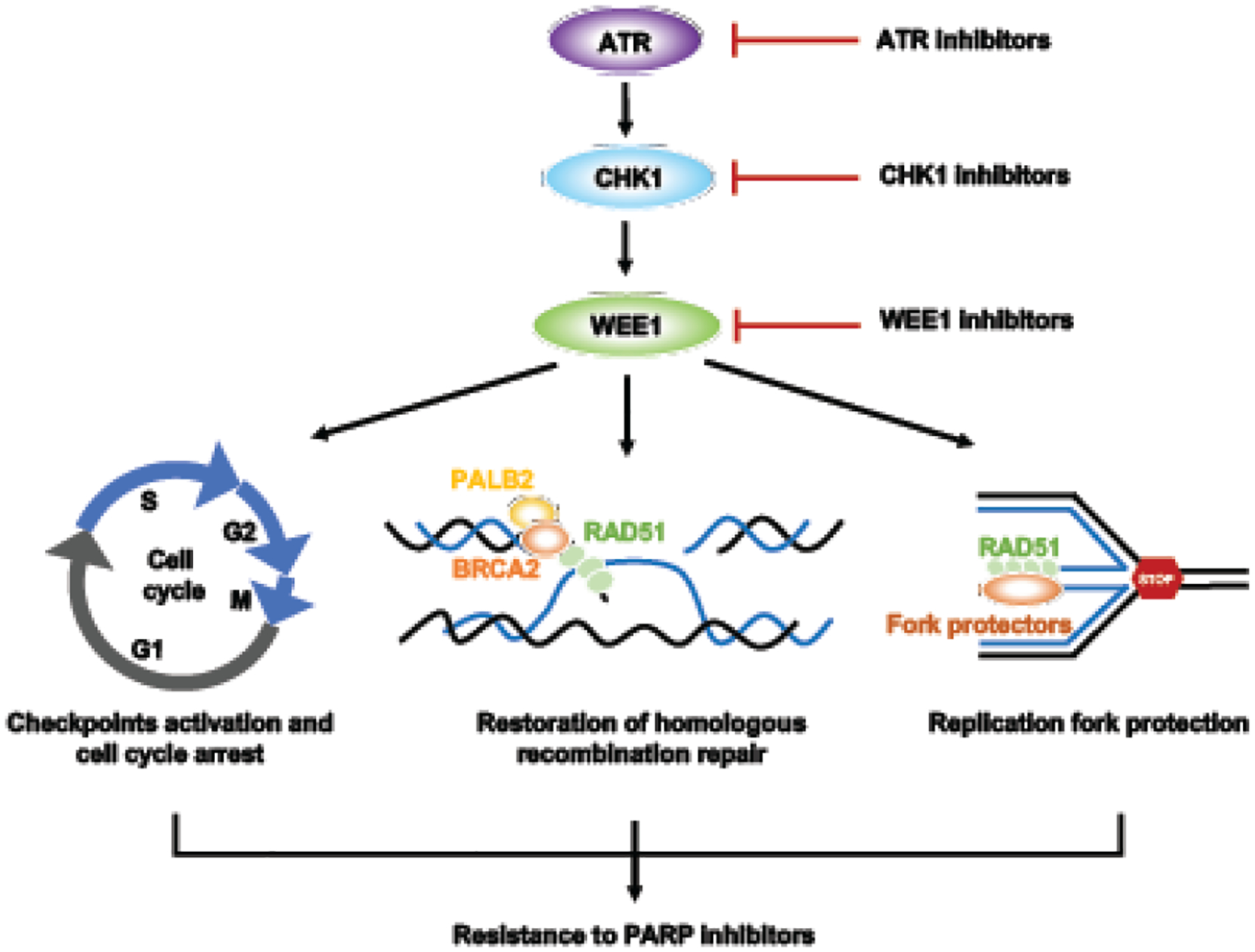
Figure 3.. Targeting the ATR/CHK1/WEE1 pathway overcomes PARP inhibitor resistance.
Monotherapy or combination therapies with ATR/CHK1/WEE1 inhibitors overcome PARP inhibitor resistance by disrupting both HR and replication fork protection, leading to accumulation of DNA damage throughout the cell cycle and increased cell death.
Figure 4.
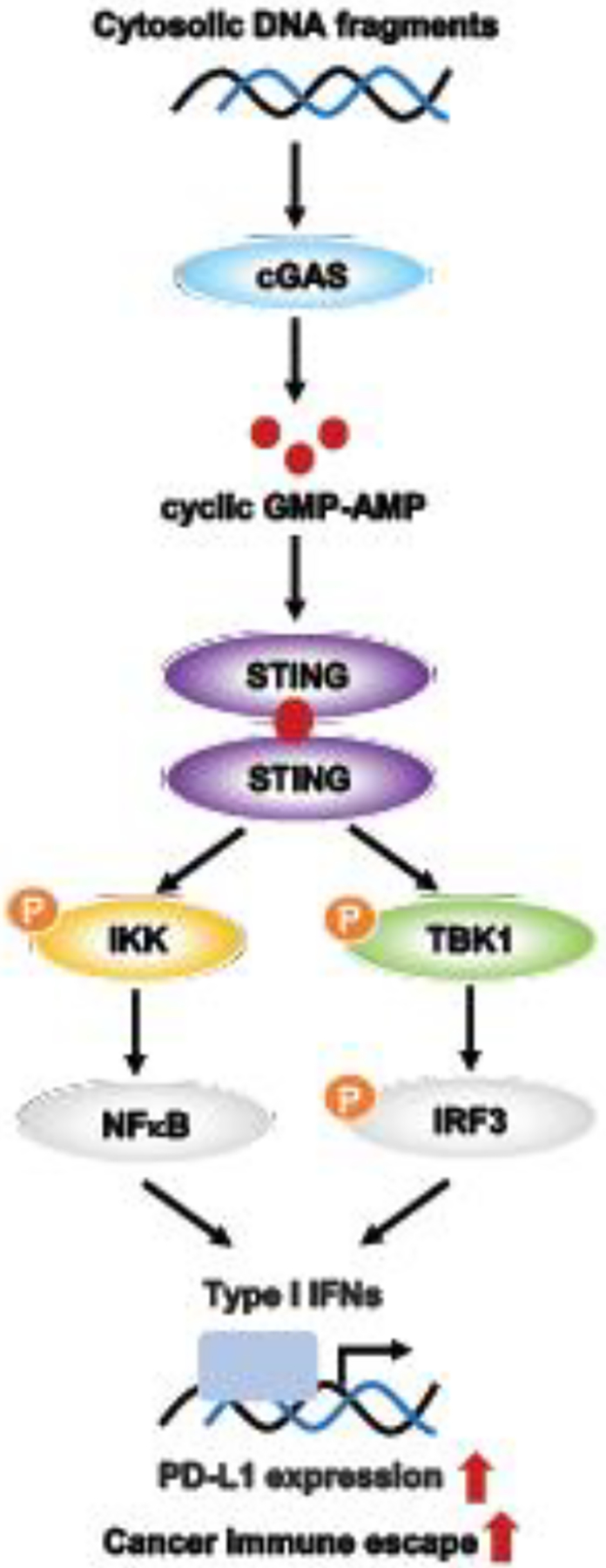
Figure 4.. DNA sensing and innate immune response in cancer cells.
Radiotherapy or chemotherapy induces DNA damage and the formation of cytosolic DNA fragments. Cytosolic DNA fragment–induced cGAS activation leads to the endogenous generation of cyclic GMP-AMP, which binds to STING. STING then activates the TANK-binding kinase 1 (TBK1)/interferon regulatory factor 3 (IRF3) axis and NF-κB pathway, resulting in the transcription of type I interferons (IFNs) and other cytokines. These cytokines upregulate PD-L1 expression, which binds to PD-1 on the surface of activated T-cell or B-cells, contributing to cancer immune escape.

References

    1. Mateo J, Lord CJ, Serra V, Tutt A, Balmaña J, Castroviejo-Bermejo M, Cruz C, Oaknin A, Kaye SB, de Bono JS, A decade of clinical development of PARP inhibitors in perspective, Ann. Oncol 30 (2019) 1437–1447. - PMC - PubMed
    1. Murai J, Huang SY, Das BB, Renaud A, Zhang Y, Doroshow JH, Ji J, Takeda S, Pommier Y, Trapping of PARP1 and PARP2 by Clinical PARP Inhibitors, Cancer Res. 72 (2012) 5588–5599. - PMC - PubMed
    1. Moore K, Colombo N, Scambia G, Kim BG, Oaknin A, Friedlander M, Lisyanskaya A, Floquet A, Leary A, Sonke GS, Gourley C, Banerjee S, Oza A, Gonzalez-Martin A, Aghajanian C, Bradley W, Mathews C, Liu J, Lowe ES, Bloomfield R, DiSilvestro P, Maintenance Olaparib in Patients with Newly Diagnosed Advanced Ovarian Cancer, N. Engl. J. Med 379 (2018) 2495–2505. - PubMed
    1. Tew WP, Lacchetti C, Ellis A, Maxian K, Banerjee S, Bookman M, Jones MB, Lee JM, Lheureux S, Liu JF, Moore KN, Muller C, Rodriguez P, Walsh C, Westin SN, Kohn EC, PARP Inhibitors in the Management of Ovarian Cancer: ASCO Guideline, J. Clin. Oncol 38 (2020) 3468–3493. - PMC - PubMed
    1. Litton JK, Rugo HS, Ettl J, Hurvitz SA, Goncalves A, Lee KH, Fehrenbacher L, Yerushalmi R, Mina LA, Martin M, Roche H, Im YH, Quek RGW, Markova D, Tudor IC, Hannah AL, Eiermann W, Blum JL, Talazoparib in Patients with Advanced Breast Cancer and a Germline BRCA Mutation, N. Engl. J. Med 379 (2018) 753–763. - PMC - PubMed

MeSH terms