


The influence of Mycoplasma species on human and canine semen quality: a review
- PMID: 35259783
- PMCID: PMC9933968
- DOI: 10.4103/aja2021124
The influence of Mycoplasma species on human and canine semen quality: a review
Abstract
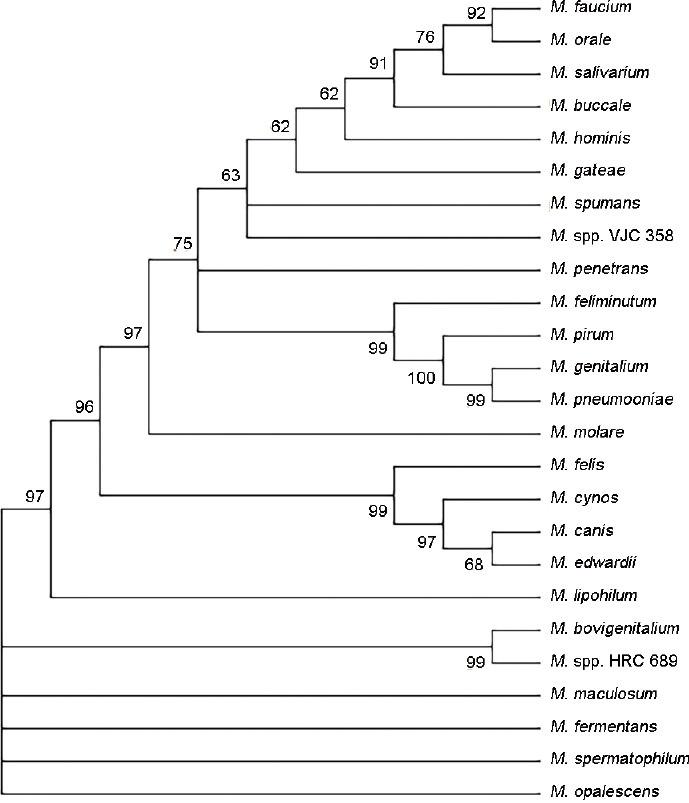
Mycoplasma species (spp.) are bacteria that are difficult to detect. Currently, the polymerase chain reaction (PCR) is considered the most effective diagnostic tool to detect these microorganisms in both human and veterinary medicine. There are 13 known species of human Mycoplasma and 15 species of canine Mycoplasma. Owing to the difficulties in identifying the individual species of Mycoplasma, there is a lack of information regarding which species are saprophytic and which are pathogenic. The prevalence of the individual species is also unknown. In addition, in both humans and dogs, the results of some studies on the impact of Mycoplasma are conflicting. The presence of Mycoplasma spp. on the epithelium of reproductive tract is often associated with infertility, although they are also detected in healthy individuals. The occurrence of Mycoplasma spp. is more common in dogs (even 89%) than in humans (1.3%-4%). This is probably because the pH of a dog's genital is more conducive to the growth of Mycoplasma spp. than that of humans. Phylogenetically, human and canine Mycoplasma are related, and majority of them belong to the same taxonomic group. Furthermore, 40% of canine Mycoplasma spp. are placed in common clusters with those of human. This suggests that species from the same cluster can play a similar role in the canine and human reproductive tracts. This review summarizes the current state of knowledge about the impact of Mycoplasma on canine and human male fertility as well as the prospects of further development in this field.
Keywords: Mycoplasma; sperm morphology; sperm motility.
Conflict of interest statement
None
Figures

References
-
- Günyeli İ, Abike F, Dünder İ, Aslan C, Tapısız ÖL, et al. Chlamydia, Mycoplasma and Ureaplasma infections in infertile couples and effects of these infections on fertility. Arch Gynecol Obstet. 2011;283:379–85. - PubMed
-
- Marcone C. Molecular biology and pathogenicity of phytoplasmas. Ann Appl Biol. 2014;165:199–221.
-
- Chalker VJ, Brownlie J. Taxonomy of the canine Mollicutes by 16S rRNA gene and 16S/23S rRNA intergenic spacer region sequence comparison. Int J Syst Evol Microbiol. 2004;54:537–42. - PubMed
Publication types
MeSH terms
LinkOut - more resources
Full Text Sources
Medical
Miscellaneous
