


Epigallocatechin-3- O-gallate promotes extracellular matrix and inhibits inflammation in IL-1β stimulated chondrocytes by the PTEN/miRNA-29b pathway
- PMID: 35260041
- PMCID: PMC8920401
- DOI: 10.1080/13880209.2022.2039722
Epigallocatechin-3- O-gallate promotes extracellular matrix and inhibits inflammation in IL-1β stimulated chondrocytes by the PTEN/miRNA-29b pathway
Abstract
Context: Epigallocatechin-3-O-gallate (EGCG) exhibits anti-arthritic activity. MiR-29b-3p provokes chondrocyte apoptosis and promotes the initiation and development of osteoarthritis (OA).
Objective: To explore the roles of EGCG and miR-29b-3p in interleukin-1β (IL-1β)-stimulated chondrocytes.
Materials and methods: HE and Safranin O staining were used to detect the pathological changes of cartilage tissue in OA patients and healthy people. OA-like chondrocyte injury was mimicked by 5 ng/mL IL-1β stimulation for 24 h in vitro, and after transfection with miR-29b-3p mimics and pcDNA-PTEN, IL-1β-stimulated chondrocytes were pre-treated with EGCG (20 and 50 μM) for 2 h. Cell viability, colony numbers, apoptosis rate, the levels of IL-6 and matrix metalloproteinase-13 (MMP-13), miR-19b-3p, PTEN and apoptosis-associated proteins in chondrocytes were evaluated.
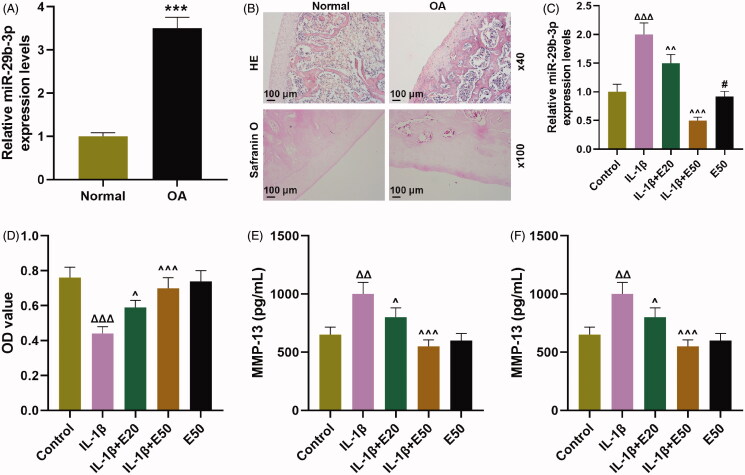
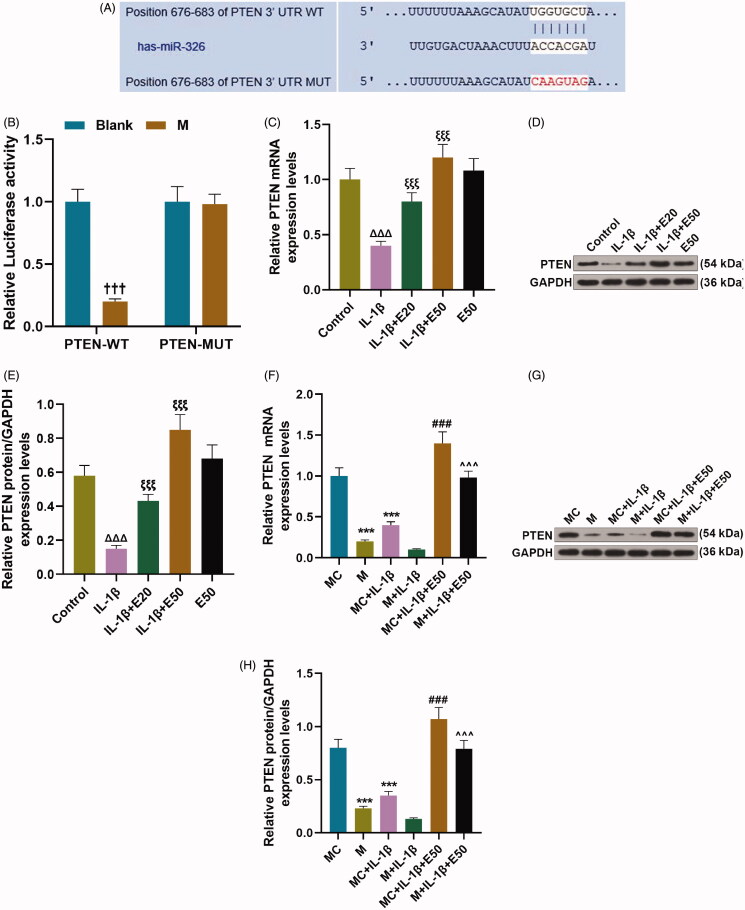
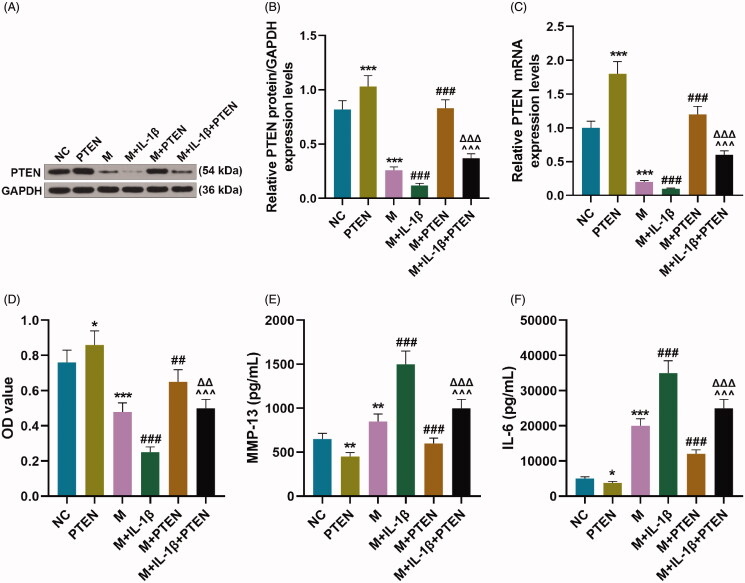
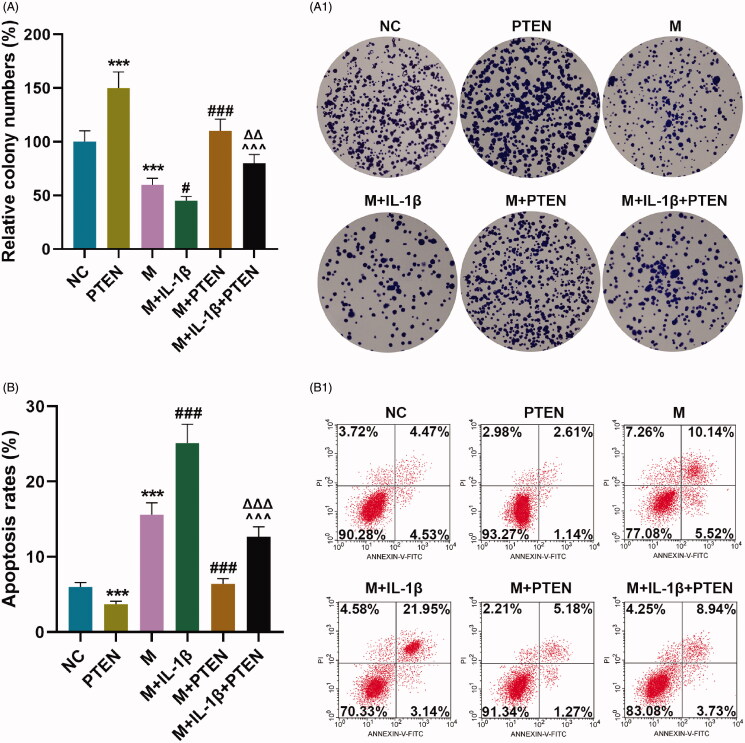
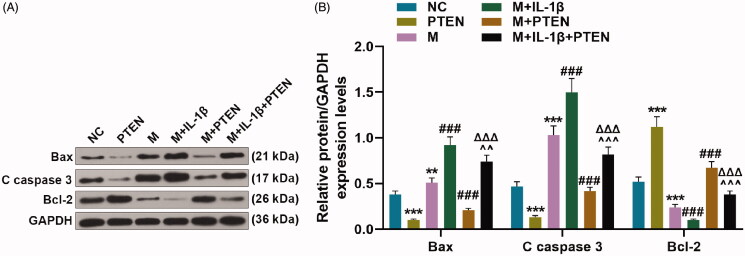
Results: MiR-29b-3p level was upregulated in cartilage tissues of OA patients (3.5-fold change, p < 0.001) and IL-1β stimulated chondrocytes (two fold change, p < 0.001). The matrix staining was weakened and unevenly distributed, and the chondrocytes were arranged disorderly in the tissues of patients with OA. EGCG (20 and 50 μM) increases viability and decreases the levels of miR-29b-3p and MMP-13 and IL-6 in IL-1β stimulated chondrocytes (p < 0.05). MiR-29b-3p mimics reversed the effects above 50 μM EGCG (p < 0.05). Furthermore, PTEN overexpression abrogated the effects of miR-29b-3p mimics on viability, colony numbers, apoptosis rate and the levels of Bcl-2, MMP-13, IL-6, Bax and cleaved caspase 3 in IL-1β-stimulated chondrocytes (p < 0.01).
Discussion and conclusions: EGCG is a potential candidate for the treatment of OA, which also can be explored in a novel therapeutic method for other degenerative or inflammatory disorders.
Keywords: Epigallocatechin-3-O-gallate; miR-29b-3p; osteoarthritis (OA).
Conflict of interest statement
The authors declare no conflicts of interest.
Figures

References
-
- Ahmed S, Rahman A, Hasnain A, Lalonde M, Goldberg VM, Haqqi TM.. 2002. Green tea polyphenol epigallocatechin-3-gallate inhibits the IL-1 beta-induced activity and expression of cyclooxygenase-2 and nitric oxide synthase-2 in human chondrocytes. Free Radic Biol Med. 33(8):1097–1105. - PubMed
-
- Ahmed S, Wang N, Lalonde M, Goldberg VM, Haqqi TM.. 2004. Green tea polyphenol epigallocatechin-3-gallate (EGCG) differentially inhibits interleukin-1 beta-induced expression of matrix metalloproteinase-1 and -13 in human chondrocytes. J Pharmacol Exp Ther. 308(2):767–773. - PubMed
-
- Bobinac D, Spanjol J, Zoricic S, Maric I.. 2003. Changes in articular cartilage and subchondral bone histomorphometry in osteoarthritic knee joints in humans. Bone. 32(3):284–290. - PubMed
MeSH terms
Substances
LinkOut - more resources
Full Text Sources
Medical
Research Materials
