


A neurodegenerative disease landscape of rare mutations in Colombia due to founder effects
- PMID: 35260199
- PMCID: PMC8902761
- DOI: 10.1186/s13073-022-01035-9
A neurodegenerative disease landscape of rare mutations in Colombia due to founder effects
Abstract
Background: The Colombian population, as well as those in other Latin American regions, arose from a recent tri-continental admixture among Native Americans, Spanish invaders, and enslaved Africans, all of whom passed through a population bottleneck due to widespread infectious diseases that left small isolated local settlements. As a result, the current population reflects multiple founder effects derived from diverse ancestries.
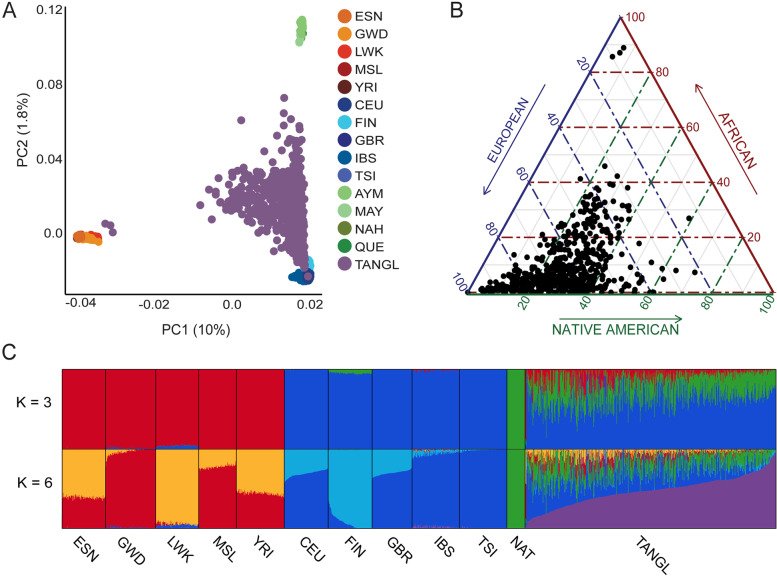
Methods: We characterized the role of admixture and founder effects on the origination of the mutational landscape that led to neurodegenerative disorders under these historical circumstances. Genomes from 900 Colombian individuals with Alzheimer's disease (AD) [n = 376], frontotemporal lobar degeneration-motor neuron disease continuum (FTLD-MND) [n = 197], early-onset dementia not otherwise specified (EOD) [n = 73], and healthy participants [n = 254] were analyzed. We examined their global and local ancestry proportions and screened this cohort for deleterious variants in disease-causing and risk-conferring genes.
Results: We identified 21 pathogenic variants in AD-FTLD related genes, and PSEN1 harbored the majority (11 pathogenic variants). Variants were identified from all three continental ancestries. TREM2 heterozygous and homozygous variants were the most common among AD risk genes (102 carriers), a point of interest because the disease risk conferred by these variants differed according to ancestry. Several gene variants that have a known association with MND in European populations had FTLD phenotypes on a Native American haplotype. Consistent with founder effects, identity by descent among carriers of the same variant was frequent.
Conclusions: Colombian demography with multiple mini-bottlenecks probably enhanced the detection of founder events and left a proportionally higher frequency of rare variants derived from the ancestral populations. These findings demonstrate the role of genomically defined ancestry in phenotypic disease expression, a phenotypic range of different rare mutations in the same gene, and further emphasize the importance of inclusiveness in genetic studies.
Keywords: Admixture; Alzheimer’s disease; Bottleneck; Demography; Founder effect; Frontotemporal dementia; Genetic drift; Motor neuron disease; Neurodegeneration; Selection.
© 2022. The Author(s).
Conflict of interest statement
FL and EMR are the principal investigator of Alzheimer’s prevention trials supported by NIH, philanthropy, and Genentech/Roche. EMR is also the principal investigator of Alzheimer’s prevention trials supported by Eli Lilly, scientific advisor to Alzheon, Aural Analytics, Denali, Green Valley, Retromer Therapeutics & Vaxxinity, a co-founder and share-holder of ALZPath, and co-inventor of a pending patent and inventor of existing patents related to Alzheimer’s drug treatment discovery and the accelerated evaluation of Alzheimer’s prevention therapies. The remaining authors declare that they have no competing interests.
Figures
References
Publication types
MeSH terms
Grants and funding
LinkOut - more resources
Full Text Sources
Medical
Research Materials
