


Assessment and diagnosis of chronic dyspnoea: a literature review
- PMID: 35260575
- PMCID: PMC8904603
- DOI: 10.1038/s41533-022-00271-1
Assessment and diagnosis of chronic dyspnoea: a literature review
Abstract
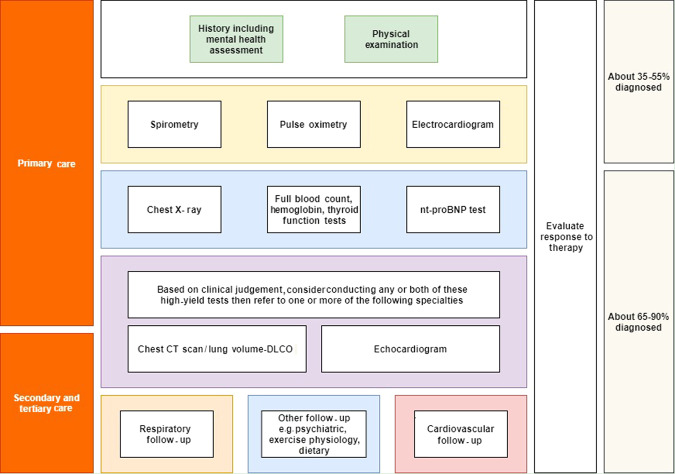
Dyspnoea or breathlessness is a common presenting symptom among patients attending primary care services. This review aimed to determine whether there are clinical tools that can be incorporated into a clinical decision support system for primary care for efficient and accurate diagnosis of causes of chronic dyspnoea. We searched MEDLINE, EMBASE and Google Scholar for all literature published between 1946 and 2020. Studies that evaluated a clinical algorithm for assessment of chronic dyspnoea in patients of any age group presenting to physicians with chronic dyspnoea were included. We identified 326 abstracts, 55 papers were reviewed, and eight included. A total 2026 patients aged between 20-80 years were included, 60% were women. The duration of dyspnoea was three weeks to 25 years. All studies undertook a stepwise or algorithmic approach to the assessment of dyspnoea. The results indicate that following history taking and physical examination, the first stage should include simply performed tests such as pulse oximetry, spirometry, and electrocardiography. If the patient remains undiagnosed, the second stage includes investigations such as chest x-ray, thyroid function tests, full blood count and NT-proBNP. In the third stage patients are referred for more advanced tests such as echocardiogram and thoracic CT. If dyspnoea remains unexplained, the fourth stage of assessment will require secondary care referral for more advanced diagnostic testing such as exercise tests. Utilising this proposed stepwise approach is expected to ascertain a cause for dyspnoea for 35% of the patients in stage 1, 83% by stage 3 and >90% of patients by stage 4.
© 2022. The Author(s).
Conflict of interest statement
The authors declare no competing interests.
Figures

References
Publication types
MeSH terms
LinkOut - more resources
Full Text Sources
Medical
Research Materials
