


Reducing ischemic kidney injury through application of a synchronization modulation electric field to maintain Na+/K+-ATPase functions
- PMID: 35263146
- PMCID: PMC9994383
- DOI: 10.1126/scitranslmed.abj4906
Reducing ischemic kidney injury through application of a synchronization modulation electric field to maintain Na+/K+-ATPase functions
Abstract
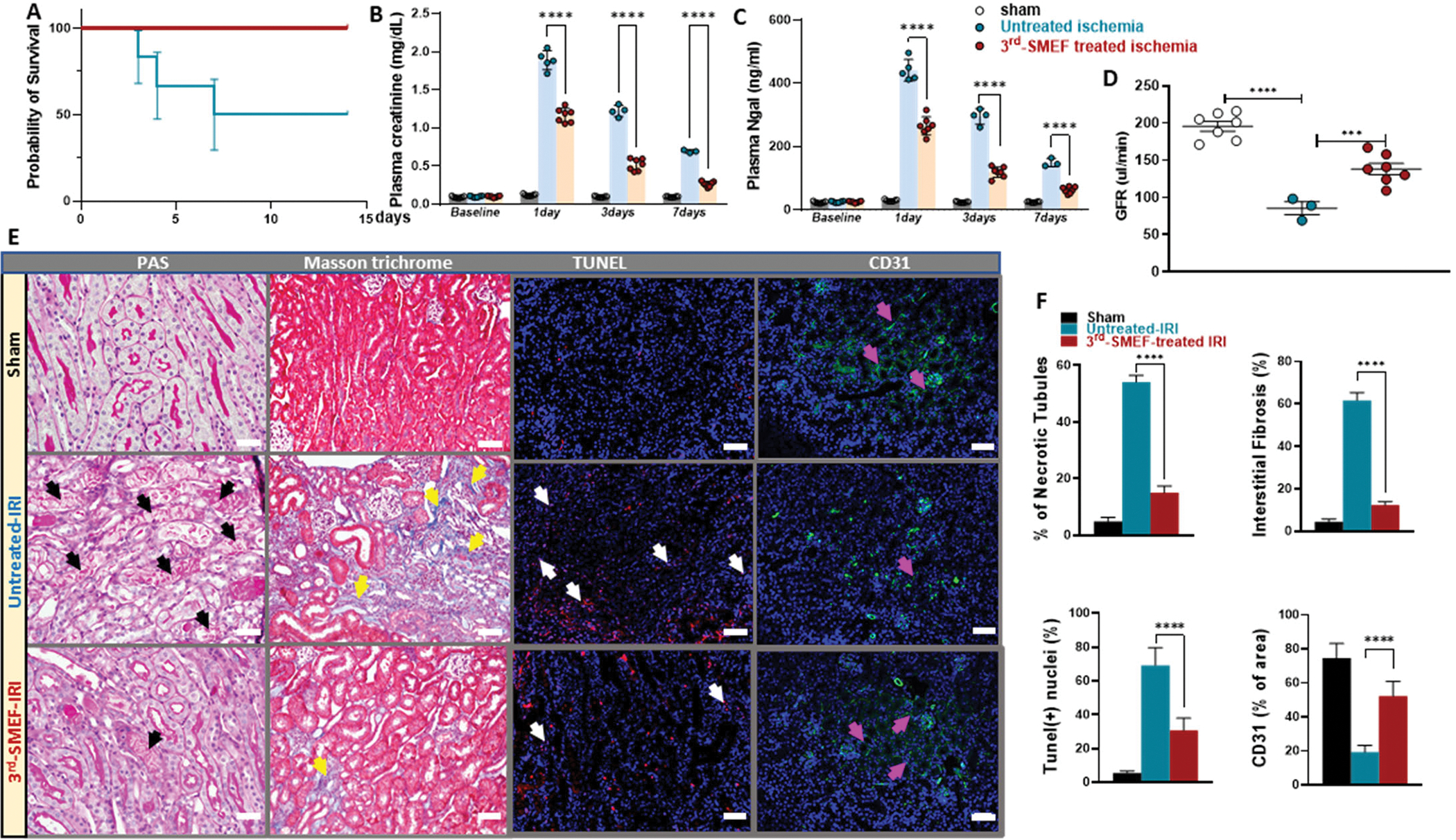
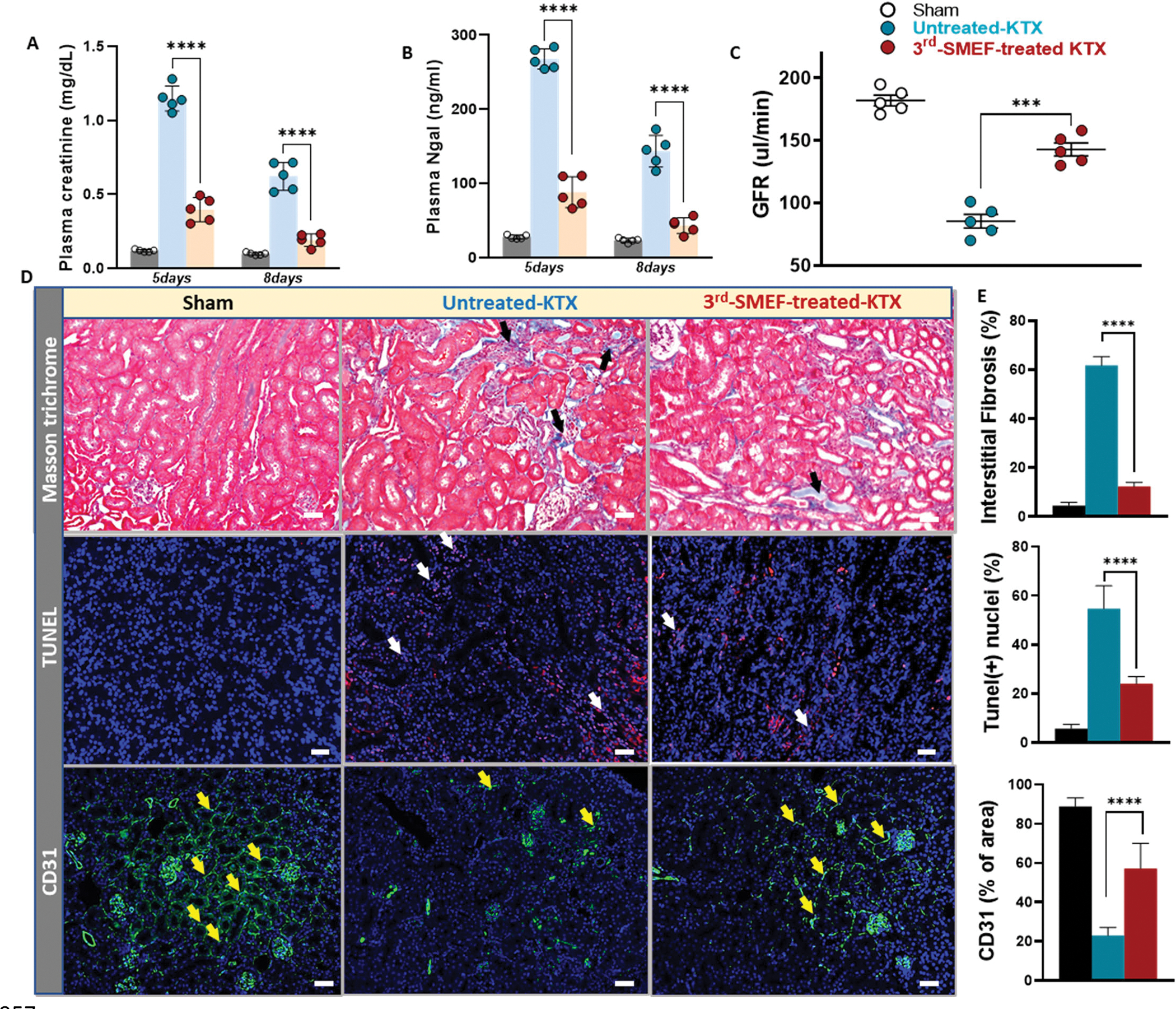
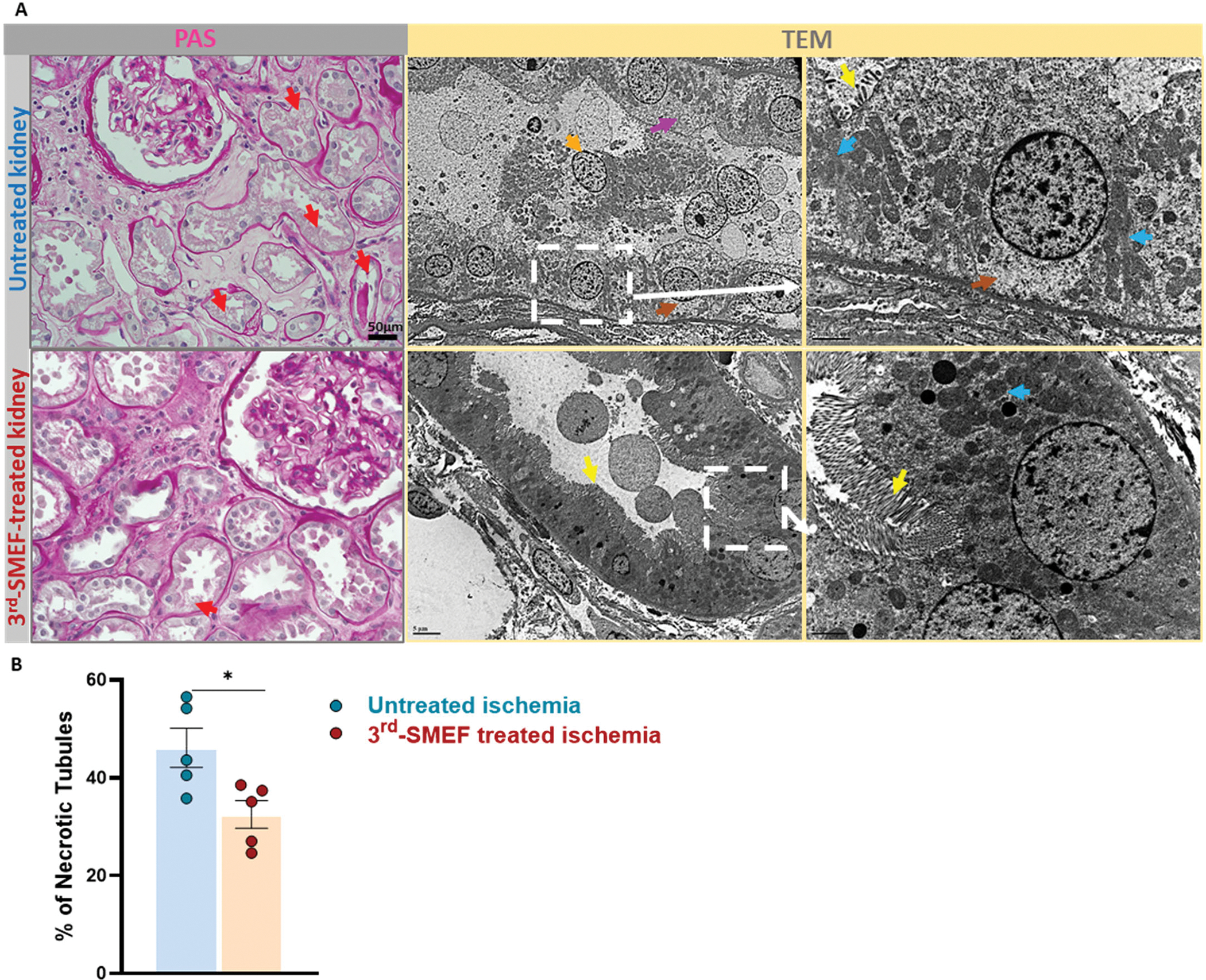
Renal ischemia-reperfusion injury is an important contributor to the development of delayed graft function after transplantation, which is associated with higher rejection rates and poorer long-term outcomes. One of the earliest impairments during ischemia is Na+/K+-ATPase (Na/K pump) dysfunction due to insufficient ATP supply, resulting in subsequent cellular damage. Therefore, strategies that preserve ATP or maintain Na/K pump function may limit the extent of renal injury during ischemia-reperfusion. Here, we applied a synchronization modulation electric field to activate Na/K pumps, thereby maintaining cellular functions under ATP-insufficient conditions. We tested the effectiveness of this technique in two models of ischemic renal injury: an in situ renal ischemia-reperfusion injury model (predominantly warm ischemia) and a kidney transplantation model (predominantly cold ischemia). Application of the synchronization modulation electric field to a renal ischemia-reperfusion injury mouse model preserved Na/K pump activity, thereby reducing kidney injury, as reflected by 40% lower plasma creatinine (1.17 ± 0.03 mg/dl) in the electric field-treated group as compared to the untreated control group (1.89 ± 0.06 mg/dl). In a mouse kidney transplantation model, renal graft function was improved by more than 50% with the application of the synchronization modulation electric field according to glomerular filtration rate measurements (85.40 ± 12.18 μl/min in the untreated group versus 142.80 ± 11.65 μl/min in the electric field-treated group). This technique for preserving Na/K pump function may have therapeutic potential not only for ischemic kidney injury but also for other diseases associated with Na/K pump dysfunction due to inadequate ATP supply.
Conflict of interest statement
Figures
References
-
- Halloran PF, Aprile MA, Farewell V, Ludwin D, Smith EK, Tsai SY, Bear RA, Cole EH, Fenton SS, Cattran DC, Early function as the principal correlate of graft survival. A multivariate analysis of 200 cadaveric renal transplants treated with a protocol incorporating antilymphocyte globulin and cyclosporine. Transplantation 46, 223–228 (1988). - PubMed
-
- Womer KL, Vella JP, Sayegh MH, Chronic allograft dysfunction: mechanisms and new approaches to therapy. Semin. Nephrol 20, 126–147 (2000). - PubMed
-
- Nehus EJ, Devarajan P, Acute kidney injury: AKI in kidney transplant recipients--here to stay. Nat. Rev Nephrol 8, 198–199 (2012). - PubMed
-
- Daemen MA, de VB, Buurman WA, Apoptosis and inflammation in renal reperfusion injury. Transplantation 73, 1693–1700 (2002). - PubMed
-
- Cooper JE, Wiseman AC, Acute kidney injury in kidney transplantation. Curr. Opin. Nephrol. Hypertens 22, 698–703 (2013). - PubMed
Publication types
MeSH terms
Substances
Grants and funding
LinkOut - more resources
Full Text Sources
Other Literature Sources
Miscellaneous
