


Emulation of synaptic functions with low voltage organic memtransistor for hardware oriented neuromorphic computing
- PMID: 35264605
- PMCID: PMC8907356
- DOI: 10.1038/s41598-022-07505-9
Emulation of synaptic functions with low voltage organic memtransistor for hardware oriented neuromorphic computing
Abstract
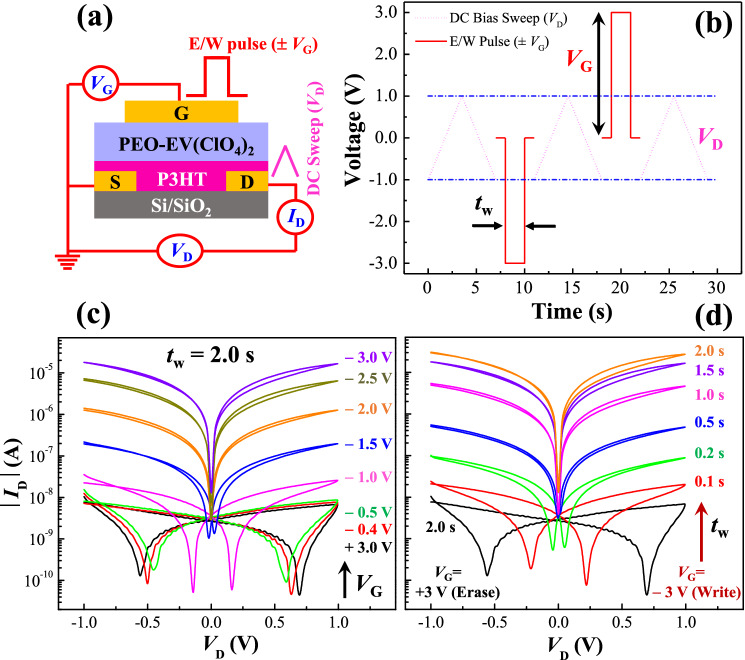
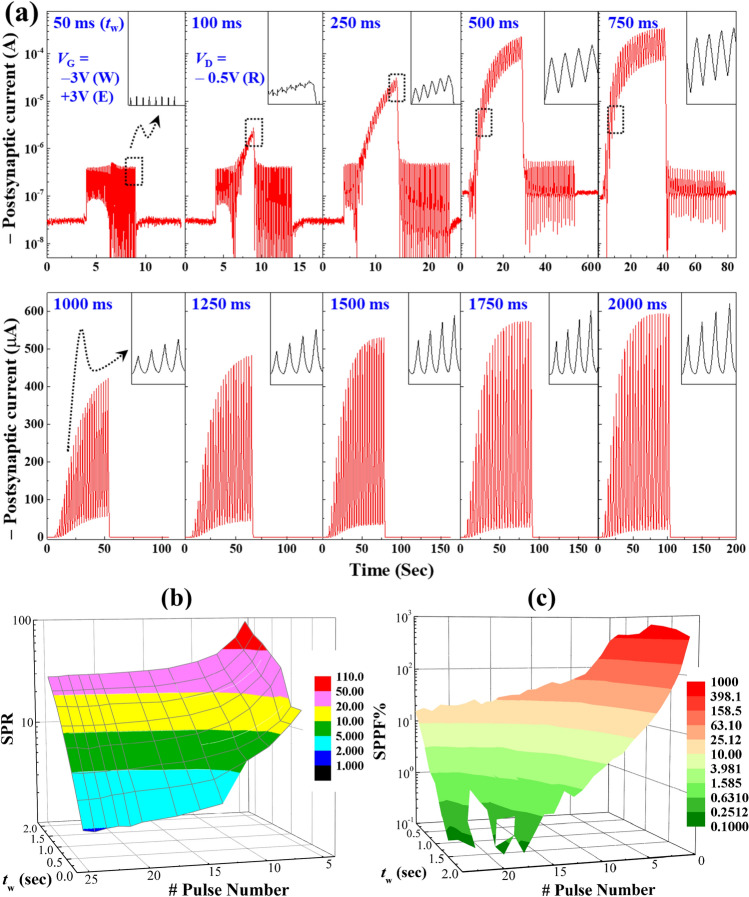
Here, various synaptic functions and neural network simulation based pattern-recognition using novel, solution-processed organic memtransistors (memTs) with an unconventional redox-gating mechanism are demonstrated. Our synaptic memT device using conjugated polymer thin-film and redox-active solid electrolyte as the gate dielectric can be routinely operated at gate voltages (VGS) below - 1.5 V, subthreshold-swings (S) smaller than 120 mV/dec, and ON/OFF current ratio larger than 108. Large hysteresis in transfer curves depicts the signature of non-volatile resistive switching (RS) property with ON/OFF ratio as high as 105. In addition, our memT device also shows many synaptic functions, including the availability of many conducting-states (> 500) that are used for efficient pattern recognition using the simplest neural network simulation model with training and test accuracy higher than 90%. Overall, the presented approach opens a new and promising way to fabricate high-performance artificial synapses and their arrays for the implementation of hardware-oriented neural network.
© 2022. The Author(s).
Conflict of interest statement
The authors declare no competing interests.
Figures



References
-
- Feng P, et al. Printed neuromorphic devices based on printed carbon nanotube thin-film transistors. Adv. Funct. Mater. 2017;27:1604447. doi: 10.1002/adfm.201604447. - DOI
-
- Wan QZ, Sharbati MT, Erickson JR, Du YH, Xiong F. Emerging artificial synaptic devices for neuromorphic computing. Adv. Mater. Technol. U.S. 2019;4:1900037. doi: 10.1002/admt.201900037. - DOI
Publication types
MeSH terms
Substances
LinkOut - more resources
Full Text Sources
Research Materials
