


Medication adherence early after stroke: using the Perceptions and Practicalities Framework to explore stroke survivors', informal carers' and nurses' experiences of barriers and solutions
- PMID: 35265156
- PMCID: PMC8899295
- DOI: 10.1177/1744987121993505
Medication adherence early after stroke: using the Perceptions and Practicalities Framework to explore stroke survivors', informal carers' and nurses' experiences of barriers and solutions
Abstract
Background: Secondary prevention medication after stroke reduces risk of recurrence, but adherence is often poor. Stroke survivors', carers' and nurses' perspectives of early post-stroke medication adherence are unexplored.
Aim: The aim of this study was to explore stroke survivors', carers' and nurses' views and experiences about adhering to medication early after post-stroke hospital discharge.
Methods: Qualitative individual and group interviews, utilising the Perceptions and Practicalities Framework, were employed. Nine people <2 months post-stroke, three carers and 15 nurses from one UK stroke unit participated. Interviews were digitally recorded, transcribed and thematically analysed.
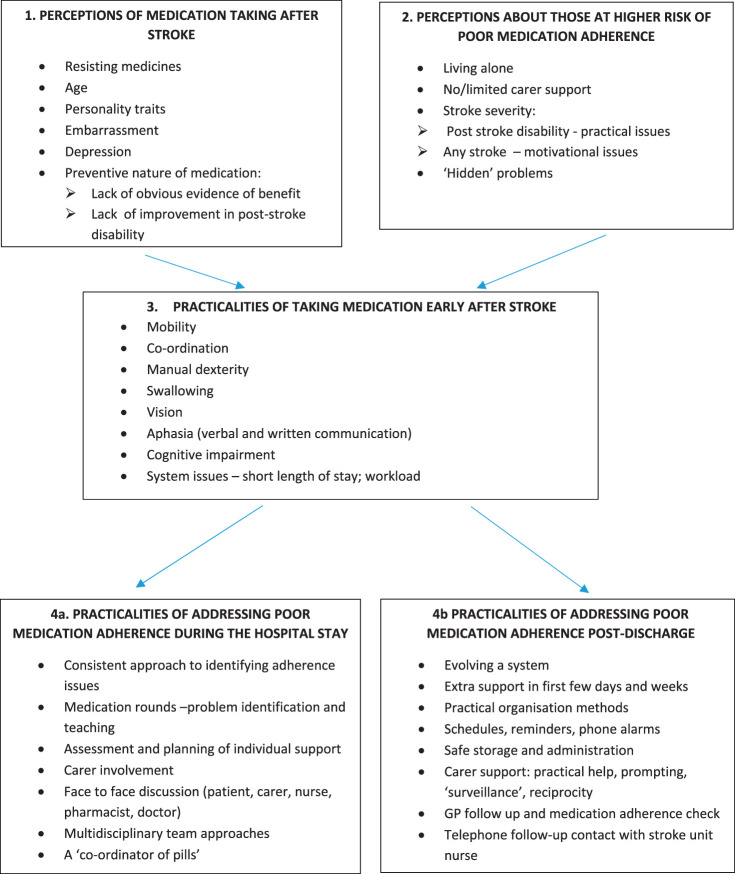
Results: There were four main themes with two sub-themes. (1) Perceptions of medication taking after stroke. Factors affecting adherence included depression, imperceptible benefits and concerns about adverse effects. (2) Perceptions about those at higher risk of poor medication adherence. Nurses suggested that poor adherence might be more likely in those living alone or with previous non-adherence. (3) Practicalities of taking medication early after stroke; these included post-stroke disabilities, cognition, polypharmacy and lack of information. (4a) Practicalities of addressing poor medication adherence during the hospital stay. Solutions included multidisciplinary co-ordination, but nurses and stroke survivors described suboptimal use of opportunities to promote adherence. (4b) Practicalities of addressing poor medication adherence post-discharge. Solutions included modifications and support from carers, but stroke survivors reported difficulties in evolving systems for taking medications.
Conclusions: Stroke survivors and informal carers lack knowledge and support needed to manage medication early after discharge. Nurses' opportunities to promote medication adherence are under-exploited. Medication adherence strategies to support stroke survivors early after discharge are needed.
Keywords: caregivers; medication adherence; patient discharge; polypharmacy; secondary prevention; stroke.
© The Author(s) 2021.
Conflict of interest statement
Declaration of conflicting interests: The author(s) declared no potential conflicts of interest with respect to the research, authorship, and/or publication of this article.
Figures
References
-
- Al AlShaikh S, Quinn T, Dunn W, et al.(2016. b) Multimodal interventions to enhance adherence to secondary preventive medication after stroke: A systematic review and meta-analyses. Cardiovascular Therapeutics 34(2): 85–93. - PubMed
-
- Andrew NE, Busingye D, Lannin NA, et al.(2017) The quality of discharge care planning in acute stroke care: Influencing factors and association with postdischarge outcomes. Journal of Stroke and Cerebrovascular Diseases 27(3): 583–590. - PubMed
-
- Bauler S, Jacquin-Courtois S, Haesebaert J, et al.(2014) Barriers and facilitators for medication adherence in stroke patients: A qualitative study conducted in French neurological rehabilitation units. European Neurology 72(5–6): 262–270. - PubMed
LinkOut - more resources
Full Text Sources