


Changes in the digital health landscape in cardiac electrophysiology: A pre-and peri-pandemic COVID-19 era survey
- PMID: 35265890
- PMCID: PMC8890346
- DOI: 10.1016/j.cvdhj.2020.12.001
Changes in the digital health landscape in cardiac electrophysiology: A pre-and peri-pandemic COVID-19 era survey
Abstract
Background: Digital health is transforming healthcare delivery.
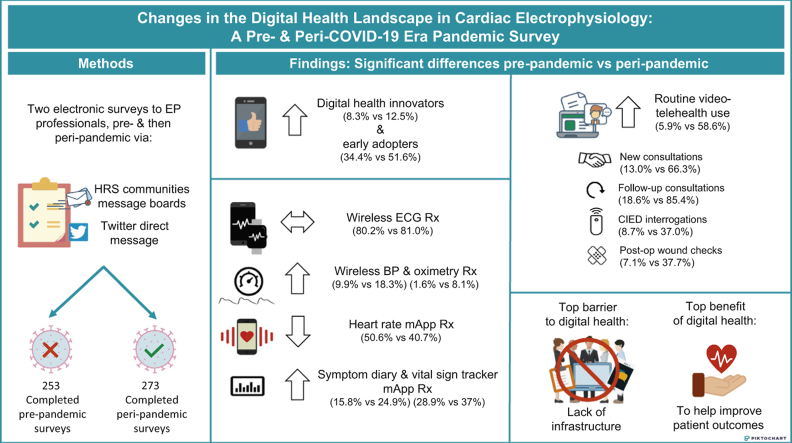
Objective: To compare the current digital health landscape in select groups of cardiac electrophysiology (EP) professionals prior to and during the COVID-19 era.
Methods: Two online surveys were emailed to 4 Heart Rhythm Society communities and tweeted out to Twitter EP, 1 before and 1 during the pandemic. Categorical variables were analyzed using the χ 2 test and reported as absolute numbers and percentages.
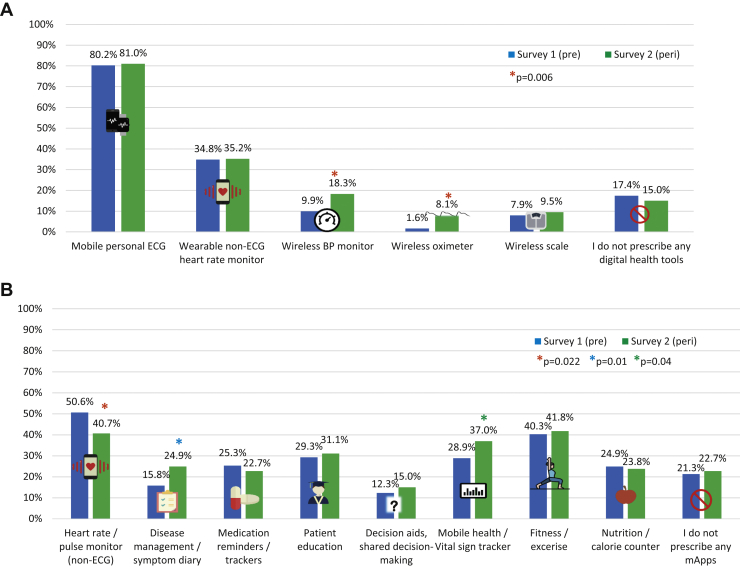
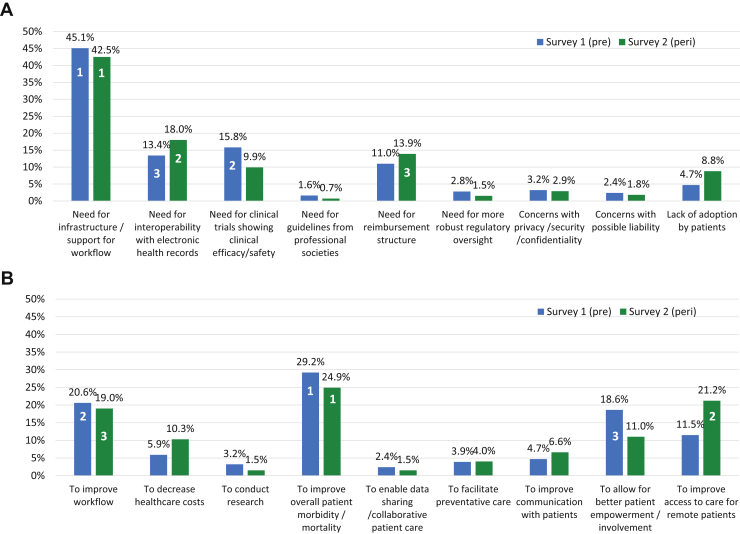
Results: There were 253 pre-pandemic (S1) and 273 follow-up surveys (S2) completed. The majority of respondents to both surveys were male, aged <55 years (70.6% vs 75.1%), university-affiliated (52.6% vs 55%), and physicians (83.3% vs 87.9%). Between S1 and S2, routine use of video-telehealth increased (5.9% vs 58.6%; P < .001) for all types of consultations (P < .001 for all). Wireless electrocardiogram prescribing was prevalent and similar (80.2% vs 81.0%), whereas wireless blood pressure monitoring (9.9% vs 18.3%) and wireless oximetry (1.6% vs 8.1%; P = .006 for both) prescribing both increased. For smartphone mobile applications (mApps), prescriptions for heart rate mApps decreased (50.6% vs 40.7%; P = .022), while vital sign (28.9% vs 37%; P = .04) and symptom trackers (15.8% vs 24.9%; P = .01) prescribing increased. A majority in both surveys (84.6% vs 75.5%) reported no workplace infrastructure or support for digital health with concerns for lack of parity in reimbursement.
Conclusion: Our results show an increase in adoption of digital health by EP during the COVID-19 pandemic. Concerns regarding a lack of supportive infrastructure persisted. Development of professional society guidelines on optimal clinical workflow, infrastructure, and reimbursement may help advance and sustain digital health integration in EP.
Keywords: Digital health; Mobile applications; Telehealth; Wearables.
Figures
References
-
- Valuates Reports Digital Health Market Size to Reach USD 385.8 Billion by 2025 [Internet]. PR Newswire. 2020 [cited 2020 May 15] https://www.prnewswire.com/news-releases/digital-health-market-size-to-r... Available from.
-
- Day S., Seninger C., Kothari M., et al. Stanford Center for Digital Health / Rock Health; 2019. Digital Consumer Adoption Report 2019; pp. 1–30.
-
- AMA Digital Health Research . American Medical Association; 2020. Physicians’ motivations and requirements for adopting digital health adoption and attitudinal shifts from 2016 to 2019; pp. 1–37.
-
- Slotwiner D., Varma N., Akar J., et al. HRS Expert Consensus Statement on remote monitoring for cardiac electronic implantable devices. Heart Rhythm. 2015;12:E69–E100. - PubMed
LinkOut - more resources
Full Text Sources
