


PIK3CA Gene Mutations in HNSCC: Systematic Review and Correlations with HPV Status and Patient Survival
- PMID: 35267596
- PMCID: PMC8909011
- DOI: 10.3390/cancers14051286
PIK3CA Gene Mutations in HNSCC: Systematic Review and Correlations with HPV Status and Patient Survival
Abstract
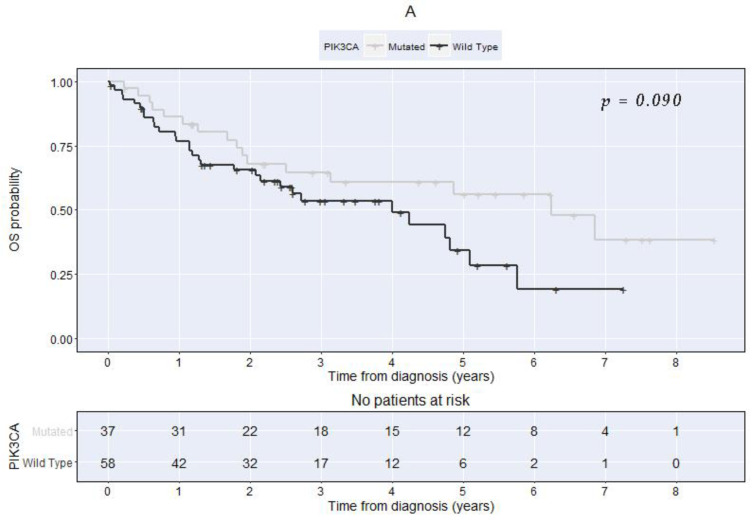
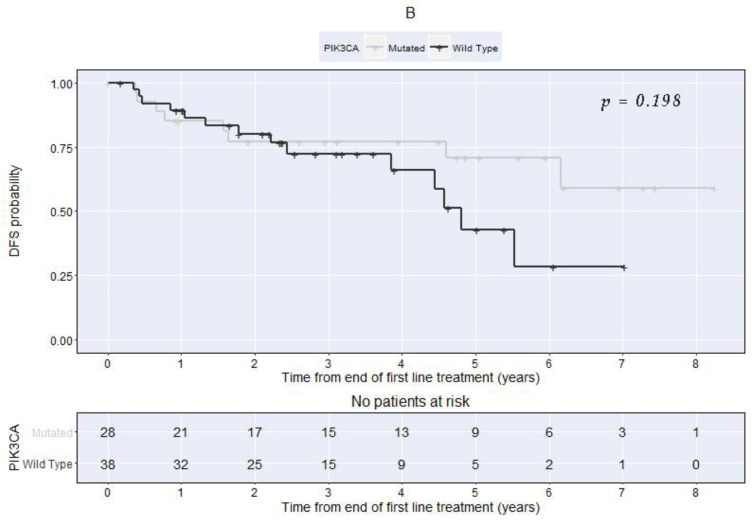
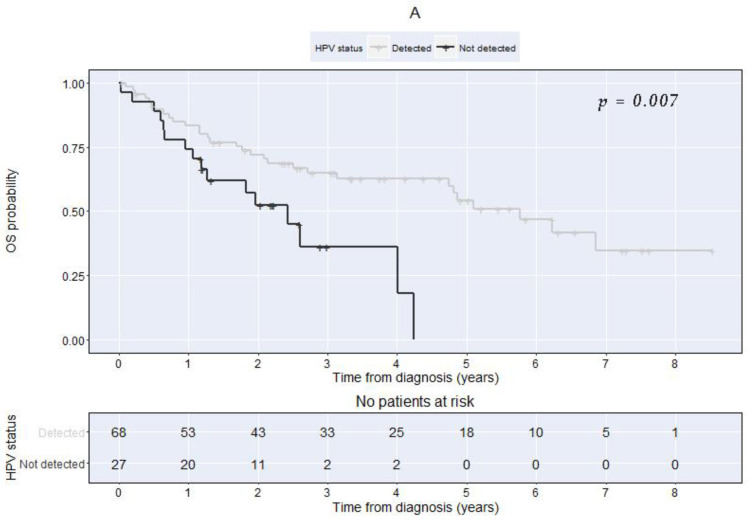
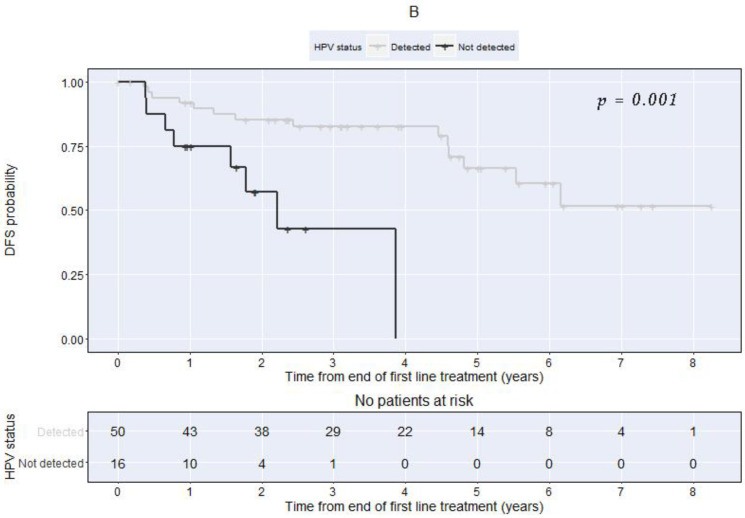
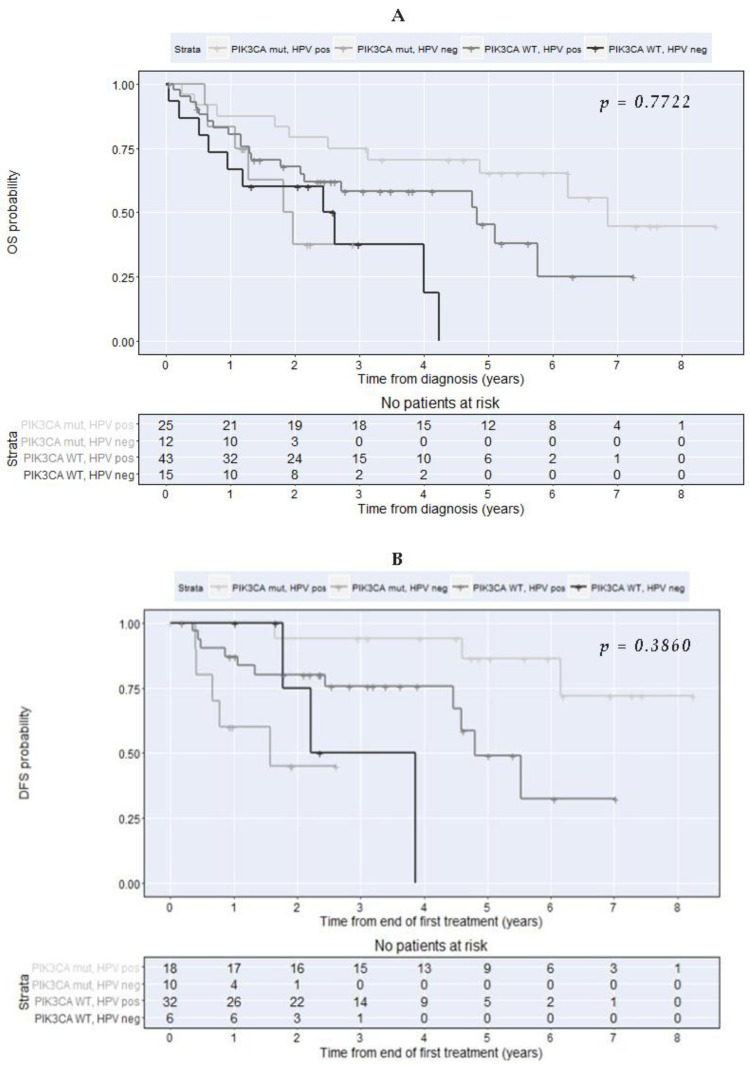
PIK3CA mutations are believed to contribute to the pathogenesis of human papillomavirus (HPV)-associated head and neck squamous cell carcinomas (HNSCC). This study aims to establish the frequency of PIK3CA mutations in a Portuguese HNSCC cohort and to determine their association with the HPV status and patient survival. A meta-analysis of scientific literature also revealed widely different mutation rates in cohorts from different world regions and a trend towards improved prognosis among patients with PIK3CA mutations. DNA samples were available from 95 patients diagnosed with HNSCC at the Portuguese Institute of Oncology in Lisbon between 2010 and 2019. HPV status was established based on viral DNA detected using real-time PCR. The evaluation of PIK3CA gene mutations was performed by real-time PCR for four mutations (H1047L; E542K, E545K, and E545D). Thirty-seven cases were found to harbour PIK3CA mutations (39%), with the E545D mutation (73%) more frequently detected. There were no significant associations between the mutational status and HPV status (74% WT and 68% MUT were HPV (+); p = 0.489) or overall survival (OS) (3-year OS: WT 54% and MUT 65%; p = 0.090). HPV status was the only factor significantly associated with both OS and disease-free survival (DFS), with HPV (+) patients having consistently better outcomes (3-year OS: HPV (+) 65% and HPV (-) 36%; p = 0.007; DFS HPV (+) 83% and HPV (-) 43%; p = 0.001). There was a statistically significant interaction effect between HPV status and PIK3CA mutation regarding DFS (Interaction test: p = 0.026). In HPV (+) patients, PIK3CA wild-type is associated with a significant 4.64 times increase in the hazard of recurrence or death (HR = 4.64; 95% CI 1.02-20.99; p = 0.047). Overall, PIK3CA gene mutations are present in a large number of patients and may help define patient subsets who can benefit from therapies targeting the PI3K pathway. The systematic assessment of PIK3CA gene mutations in HNSCC patients will require further methodological standardisation.
Keywords: HNSCC; HPV; PIK3CA; p16 INK4a.
Conflict of interest statement
The authors declare no conflict of interest.
Figures
References
-
- Koroulakis A., Agarwal M. Laryngeal Cancer. StatPearls Publishing; Treasure Island, FL, USA: 2021. StatPearls [Internet]
-
- Patmore H.S., Ashman J.N.E., Stafford N.D., Berrieman H.K., MacDonald A., Greenman J., Cawkwell L. Genetic analysis of head and neck squamous cell carcinoma using comparative genomic hybridisation identifies specific aberrations associated with laryngeal origin. Cancer Lett. 2007;258:55–62. doi: 10.1016/j.canlet.2007.08.014. - DOI - PubMed
LinkOut - more resources
Full Text Sources
Miscellaneous
