


Case Distribution, Sources, and Breeds of Dogs Presenting to a Veterinary Behavior Clinic in the United States from 1997 to 2017
- PMID: 35268145
- PMCID: PMC8909650
- DOI: 10.3390/ani12050576
Case Distribution, Sources, and Breeds of Dogs Presenting to a Veterinary Behavior Clinic in the United States from 1997 to 2017
Abstract
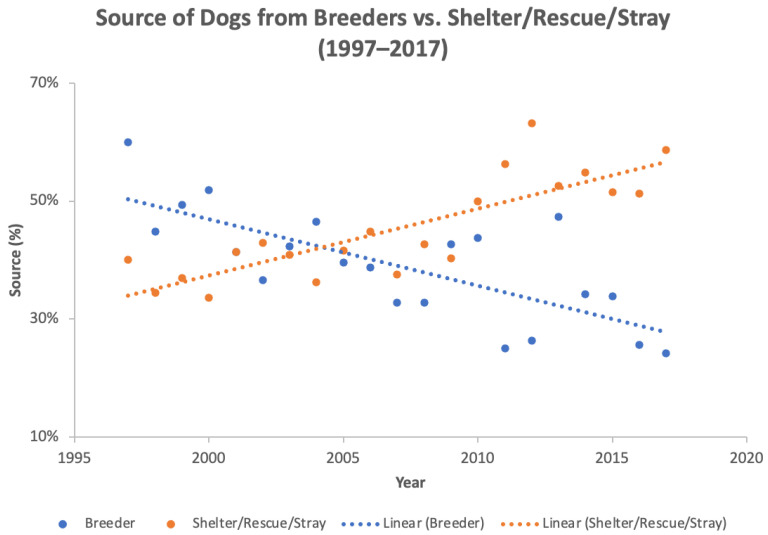
The purpose of this retrospective case study was to evaluate trends over time in case distribution, sources, and breeds of dogs presenting to the behavioral medicine service at a veterinary college referral hospital in the United States. For case distribution and sources, the available records from the behavior service (n = 1923) from 1997 to 2017 were evaluated. Breeds of dogs presenting to all services (n = 51,052) were compared to behavior cases (n = 822) from 2007 to 2016. Over twenty years, 72.2% of dogs presented for aggression, 20.1% for anxieties/fears/phobias, and 7.4% for miscellaneous behavioral problems. Dogs acquired from breeders decreased and dogs from shelters, rescues, or adopted as a stray increased over twenty years (p < 0.0001). The Herding (p = 0.0124) and Terrier (p < 0.0001) groups were overrepresented for behavior problems as compared to all other services over ten years. Variations in terminology and diagnostic approach made comparisons with earlier studies difficult, which underscores a need for a more consistent methodology in veterinary behavioral medicine. Understanding trends in sources of dogs could direct resources aimed at guiding owners when acquiring a pet dog and preventing behavioral problems. Findings related to breeds could help guide research focused on the genetic contributions to behavior.
Keywords: aggression; anxiety; behavioral problems; canine; veterinary behavior.
Conflict of interest statement
The authors declare no conflict of interest.
Figures
References
-
- Lustgarten J.L., Zehnder A., Shipman W., Gancher E., Webb T.L. Veterinary informatics: Forging the future between veterinary medicine, human medicine, and One Health initiatives—A joint paper by the Association for Veterinary Informatics (AVI) and the CTSA One Health Alliance (COHA) JAMIA Open. 2020;3:306–317. doi: 10.1093/jamiaopen/ooaa005. - DOI - PMC - PubMed
-
- Denenberg S., Landsberg G.M., Horwitz D., Seksel K. A Comparison of Cases Referred to Behaviorists in Three Different Countries; Proceedings of the 5th International Veterinary Behavorial Meeting; West Lafayette, Indiana. 15 July 2005; pp. 56–62. Current Issues and Research in Veterinary Behavioral Medicine.
-
- Landsberg G.M. The distribution of canine behavior cases at three behavior referral practices. Vet. Med. 1991;86:1011–1018.
LinkOut - more resources
Full Text Sources
