


Gene Therapy of Chronic Limb-Threatening Ischemia: Vascular Medical Perspectives
- PMID: 35268373
- PMCID: PMC8910863
- DOI: 10.3390/jcm11051282
Gene Therapy of Chronic Limb-Threatening Ischemia: Vascular Medical Perspectives
Abstract
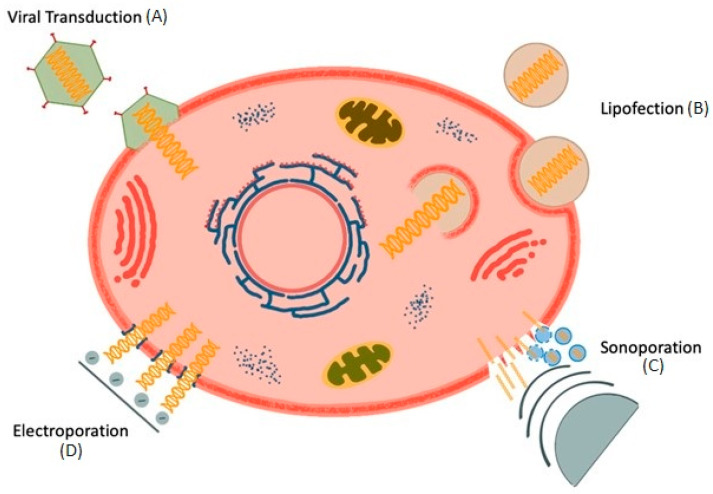
A decade ago, gene therapy seemed to be a promising approach for the treatment of chronic limb-threatening ischemia, providing new perspectives for patients without conventional, open or endovascular therapeutic options by potentially enabling neo-angiogenesis. Yet, until now, the results have been far from a safe and routine clinical application. In general, there are two approaches for inserting exogenous genes in a host genome: transduction and transfection. In case of transduction, viral vectors are used to introduce genes into cells, and depending on the selected strain of the virus, a transient or stable duration of protein production can be achieved. In contrast, the transfection of DNA is transmitted by chemical or physical processes such as lipofection, electro- or sonoporation. Relevant risks of gene therapy may be an increasing neo-vascularization in undesired tissue. The risks of malignant transformation and inflammation are the potential drawbacks. Additionally, atherosclerotic plaques can be destabilized by the increased angiogenesis, leading to arterial thrombosis. Clinical trials from pilot studies to Phase II and III studies on angiogenic gene therapy show mainly a mixed picture of positive and negative final results; thus, the role of gene therapy in vascular occlusive disease remains unclear.
Keywords: angiogenesis; arteriogenesis; chronic limb-threatening ischemia (CLTI); gene therapy; peripheral arterial disease (PAD); transduction; transfection; vasculogenesis.
Conflict of interest statement
The authors declare no conflict of interest.
Figures
References
-
- Martini R., Ghirardini F. Patients with critical limb ischemia (CLI) not suitable for revascularization: The “dark side” of CLI. Vasc. Invest. Ther. 2021;4:87–94. doi: 10.4103/2589-9686.321924. - DOI
Publication types
LinkOut - more resources
Full Text Sources
