Review
. 2022 Feb 24;22(5):1763.
doi: 10.3390/s22051763.

A Review of Mechanical and Chemical Sensors for Automotive Li-Ion Battery Systems

Affiliations
Review

A Review of Mechanical and Chemical Sensors for Automotive Li-Ion Battery Systems

Matteo Dotoli et al. Sensors (Basel). .

Abstract

The electrification of passenger cars is one of the most effective approaches to reduce noxious emissions in urban areas and, if the electricity is produced using renewable sources, to mitigate the global warming. This profound change of paradigm in the transport sector requires the use of Li-ion battery packages as energy storage systems to substitute conventional fossil fuels. An automotive battery package is a complex system that has to respect several constraints: high energy and power densities, long calendar and cycle lives, electrical and thermal safety, crash-worthiness, and recyclability. To comply with all these requirements, battery systems integrate a battery management system (BMS) connected to an complex network of electric and thermal sensors. On the other hand, since Li-ion cells can suffer from degradation phenomena with consequent generation of gaseous emissions or determine dimensional changes of the cell packaging, chemical and mechanical sensors should be integrated in modern automotive battery packages to guarantee the safe operation of the system. Mechanical and chemical sensors for automotive batteries require further developments to reach the requested robustness and reliability; in this review, an overview of the current state of art on such sensors will be proposed.

Keywords: Li-ion battery system; chemical sensors; safety; state of health.


Conflict of interest statement

The authors declare no conflict of interest.

Figures
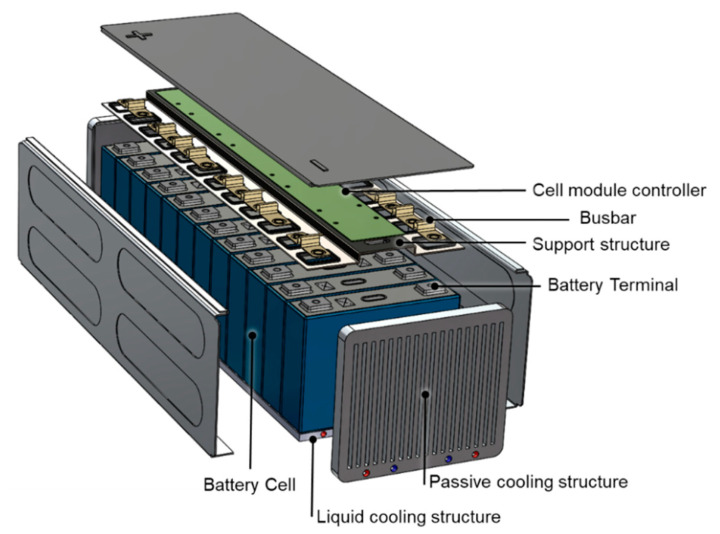
Figure 1
Figure 1
Typical layout of an automotive battery package integrating prismatic-type lithium ion cells. The thermal management system is also shown. Figure partially reproduced from [8].
Figure 2
Figure 2
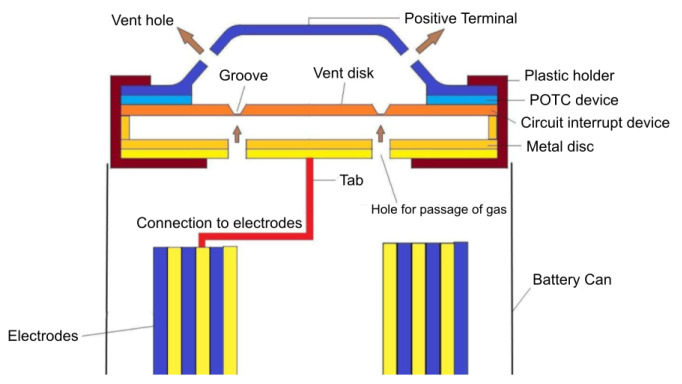
Schematic structure of Circuit Interrupt Device (CID), Positive Temperature Coefficient (PTC), and venting system in a cylindrical cell. Reproduced from [13].
Figure 3
Figure 3
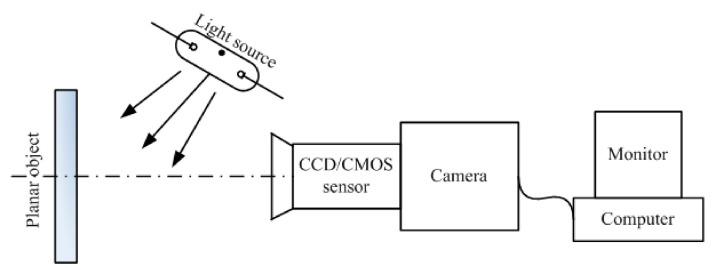
Due to its simple experimental setup, 2D-DIC is ideal to measure the in-plane deformation of an object. The technique is based on the illumination of the object under test using a light source: the image of the surface of the object is captured by a digital camera: the comparison of the undeformed and deformed surface images through numerical digitization software allows for the precise measurement of the in-plane deformation. High-quality cameras are required to obtain accurate measurement of strain. Figure reproduced from [38].
Figure 4
Figure 4
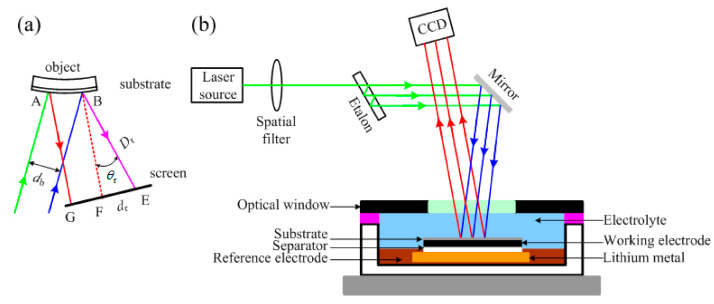
Theory of MOSS technique. (a) If two light beams strike on two different positions of a curved object under measurement, the distance between their reflections depends on the curvature of the reflecting surface. The curvature radius Rk is linked to the distance between the reflections dr according to Rk = 2Drdb/(rcosθr). (b) Using more than two parallel light beams, the distance between adjacent beams can be mediated to reduce the measurement error. A linear array of multi-beams can be obtained using an etalon, an optical element having highly reflective and parallel faces. Using this approach, it is possible to monitor the evolution of stress on a planar or curved objects. Figure reproduced from [38].
Figure 5
Figure 5
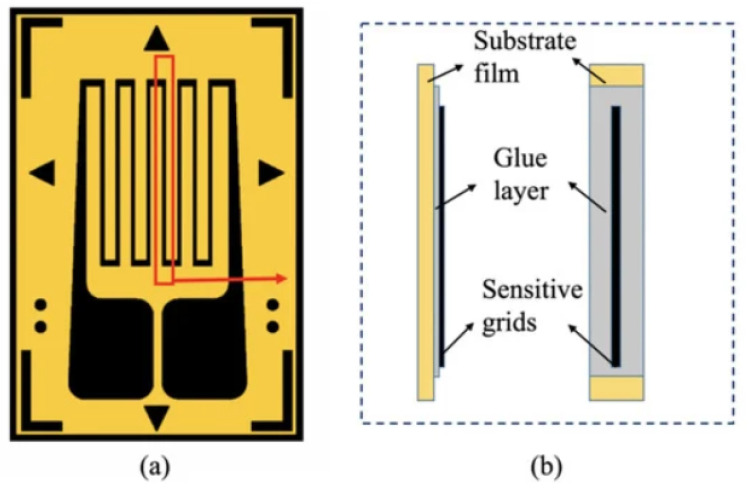
Front (a) and side (b) views of the typical structure of a resistive metallic strain gauge. Figure reproduced from [40].
Figure 6
Figure 6
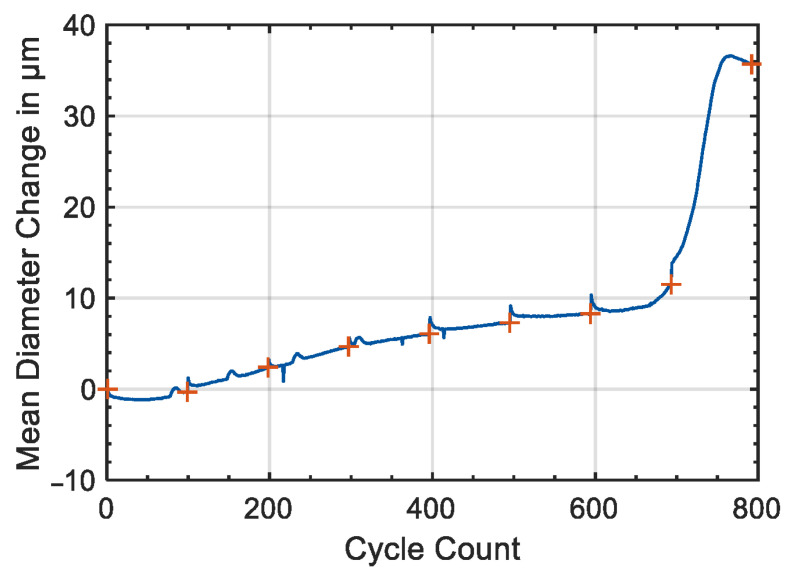
Mean diameter change measured with a strain gauge as a function of cycle count. Orange crosses highlight the time of the check-up. Figure reproduced from [41].
Figure 7
Figure 7
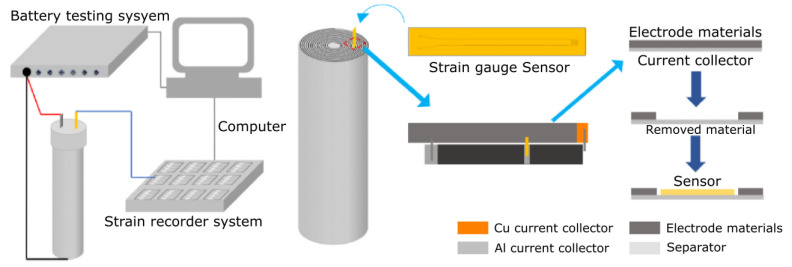
Integration of thin film strain gauge sensor in current collector of the positive electrode of the cell jelly roll. Reprinted with permission from ref. [42]. Copyright 2022 Elsevier Ltd.
Figure 8
Figure 8
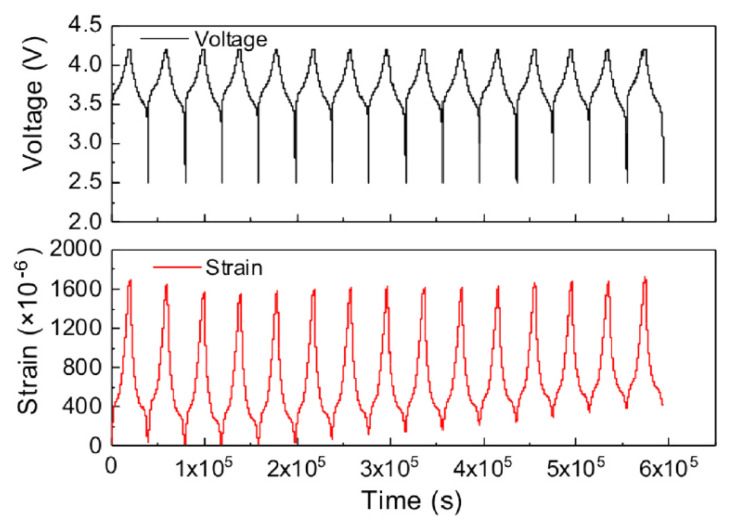
The cycle performance of the instrumented Li-ion cell and the evolution in-operando circumferential internal strain during the first 15 cycles. It is evident that a certain part of the strain is not recovered after the discharge. Reprinted with permission from ref. [42]. Copyright 2022 Elsevier Ltd.
Figure 9
Figure 9
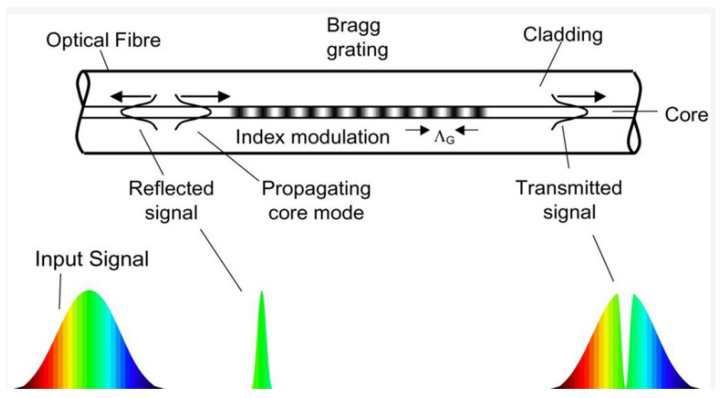
The fiber Bragg grating (FBG) is a wavelength-dependent light filter obtained by creating a periodic refractive index grating, with spacing of the order of a wavelength of incident light, within the core of an optical fiber. If monochromatic light is sent through the grating, the total reflection condition is satisfied when λB=2nΛ, where n is the effective refractive index of the grating, λB is the Bragg wavelength, and Λ is the period of the grating. If a polychromatic light beam is sent to the grating, a reflected spectrum whose centre wavelength is λB is reflected and the remaining portion of light is transmitted. Since the grating period is dependent on the operative temperature and on the deformation of the fiber, the measurement of the shift of Bragg wavelength can be used to sense strain and temperature with a great accuracy. Reproduced from [51].
Figure 10
Figure 10
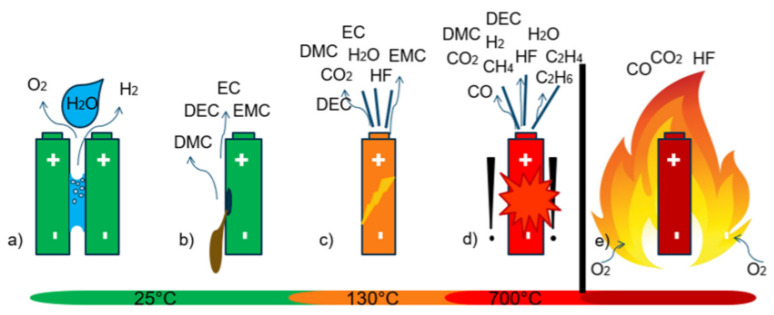
Battery failure modes, which involve the emission of gaseous species: (a) electrolysis due to the presence of water between positive and negative poles of the cells, (b) evaporation of electrolyte from damaged cells, (c) early venting from a failing cell, (d) the thermal runway (TR), and (e) battery fire. Adapted from [58].
Figure 11
Figure 11
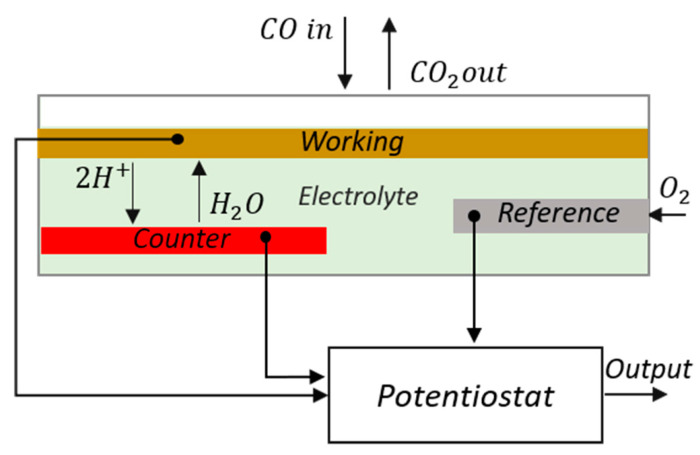
Operating principle of an electrochemical sensor for CO detection. Reproduced from [69].
Figure 12
Figure 12
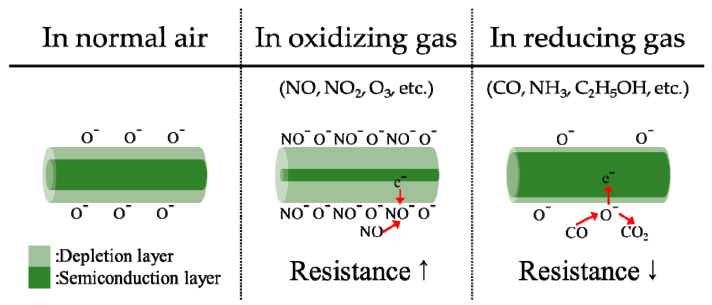
Operating principle of an MOS chemical sensor. N-type metal oxide semiconductors contains oxygen vacancies due to non-stoichiometry. When the sensor is exposed to oxidizing molecules at temperature between 200 and 400 °C, oxygen ions attach on the surface of the oxide, depriving electrons from the conduction band of the material. For this reason, the resistance of the sensing element increases. On the contrary, in presence of reducing molecules, the process is reversed and a decrease of resistivity is observed. Adapted from [70].
Figure 13
Figure 13
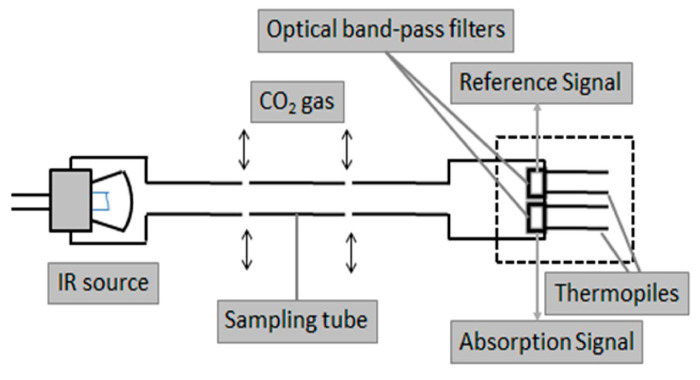
Internal structure of an NDIR CO2 sensor. Constituted by an IR lamp, a perforated pipe in which light interacts with CO2 molecules in the air, and thermopiles provided with optical bandpass windows. Adapted from [73].

References

    1. Wei Z., Hu J., Li Y., He H., Li W., Sauer D.U. Hierarchical soft measurement of load current and state of charge for future smart lithium-ion batteries. Appl. Energy. 2022;307:118246. doi: 10.1016/j.apenergy.2021.118246. - DOI
    1. Wei Z., Ruan H., Li Y., Li J., Zhang C., He H. Multistage State of Health Estimation of Lithium-Ion Battery with High Tolerance to Heavily Partial Charging. IEEE Trans. Power Electron. 2022;37:7432–7442. doi: 10.1109/TPEL.2022.3144504. - DOI
    1. Chen C., Wei Z., Knoll A.C. Charging Optimization for Li-ion Battery in Electric Vehicles: A Review. IEEE Trans. Transp. Electrif. 2021 doi: 10.1109/TTE.2021.3135525. - DOI
    1. Aiello O. Electromagnetic Susceptibility of Battery Management Systems’ ICs for Electric Vehicles: Experimental Study. Electronics. 2020;9:510. doi: 10.3390/electronics9030510. - DOI
    1. Campagna N., Castiglia V., Miceli R., Mastromauro R.A., Spataro C., Trapanese M., Viola F. Battery Models for Battery Powered Applications: A Comparative Study. Energies. 2020;13:4085. doi: 10.3390/en13164085. - DOI