. 2022 May 1;8(5):e220446.
doi: 10.1001/jamaoncol.2022.0446. Epub 2022 May 19.

Humoral Responses Against Variants of Concern by COVID-19 mRNA Vaccines in Immunocompromised Patients

Affiliations

Humoral Responses Against Variants of Concern by COVID-19 mRNA Vaccines in Immunocompromised Patients

Michel Obeid et al. JAMA Oncol. .

Abstract

Importance: There are limited comparative data on the durability of neutralizing antibody (nAb) responses elicited by messenger RNA (mRNA) vaccines against the SARS-CoV-2 variants of concern (VOCs) in immunocompromised patients and healthy controls.

Objective: To assess the humoral responses after vaccination with BNT162b2 (Pfizer-BioNTech) or mRNA-1273 (Moderna) vaccines.

Design, setting, and participants: In this prospective, longitudinal monocentric comparative effectiveness study conducted at the Lausanne University Hospital, binding IgG anti-spike antibody and nAb levels were measured at 1 week, 1 month, 3 months, and 6 months after vaccination with mRNA-1273 (24.6% of participants) or BNT162b2 (75.3% of participants).

Interventions: All participants received 2 doses of either mRNA-1273 or BNT162b2 vaccines 4 to 6 weeks apart.

Main outcomes and measures: The primary outcome of the study was the persistence of nAb responses against the original, nonvariant SARS-CoV-2 (2019-nCoV) and different VOCs at 6 months after vaccination. Key secondary outcomes were associations of the type of mRNA vaccine, the underlying disease, and the treatment with the response to vaccination.

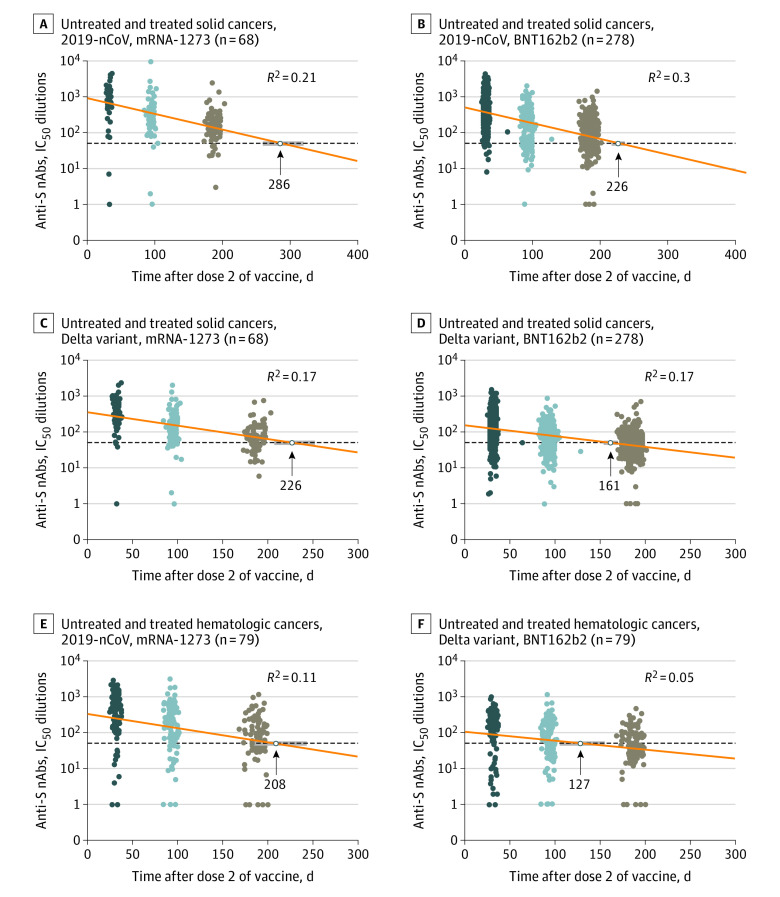
Results: Among the 841 participants enrolled between January 14 and August 8, 2021, the patient population comprised 637 participants (mean [SD] age, 61.8 [13.7] years; 386 [60.6%] female), and the healthy control population comprised 204 participants (mean [SD] age, 45.9 [12.0] years; 144 [70.6%] female). There were 399 patients with solid cancers, 101 with hematologic cancers, 38 with solid organ transplants, 99 with autoimmune diseases, and 204 healthy controls. More than 15 000 nAb determinations were performed against the original, nonvariant 2019-nCoV and the Alpha, Beta, Gamma, and Delta variants. The proportions of nAbs and their titers decreased in all study groups at 6 months after vaccination, with the greatest decreases for the Beta and Delta variants. For Beta, the proportion decreased to a median (SE) of 39.2% (5.5%) in those with hematologic cancers, 44.8% (2.7%) in those with solid cancers, 23.1% (8.3%) in those with solid organ transplants, and 22.7% (4.8%) in those with autoimmune diseases compared with 52.1% (4.2%) in healthy controls. For Delta, the proportions decreased to 41.8% (5.6%) in participants with hematologic cancer, 51.9% (2.7%) in those with solid cancers, 26.9% (8.7%) in those with solid organ transplants, and 30.7% (5.3%) in those with autoimmune diseases compared with 56.9% (4.1%) healthy controls. Neutralizing antibody titers decreased 3.5- to 5-fold between month 1 and month 6, and the estimated duration of response was greater and more durable among those participants vaccinated with mRNA-1273. In participants with solid cancers, the estimated duration of nAbs against the Beta variant was 221 days with mRNA-1273 and 146 days with BNT162b2, and against the Delta variant, it was 226 days with mRNA-1273 and 161 with BNT162b2. The estimated duration of nAbs in participants with hematologic cancers was 113 and 127 days against Beta and Delta variants, respectively.

Conclusions and relevance: This comparative effectiveness study suggests that approximately half of patients with hematologic cancers and solid cancers, about 70% of patients with solid organ transplants or autoimmune diseases, and 40% of healthy controls have lost nAbs against the circulating VOCs at 6 months after vaccination. These findings may be helpful for developing the best boosting vaccination schedule especially in immunocompromised patients.


Conflict of interest statement

Conflict of Interest Disclosures: Dr Gottardo reported receiving personal fees from Takeda Consulting, and owning stocks from BioNTech, Ozette, and Modulus Therapeutics outside the submitted work. Dr Fenwick reported having a patent pending (application No. EP20205298.1) for a neutralization assay used in this study. Dr Peters reported receiving personal fees (all to her institution) from advisory boards of Amgen, AstraZeneca, Bayer, BeiGene, Bristol Myers Squibb, Daiichi Sankyo, Debiopharm, Eli Lilly, Elsevier, Foundation Medicine, Janssen, Merck Sharp & Dohme, Merck Serono, Novartis, PharmaMar, Phosplatin Therapeutics, Pfizer, Regeneron, Roche, Sanofi, Seattle Genetics, and Takeda outside the submitted work. Dr Pantaleo reported having a patent pending (application No. EP20205298.1) for a neutralization assay used in this study. No other disclosures were reported.

Figures

Figure 1.
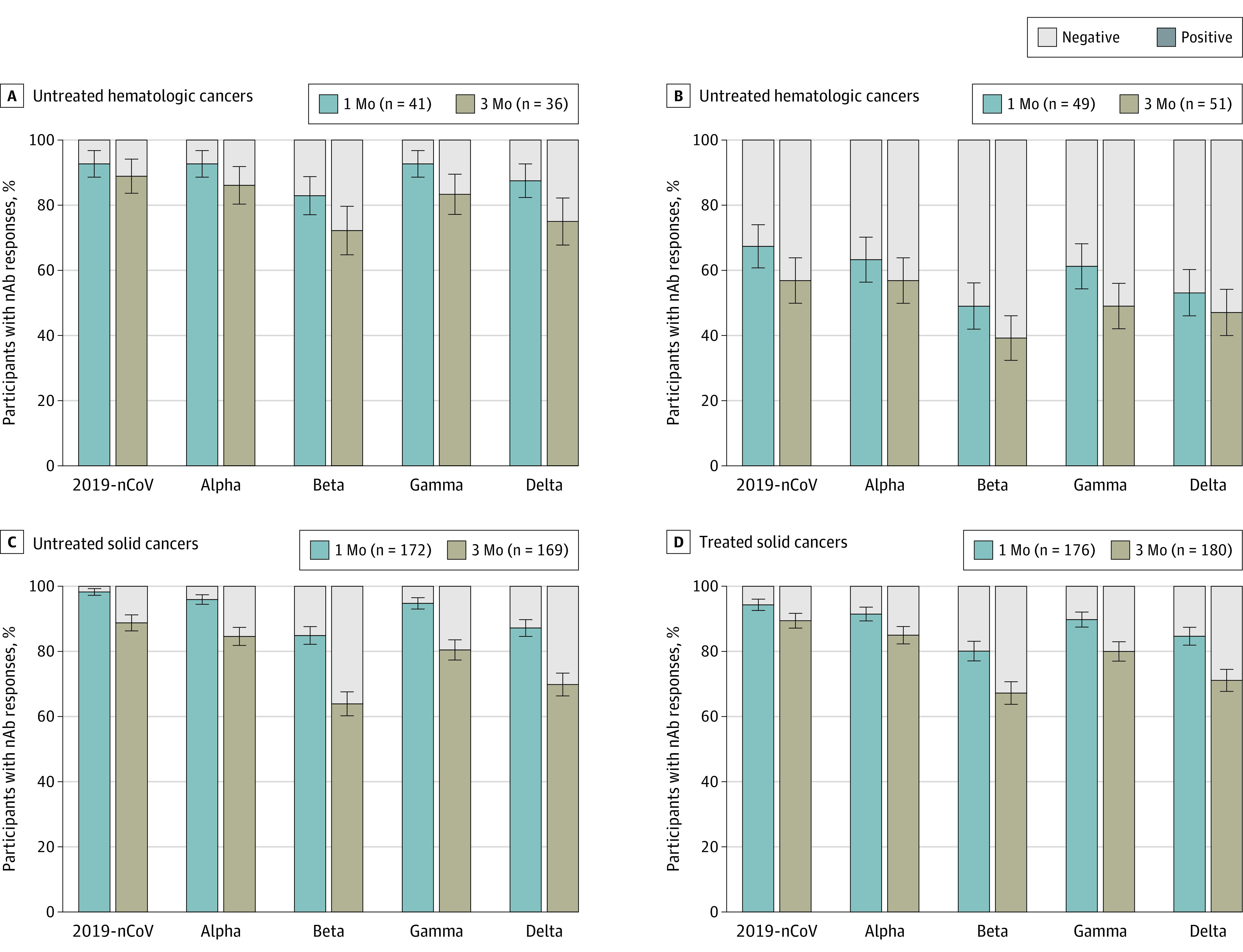
Figure 1.. Percentages of Participants With Neutralizing Antibody (nAb) Responses at 1 Month and 3 Months After the Second Vaccine Dose
Neutralizing antibody responses were measured against 2019-nCoV (the original, nonvariant SARS-CoV-2) and the different variants of concern. Data are expressed as IC50 (half maximal inhibitory concentration) dilutions. Negative (gray bars) indicates IC50 titers <50 dilutions; positive (colored bars) indicates IC50 titers >50 dilutions. Values are median (SE, denoted by whiskers).
Figure 2.
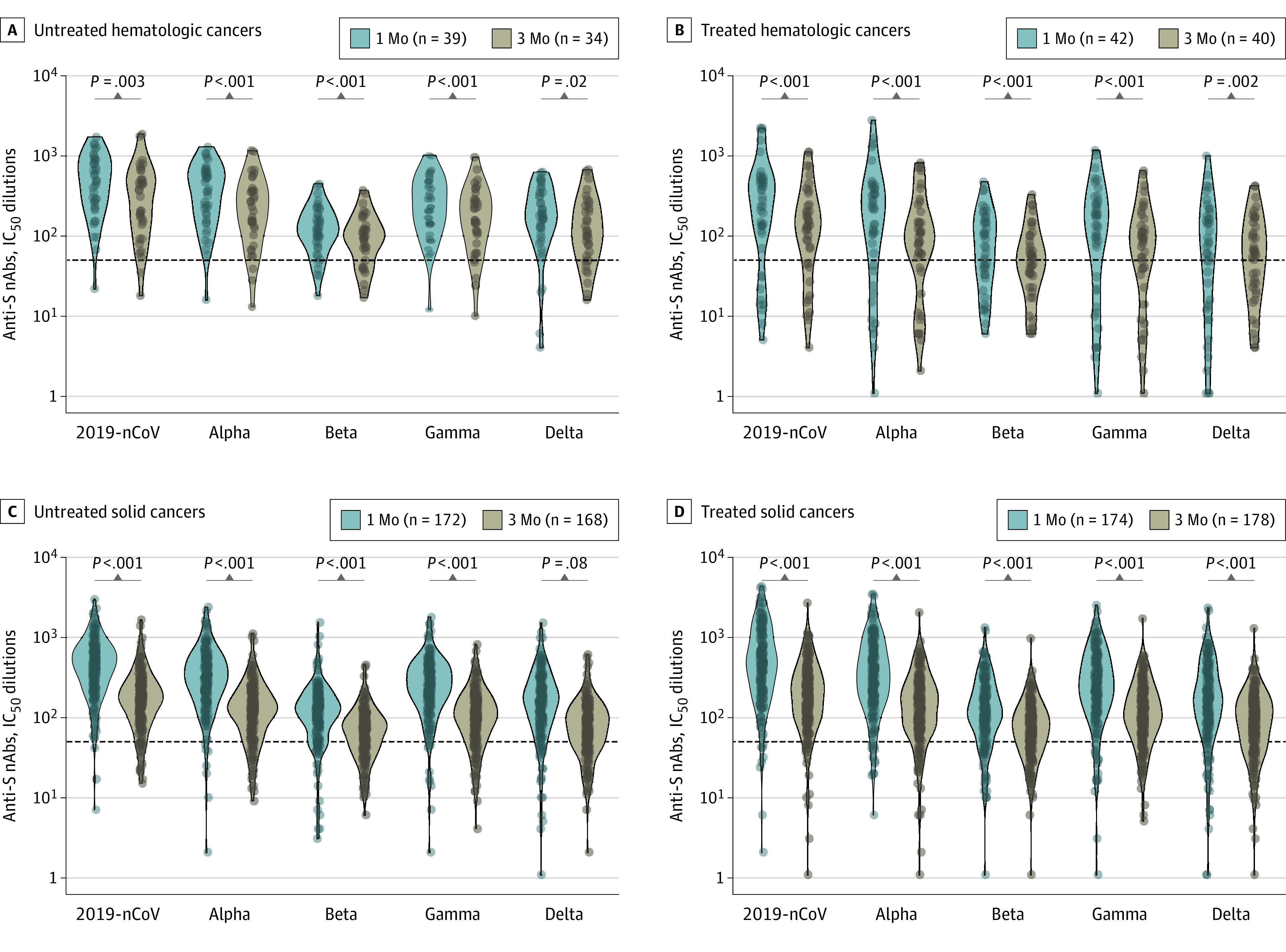
Figure 2.. Levels of Neutralizing Antibody (nAb) Responses at 1 Month and 3 Months After the Second Vaccine Dose
Neutralizing antibody responses are measured by half maximal inhibitory concentration (IC50) dilutions. The dotted lines indicate the threshold positivity of the assay (ie, IC50 greater than 50 dilutions); IC50 dilutions were log10 transformed for analysis. Resulting P values were adjusted for multiple testing using the Benjamini-Hochberg false discovery rate. Anti-S indicates IgG anti-spike; 2019-nCoV, the original, nonvariant SARS-CoV-2.
Figure 3.
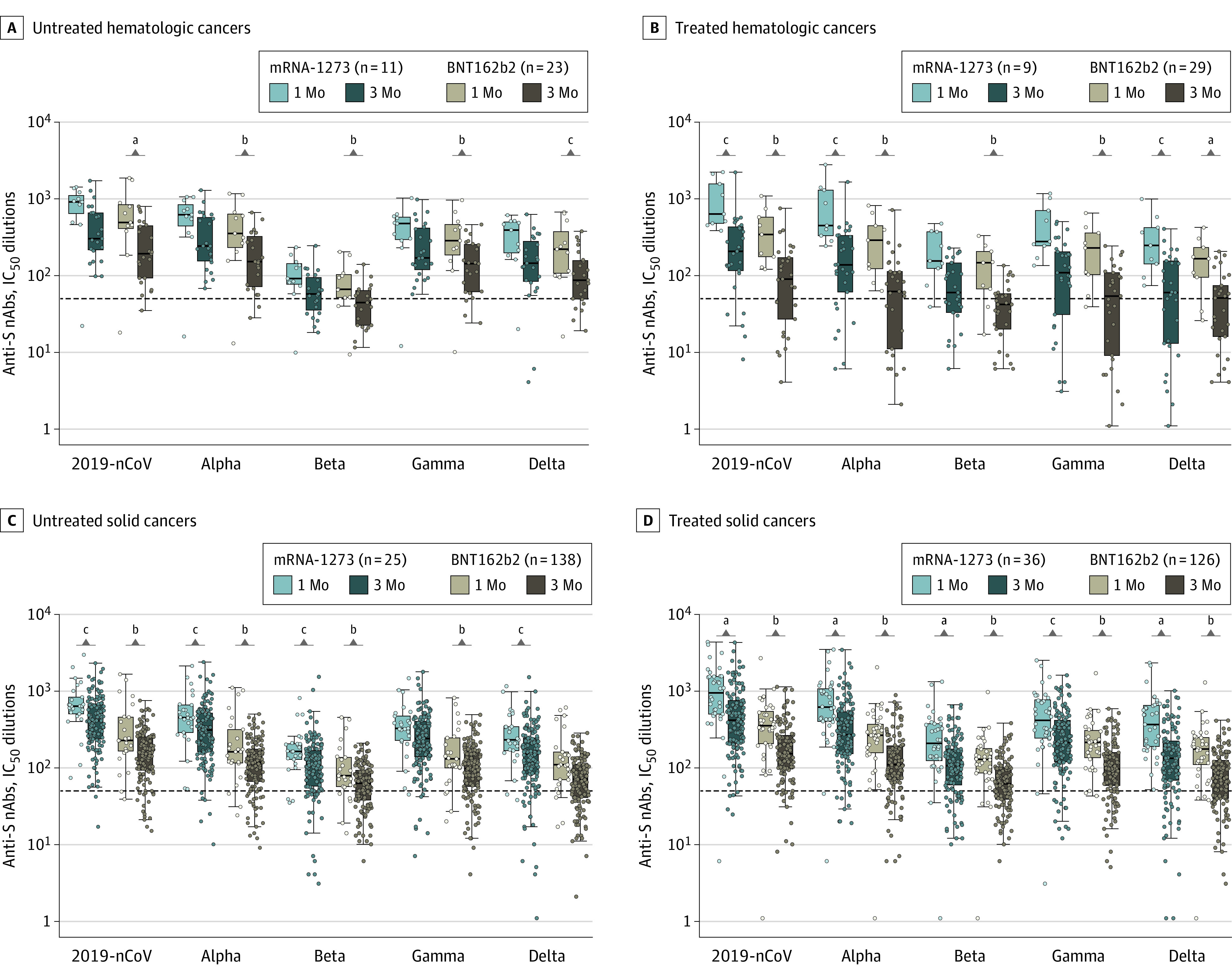
Figure 3.. Levels of Neutralizing Antibody (nAb) Responses After the Second Dose of the mRNA-1273 or BNT162b2 Vaccine
Neutralizing antibody responses are measured by half maximal inhibitory concentration (IC50) dilutions. The dotted lines indicate the threshold positivity of the assay (ie, IC50 >50 dilutions); IC50 dilutions were log10 transformed for analysis. Resulting P values were adjusted for multiple testing using the Benjamini-Hochberg false discovery rate. Values are median (SE, denoted by whiskers). Additional information on P values is provided in the eLegend for eFigure 3 in the Supplement. Anti-S indicates IgG anti-spike; 2019-nCoV, the original, nonvariant SARS-CoV-2. aP < .01. bP < .001. cP < .05.
Figure 4.
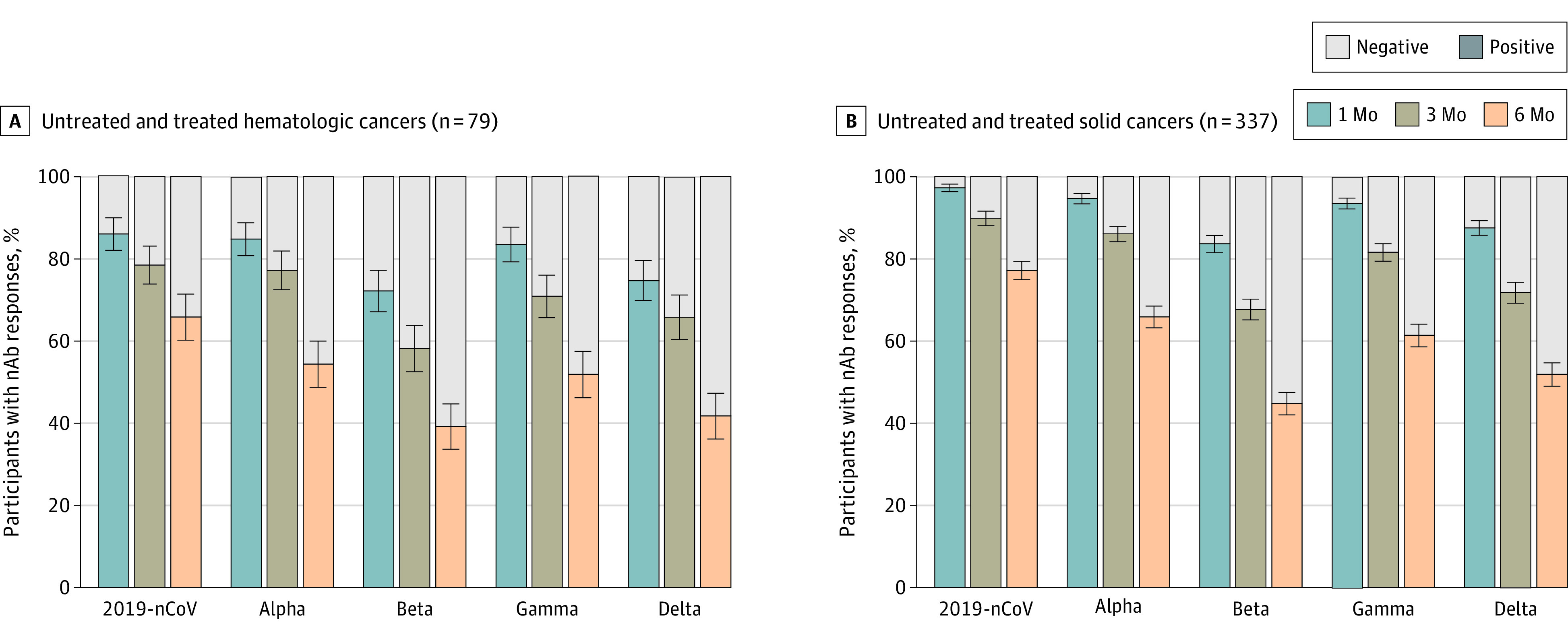
Figure 4.. Percentages of Participants With Neutralizing Antibody (nAb) Responses at 1 Month, 3 Months, and 6 Months After the Second Vaccine Dose
Untreated and treated hematologic cancers and solid cancers participants were combined for the analysis within each group. Negative (gray bars) indicates IC50 titers <50 dilutions; positive (colored bars) indicates IC50 titers >50 dilutions. Values are median (SE, denoted by whiskers). 2019-nCoV indicates the original, nonvariant SARS-CoV-2.
Figure 5.
Figure 5.. Estimates of the Duration of Neutralizing Antibody (nAb) Responses for Both Vaccines at 6 Months After the Second Vaccine Dose
Among participants, 278 with solid cancers received BNT162b2, and 68 received mRNA-1273. Cumulative analyses of the two vaccines are shown for the 79 patients with hematologic cancers. A-D, Duration of nAb responses against the original, nonvariant SARS-CoV-2 (2019-nCoV) and the Delta variant in participants with solid cancers. E and F, Duration of nAbs responses in participants with hematologic cancers. The nAb duration in days was estimated by linear regression models using time as a continuous covariate (the number of days to 1 month, 3 months, and 6 months after vaccination). Anti-S indicates IgG anti-spike.

References

    1. Kuderer NM, Choueiri TK, Shah DP, et al. ; COVID-19 and Cancer Consortium . Clinical impact of COVID-19 on patients with cancer (CCC19): a cohort study. Lancet. 2020;395(10241):1907-1918. doi:10.1016/S0140-6736(20)31187-9 - DOI - PMC - PubMed
    1. Boyarsky BJ, Werbel WA, Avery RK, et al. . Antibody response to 2-dose SARS-CoV-2 mRNA vaccine series in solid organ transplant recipients. JAMA. 2021;325(21):2204-2206. doi:10.1001/jama.2021.7489 - DOI - PMC - PubMed
    1. Akiyama S, Hamdeh S, Micic D, Sakuraba A. Prevalence and clinical outcomes of COVID-19 in patients with autoimmune diseases: a systematic review and meta-analysis. Ann Rheum Dis. 2020;annrheumdis-2020-218946. - PubMed
    1. Mato AR, Roeker LE, Lamanna N, et al. . Outcomes of COVID-19 in patients with CLL: a multicenter international experience. Blood. 2020;136(10):1134-1143. doi:10.1182/blood.2020006965 - DOI - PMC - PubMed
    1. Scarfò L, Chatzikonstantinou T, Rigolin GM, et al. . COVID-19 severity and mortality in patients with chronic lymphocytic leukemia: a joint study by ERIC, the European Research Initiative on CLL, and CLL Campus. Leukemia. 2020;34(9):2354-2363. doi:10.1038/s41375-020-0959-x - DOI - PMC - PubMed

Publication types

Supplementary concepts