


Influence of pregnancy related anthropometric changes on plantar pressure distribution during gait-A follow-up study
- PMID: 35275934
- PMCID: PMC8916641
- DOI: 10.1371/journal.pone.0264939
Influence of pregnancy related anthropometric changes on plantar pressure distribution during gait-A follow-up study
Abstract
Background: As foot constitutes the base of support for the whole body, the pregnancy-related anthropometric changes can result in adaptive plantar pressure alterations. The present study aimed to investigate how pregnancy affects foot loading pattern in gait, and if it is related to body adjustments to growing foetus that occur in the course of pregnancy.
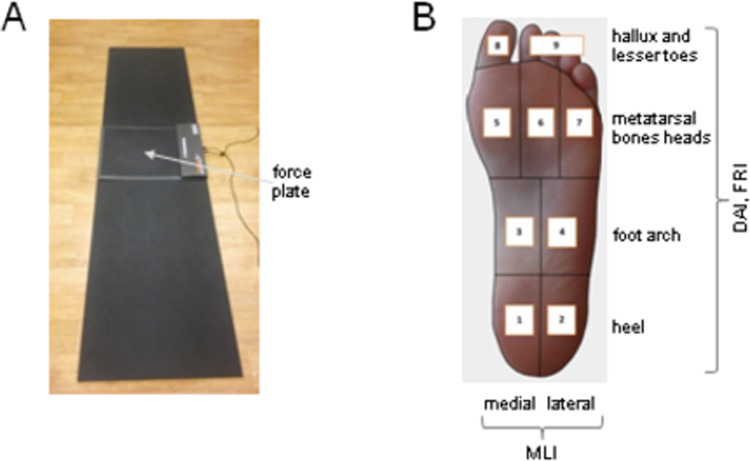
Methods: A prospective longitudinal study included 30 women. Three experimental sessions in accordance with the same procedure were carried out in the first, second and third trimesters of pregnancy. First, the anthropometric measures of the body mass and waist circumference were taken. Then walking trials at a self-selected speed along a ~6-m walkway were registered with the FreeMED force platform (Sensor Medica, Italy). Vertical foot pressure was recorded by the force plate located in the middle of the walkway.
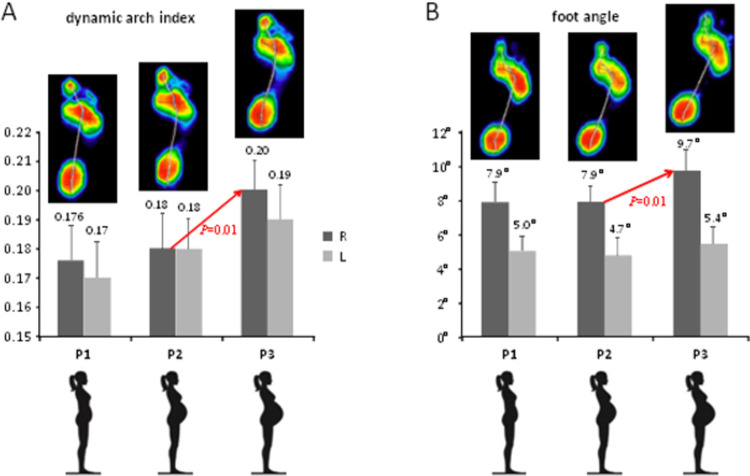
Findings: The correlation of individual foot loading parameters across different trimesters was relatively high. Nevertheless, our results revealed a longitudinal foot arch flattening with the strongest effect in late pregnancy (P = 0.01). The anthropometric characteristics also influenced the foot loading pattern depending on the phase of pregnancy. In particular, arch flattening correlated with the body mass in all trimesters (r≥0.44, P≤0.006) while the medial-lateral loading index correlated only in the first (r = 0.45, P = 0.005) and second (r = 0.36, P = 0.03) trimesters. Waist circumference changes significantly influenced dynamic arch flattening but only in the late pregnancy (r≥0.46, P≤0.004). In the third trimester, a small though significant increase in the right foot angle was observed (P = 0.01).
Interpretation: The findings provided the characteristics of the relative foot areas loading throughout pregnancy. Growing abdominal size increases the risk of medial arch flattening, which can result in less stable gait. The observed increase in foot angle in late pregnancy may constitute a strategy to enhance gait stability.
Conflict of interest statement
The authors declare no conflict of interest. The funders had no role in the design of the study; in the collection, analyses, or interpretation of data; in the writing of the manuscript, or in the decision to publish the results.
Figures
References
-
- Nyska M, Sofer D, Porat A, Howard CB, Levi A, Meizner I. Planter foot pressures in pregnant women. Isr J Med Sci. 1997; 33: 139–146. - PubMed
Publication types
MeSH terms
LinkOut - more resources
Full Text Sources
