


Can Fasting Curb the Metabolic Syndrome Epidemic?
- PMID: 35276815
- PMCID: PMC8838760
- DOI: 10.3390/nu14030456
Can Fasting Curb the Metabolic Syndrome Epidemic?
Abstract
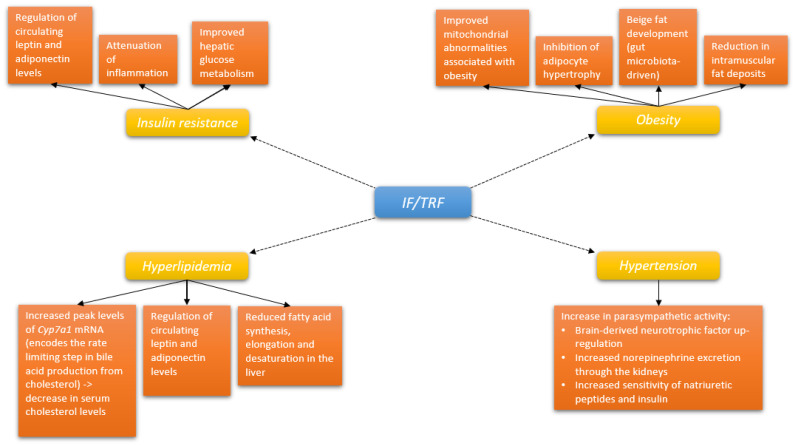
Metabolic syndrome (MetS) represents a cluster of metabolic abnormalities that includes hypertension, central obesity, insulin resistance, and atherogenic dyslipidemia. Due to the high prevalence (around 1/3 of the world population) economic burden of MetS, there is a need for new dietary, lifestyle, and therapeutic options. Recently, fasting emerged as a dietary method proposed for controlling metabolic risk factors. Intermittent fasting (IF), or time-restricted feeding (TRF), describes an array of feeding patterns in which calorie intake is restricted to a specific time period. Hence, this review aimed to elucidate the latest data on MetS and explore the viability of simple management options, such as IF and TRF. Preclinical studies have shown how IF/TRF exerts beneficial effects on the gut microbiota, glucose and insulin metabolism, weight and visceral fat, and lipid metabolism. However, the results obtained from human studies are somewhat conflicting, as weight loss was achieved in all studies, whereas in some studies, there was no significant effect on insulin resistance, cholesterol/lipid metabolism, or blood pressure. Nevertheless, as only very few human studies were performed, there is a need for more randomized control trials on larger cohorts of patients with MetS to gather higher-yield evidence to clarify whether IF/TRF are suitable dietary patterns for this population.
Keywords: diabetes mellitus; dyslipidemia; fasting; hypertension; intermittent fasting; metabolic syndrome; obesity; time restricted feeding.
Conflict of interest statement
The authors declare no conflict of interest.
Figures
References
-
- Lam D.W., LeRoith D. Metabolic Syndrome. In: Feingold K.R., Anawalt B., Boyce A., Chrousos G., de Herder W.W., Dhatariya K., Dungan K., Grossman A., Hershman J.M., Hofland J., et al., editors. Endotext. MDText.com, Inc.; South Dartmouth, MA, USA: 2000.
Publication types
MeSH terms
LinkOut - more resources
Full Text Sources
Medical
Miscellaneous
