


Effects of Intermittent Fasting on Cardiometabolic Health: An Energy Metabolism Perspective
- PMID: 35276847
- PMCID: PMC8839160
- DOI: 10.3390/nu14030489
Effects of Intermittent Fasting on Cardiometabolic Health: An Energy Metabolism Perspective
Abstract
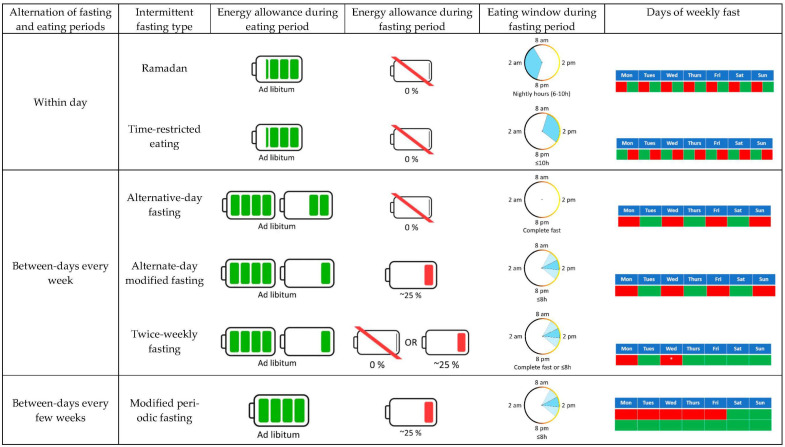
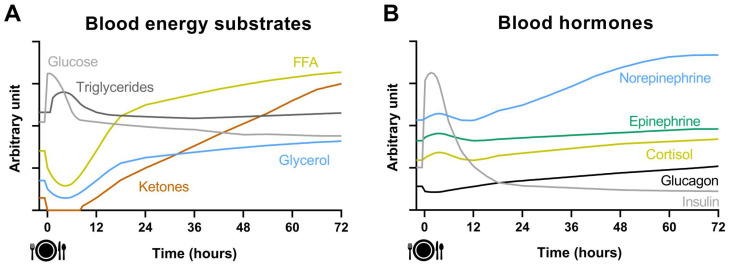
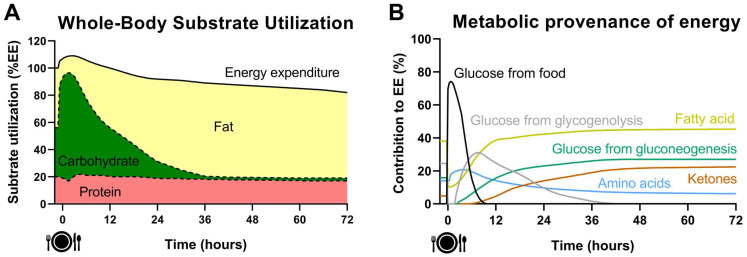
This review summarizes the effects of different types of intermittent fasting (IF) on human cardiometabolic health, with a focus on energy metabolism. First, we discuss the coordinated metabolic adaptations (energy expenditure, hormonal changes and macronutrient oxidation) occurring during a 72 h fast. We then discuss studies investigating the effects of IF on cardiometabolic health, energy expenditure and substrate oxidation. Finally, we discuss how IF may be optimized by combining it with exercise. In general, IF regimens improve body composition, ectopic fat, and classic cardiometabolic risk factors, as compared to unrestricted eating, especially in metabolically unhealthy participants. However, it is still unclear whether IF provides additional cardiometabolic benefits as compared to continuous daily caloric restriction (CR). Most studies found no additional benefits, yet some preliminary data suggest that IF regimens may provide cardiometabolic benefits in the absence of weight loss. Finally, although IF and continuous daily CR appear to induce similar changes in energy expenditure, IF regimens may differentially affect substrate oxidation, increasing protein and fat oxidation. Future tightly controlled studies are needed to unravel the underlying mechanisms of IF and its role in cardiometabolic health and energy metabolism.
Keywords: 5:2 diet; Ramadan; alternate-day fasting; cardiovascular health; energy expenditure; exercise; fasting-mimicking diet; fat oxidation; metabolic rate; modified periodic fasting; time-restricted eating; twice-weekly fasting.
Conflict of interest statement
The authors declare no conflict of interest.
Figures
References
-
- O’Connor S.G., Boyd P., Bailey C.P., Shams-White M.M., Agurs-Collins T., Hall K., Reedy J., Sauter E.R., Czajkowski S.M. Perspective: Time-Restricted Eating Compared with Caloric Restriction: Potential Facilitators and Barriers of Long-Term Weight Loss Maintenance. Adv. Nutr. 2021;12:325–333. doi: 10.1093/advances/nmaa168. - DOI - PMC - PubMed
Publication types
MeSH terms
Grants and funding
LinkOut - more resources
Full Text Sources
Medical
Miscellaneous
