


Association between Dietary Nitrate, Nitrite Intake, and Site-Specific Cancer Risk: A Systematic Review and Meta-Analysis
- PMID: 35277025
- PMCID: PMC8838348
- DOI: 10.3390/nu14030666
Association between Dietary Nitrate, Nitrite Intake, and Site-Specific Cancer Risk: A Systematic Review and Meta-Analysis
Abstract
Background: People consume nitrates, nitrites, nitrosamines, and NOCs compounds primarily through processed food. Many studies have yielded inconclusive results regarding the association between cancer and dietary intakes of nitrates and nitrites. This study aimed to quantify these associations across the reported literature thus far.
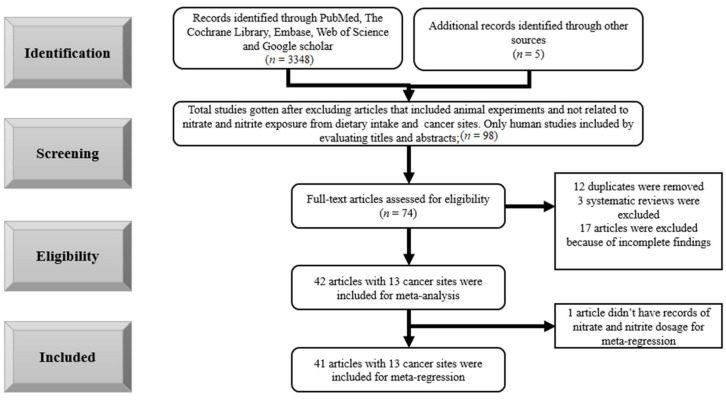
Methods: We performed a systematic review following PRISMA and MOOSE guidelines. A literature search was performed using Web of Science, Embase, PubMed, the Cochrane library, and google scholar up to January 2020. STATA version 12.0 was used to conduct meta-regression and a two-stage meta-analysis.
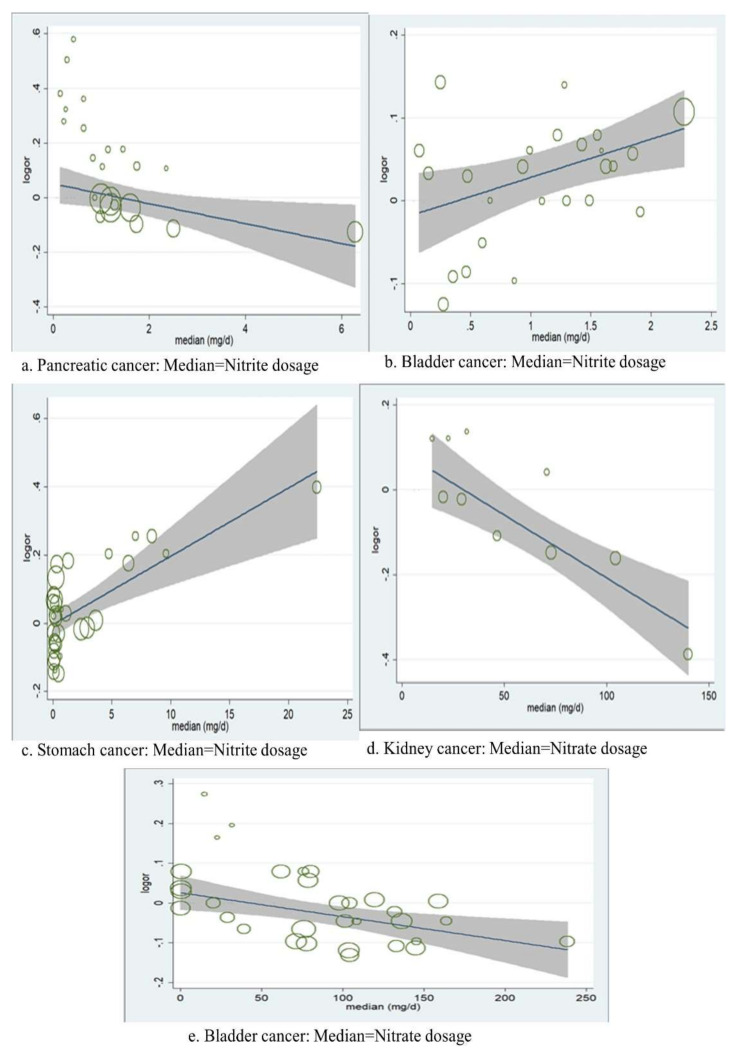
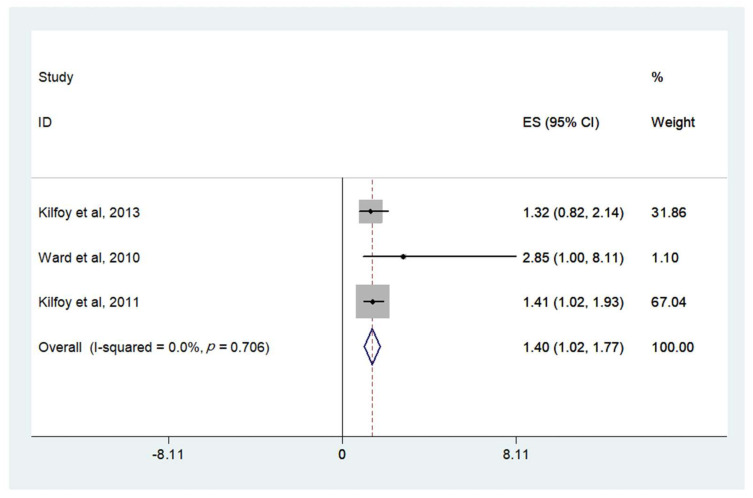
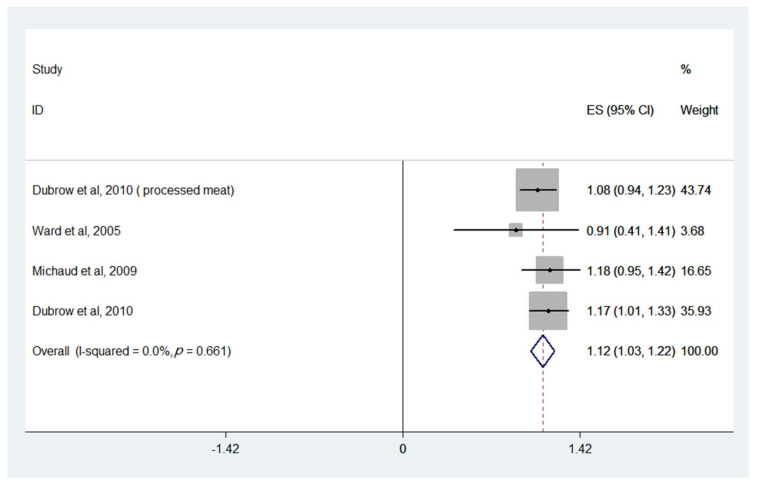
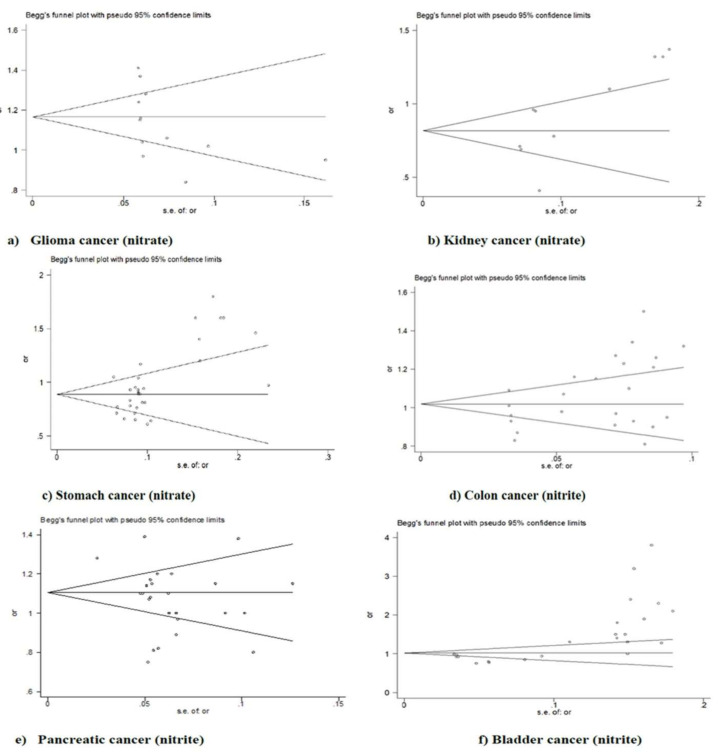
Results: A total of 41 articles with 13 different cancer sites were used for analysis. Of these 13 cancer types/sites, meta-regression analysis showed that bladder and stomach cancer risk was greater, and that pancreatic cancer risk was lower with increasing nitrite intakes. Kidney and bladder cancer risk were both lower with increasing nitrate intakes. When comparing highest to lowest (reference) categories of intake, meta-analysis of studies showed that high nitrate intake was associated with an increased risk of thyroid cancer (OR = 1.40, 95% CI: 1.02, 1.77). When pooling all intake categories and comparing against the lowest (reference) category, higher nitrite intake was associated with an increased risk of glioma (OR = 1.12, 95% CI: 1.03, 1.22). No other associations between cancer risk and dietary intakes of nitrates or nitrites were observed.
Conclusion: This study showed varied associations between site-specific cancer risks and dietary intakes of nitrate and nitrite. Glioma, bladder, and stomach cancer risks were higher and pancreatic cancer risk was lower with higher nitrite intakes, and thyroid cancer risk was higher and kidney cancer risk lower with higher nitrate intakes. These data suggest type- and site-specific effects of cancer risk, including protective effects, from dietary intakes of nitrate and nitrite.
Keywords: cancer; dietary intake; humans; nitrate; nitrites; systematic review.
Conflict of interest statement
The authors declare that they have no competing interest.
Figures
References
-
- Bryan N.S., van Grinsven H. The role of nitrate in human health. Adv. Agron. 2013;119:153–182.
-
- GBD 2015 Risk Factors Collaborators Global, regional, and national comparative risk assessment of 79 behavioural, environmental and occupational, and metabolic risks or clusters of risks, 1990–2015: A systematic analysis for the Global Burden of Disease Study 2015. Lancet. 2016;388:1659–1724. doi: 10.1016/S0140-6736(16)31679-8. - DOI - PMC - PubMed
Publication types
MeSH terms
Substances
LinkOut - more resources
Full Text Sources
