


Beneficial Effects of Spirulina Consumption on Brain Health
- PMID: 35277035
- PMCID: PMC8839264
- DOI: 10.3390/nu14030676
Beneficial Effects of Spirulina Consumption on Brain Health
Abstract
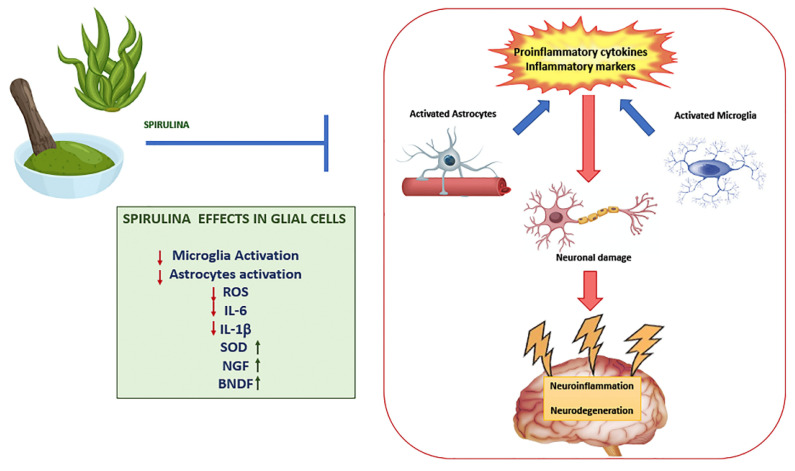
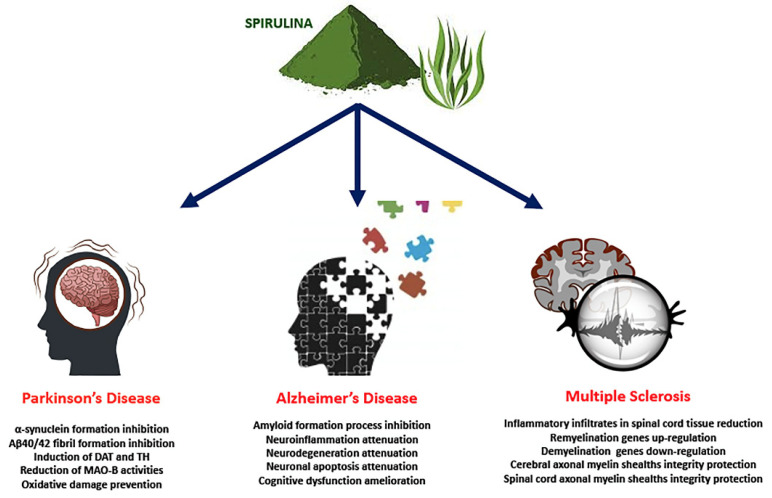
Spirulina is a microscopic, filamentous cyanobacterium that grows in alkaline water bodies. It is extensively utilized as a nutraceutical food supplement all over the world due to its high levels of functional compounds, such as phycocyanins, phenols and polysaccharides, with anti-inflammatory, antioxidant, immunomodulating properties both in vivo and in vitro. Several scientific publications have suggested its positive effects in various pathologies such as cardiovascular diseases, hypercholesterolemia, hyperglycemia, obesity, hypertension, tumors and inflammatory diseases. Lately, different studies have demonstrated the neuroprotective role of Spirulina on the development of the neural system, senility and a number of pathological conditions, including neurological and neurodegenerative diseases. This review focuses on the role of Spirulina in the brain, highlighting how it exerts its beneficial anti-inflammatory and antioxidant effects, acting on glial cell activation, and in the prevention and/or progression of neurodegenerative diseases, in particular Parkinson's disease, Alzheimer's disease and Multiple Sclerosis; due to these properties, Spirulina could be considered a potential natural drug.
Keywords: Alzheimer’s disease; Parkinson’s disease; astrocytes; microglia; multiple sclerosis; neurodegeneration diseases; neuroinflammation; phycocyanin; spirulina.
Conflict of interest statement
The authors declare no conflict of interest.
Figures
References
-
- López-Romero D., Izquierdo-Vega J.A., Morales-González J.A., Madrigal-Bujaidar E., Chamorro-Cevallos G., Sánchez-Gutiérrez M., Betanzos-Cabrera G., Alvarez-Gonzalez I., Morales-González Á., Madrigal-Santillán E. Evidence of Some Natural Products with Antigenotoxic Effects. Part 2: Plants, Vegetables, and Natural Resin. Nutrients. 2018;10:1954. doi: 10.3390/nu10121954. - DOI - PMC - PubMed
-
- Gutiérrez-Salmeán G., Fabila-Castillo L., Chamorro-Cevallos G. Nutritional and toxicological aspects of Spirulina (Arthrospira) Nutr. Hosp. 2015;32:34–40. - PubMed
Publication types
MeSH terms
Substances
LinkOut - more resources
Full Text Sources
Medical
