


Computational pathology for musculoskeletal conditions using machine learning: advances, trends, and challenges
- PMID: 35277196
- PMCID: PMC8915507
- DOI: 10.1186/s13075-021-02716-3
Computational pathology for musculoskeletal conditions using machine learning: advances, trends, and challenges
Abstract
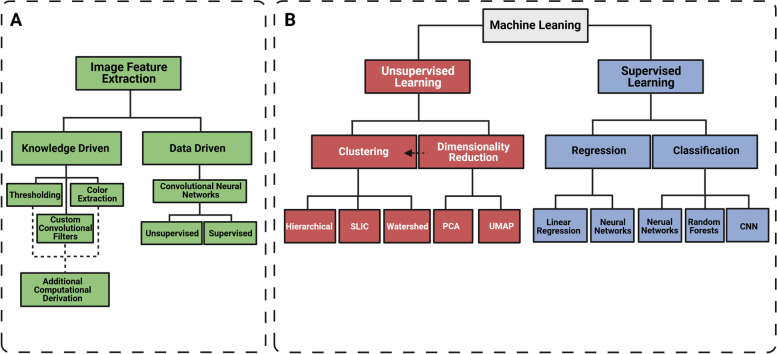
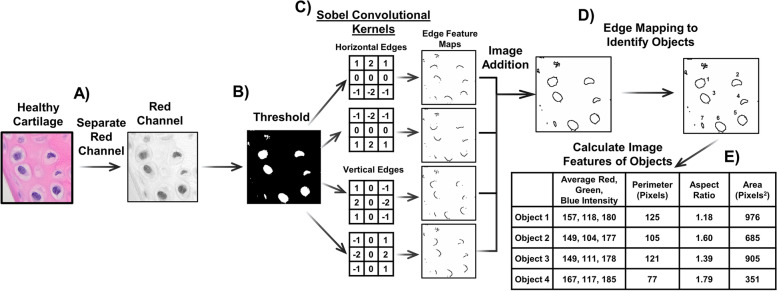
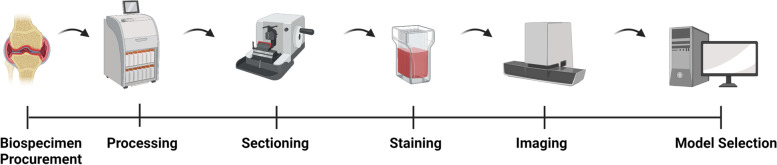
Histopathology is widely used to analyze clinical biopsy specimens and tissues from pre-clinical models of a variety of musculoskeletal conditions. Histological assessment relies on scoring systems that require expertise, time, and resources, which can lead to an analysis bottleneck. Recent advancements in digital imaging and image processing provide an opportunity to automate histological analyses by implementing advanced statistical models such as machine learning and deep learning, which would greatly benefit the musculoskeletal field. This review provides a high-level overview of machine learning applications, a general pipeline of tissue collection to model selection, and highlights the development of image analysis methods, including some machine learning applications, to solve musculoskeletal problems. We discuss the optimization steps for tissue processing, sectioning, staining, and imaging that are critical for the successful generalizability of an automated image analysis model. We also commenting on the considerations that should be taken into account during model selection and the considerable advances in the field of computer vision outside of histopathology, which can be leveraged for image analysis. Finally, we provide a historic perspective of the previously used histopathological image analysis applications for musculoskeletal diseases, and we contrast it with the advantages of implementing state-of-the-art computational pathology approaches. While some deep learning approaches have been used, there is a significant opportunity to expand the use of such approaches to solve musculoskeletal problems.
Keywords: Computational pathology; Convolutional neural network; Deep learning; Histopathology; Image analysis; Machine learning; Orthopedics; Rheumatology.
© 2022. The Author(s).
Conflict of interest statement
The authors declare that they have no competing interests.
Figures
References
-
- Boyce BF. Whole slide imaging: uses and limitations for surgical pathology and teaching. Biotech Histochem. 2015;90(5):321–330. - PubMed
-
- Krenn V, et al. Grading of chronic synovitis--a histopathological grading system for molecular and diagnostic pathology. Pathol Res Pract. 2002;198(5):317–325. - PubMed
-
- Glasson SS, et al. The OARSI histopathology initiative - recommendations for histological assessments of osteoarthritis in the mouse. Osteoarthritis Cartilage. 2010;18(Suppl 3):S17–S23. - PubMed
-
- Renshaw AA, Gould EW. Measuring errors in surgical pathology in real-life practice: defining what does and does not matter. Am J Clin Pathol. 2007;127(1):144–152. - PubMed
-
- Robboy SJ, et al. The Pathologist Workforce in the United States: II. An Interactive Modeling Tool for Analyzing Future Qualitative and Quantitative Staffing Demands for Services. Arch Pathol Lab Med. 2015;139(11):1413–1430. - PubMed
Publication types
MeSH terms
Grants and funding
LinkOut - more resources
Full Text Sources
Other Literature Sources
