


Prevalence of Acute Pulmonary Embolism at Autopsy in Patients With COVID-19
- PMID: 35277253
- PMCID: PMC8902912
- DOI: 10.1016/j.amjcard.2022.01.051
Prevalence of Acute Pulmonary Embolism at Autopsy in Patients With COVID-19
Abstract
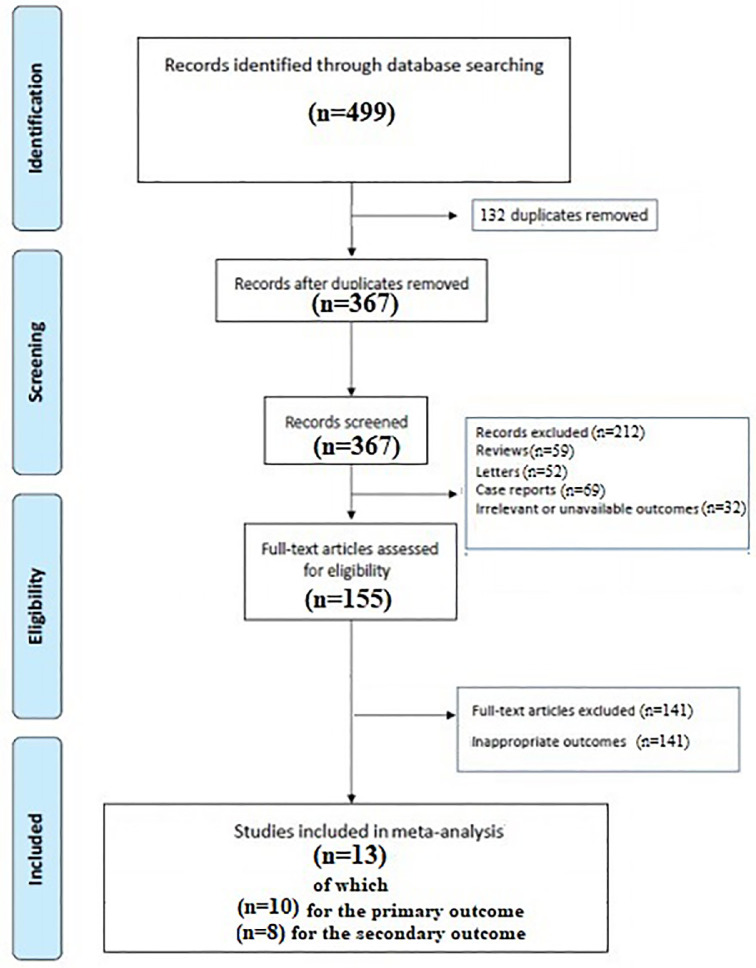
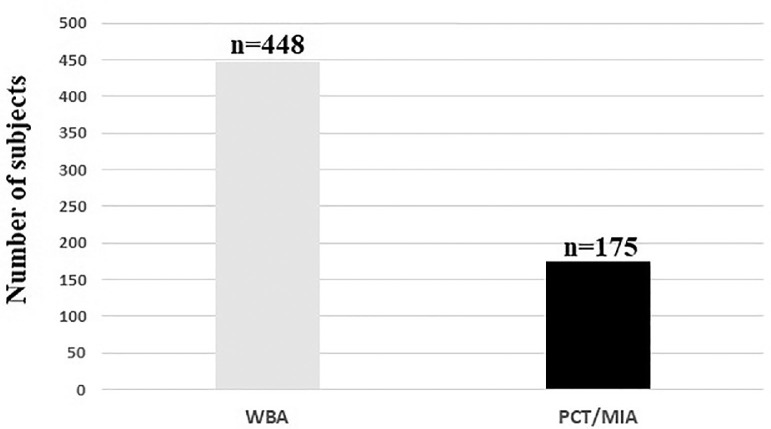
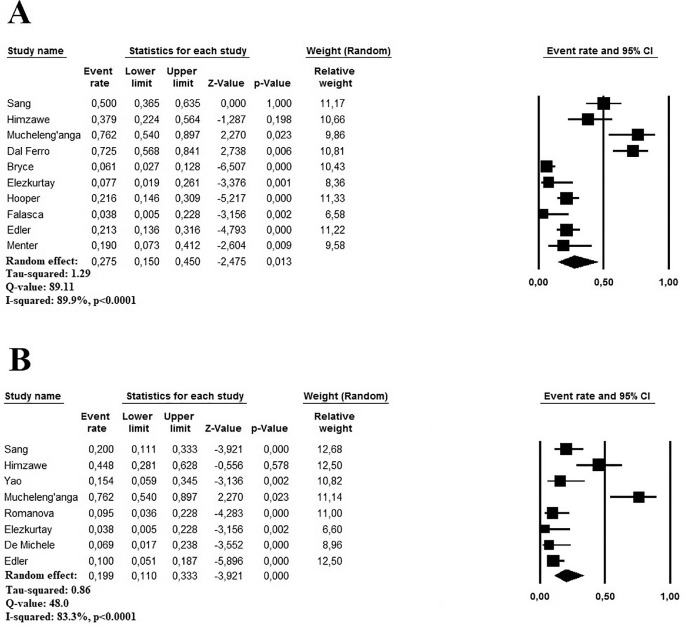
To date, the actual prevalence of acute pulmonary embolism (PE) in patients with SARS-CoV-2 infection remains unknown, as systematic screening for PE is cumbersome. We performed a systematic review and meta-analysis on autoptic data to estimate the prevalence of histopathologic findings of acute PE and its relevance as a cause of death on patients with COVID-19. We searched MEDLINE-PubMed and Scopus to locate all articles published in the English language, up to August 10, 2021, reporting the autoptic prevalence of acute PE and evaluating PE as the underlying cause of death in patients with COVID-19. The pooled prevalence for both outcomes was calculated using a random-effects model and presenting the related 95% confidence interval (CI). Statistical heterogeneity was measured using the Higgins I2 statistic. We analyzed autoptic data of 749 patients with COVID-19 (mean age 63.4 years) included in 14 studies. In 10 studies, based on 526 subjects (mean age 63.8 years), a random-effect model revealed that autoptic acute PE findings were present in 27.5% of cases (95% CI 15.0 to 45.0%, I2 89.9%). Conversely, in 429 COVID-19 subjects (mean age 64.0 years) enrolled in 9 studies, acute PE was the underlying cause of death in 19.9% of cases (95% CI 11.0 to 33.3%, I2 83.3%). Autoptic findings of acute PE in patients with COVID-19 are present in about 30% of subjects, whereas a venous thromboembolic event represents the underlying cause of death in about 1 of 4 patients.
Copyright © 2022 Elsevier Inc. All rights reserved.
Figures
References
-
- Klok FA, Kruip MJHA, van der Meer NJM, Arbous MS, Gommers D, Kant KM, Kaptein FHJ, van Paassen J, Stals MAM, Huisman MV, Endeman H. Confirmation of the high cumulative incidence of thrombotic complications in critically ill ICU patients with COVID-19: an updated analysis. Thromb Res. 2020;191:148–150. - PMC - PubMed
-
- Wichmann D, Sperhake JP, Lütgehetmann M, Steurer S, Edler C, Heinemann A, Heinrich F, Mushumba H, Kniep I, Schröder AS, Burdelski C, de Heer G, Nierhaus A, Frings D, Pfefferle S, Becker H, Bredereke-Wiedling H, de Weerth A, Paschen HR, Sheikhzadeh-Eggers S, Stang A, Schmiedel S, Bokemeyer C, Addo MM, Aepfelbacher M, Püschel K, Kluge S. Autopsy findings and venous thromboembolism in patients with COVID-19: A prospective cohort study. Ann Intern Med. 2020;173:268–277. - PMC - PubMed
-
- Wells GA, Shea B, O'Connell D, Peterson J, Welch V, Losos M, Tugwell P. The Newcastle-Ottawa Scale (NOS) for assessing the quality if nonrandomized studies in meta-analyses. The Ottawa Hospital. Available at: http://www.ohri.ca/programs/clinical_epidemiology/oxford.asp Accessed on August 5, 2021.
Publication types
MeSH terms
LinkOut - more resources
Full Text Sources
Medical
Miscellaneous
