


Ascorbate glutathione antioxidant system alleviates fly ash stress by modulating growth physiology and biochemical responses in Solanum lycopersicum
- PMID: 35280552
- PMCID: PMC8913553
- DOI: 10.1016/j.sjbs.2021.12.013
Ascorbate glutathione antioxidant system alleviates fly ash stress by modulating growth physiology and biochemical responses in Solanum lycopersicum
Abstract
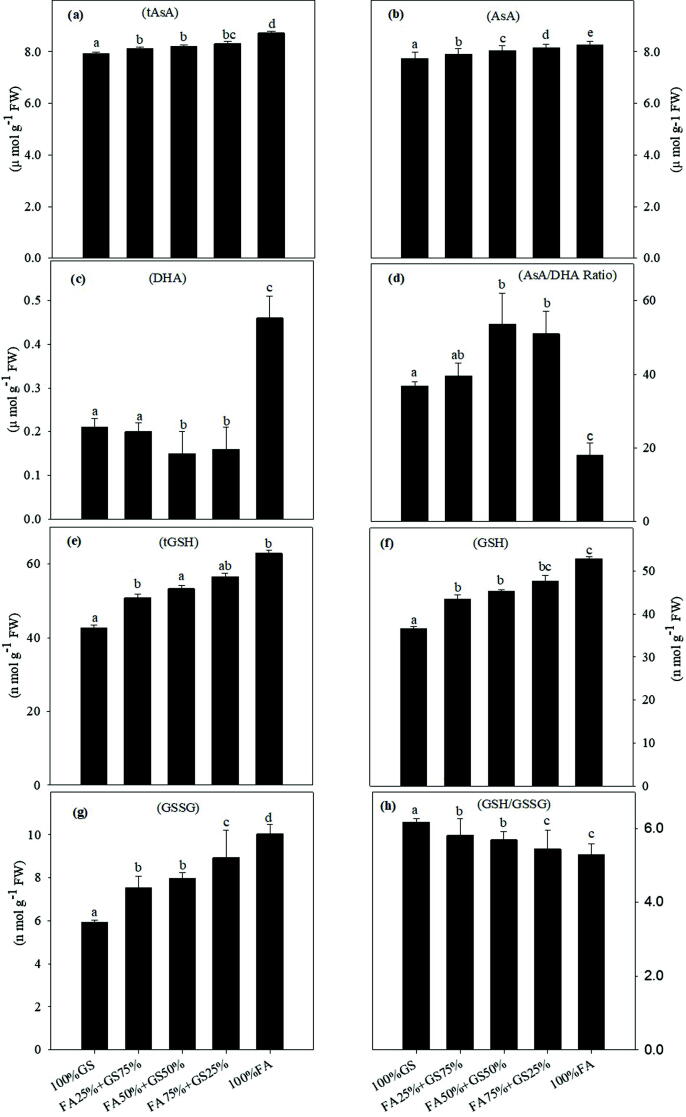
Tomato plants (Solanum lycopersicum L.) were developed in soils with different fly ash (FA) amendments (25, 50, 75, 100% FA) to measure the effects of FA on metal accumulation, chlorophyll pigments, chlorophyll fluorescence, growth, biomass, gas exchange parameters, and the ascorbate glutathione pathway (AsA-GSH). The metal concentration was much higher in FA compared to the garden soil/(control). The observed metal translocation was higher in roots than shoots. Plants raised in soils treated with 50% or more FA showed significant decreases in growth, biomass, gas exchange parameters, protein, chlorophyll pigments, and fluorescence parameters. Additionally, a significant increase in antioxidants under higher FA-amended soils were observed. Our results showed that the ability of Solanum lycopersicum plants to effectively synchronize the actions of antioxidant enzymes associated in reactive oxygen species (ROS) scavenging - notably superoxidase dismutase (SOD), ascorbate peroxidase (APX), and glutathione reductase (GR) - with good maintenance of the AsA/DHA ratio, that could be connected to FA stress tolerance. The toxic metals present in FA caused oxidative stress in Solanum lycopersicum, as evident from the increase in electrolyte leakage (EL), lipid peroxidation (MDA), and ROS levels. Furthermore, the AsA-GSH cycle plays a key role in alleviating oxidative damage caused by FA application.
Keywords: Fly ash; Heavy metal; Oxidative stress; Reactive Oxygen Species; Solanum lycopersicum; Stress tolerance.
© 2021 The Author(s).
Conflict of interest statement
The authors declare that they have no known competing financial interests or personal relationships that could have appeared to influence the work reported in this paper.
Figures


References
-
- Afshan S., Ali S., Bharwana S.A., Rizwan M., Farid M., Abbas F., Ibrahim M., Mehmood M.A., Abbasi G.H. Citric acid enhances the phytoextraction of chromium, plant growth, and photosynthesis by alleviating the oxidative damages in Brassica napus L. Environ. Sci. Pollut. Res. 2015;22(15):11679–11689. doi: 10.1007/s11356-015-4396-8. - DOI - PubMed
-
- Ahmad P., Jaleel C.A., Salem M.A., Nabi G., Sharma S. Roles of enzymatic and nonenzymatic antioxidants in plants during abiotic stress. Crit. Rev. Biotechnol. 2010;30(3):161–175. - PubMed
-
- Ahmad P., Tripathi D.K., Deshmukh R., Pratap Singh V., Corpas F.J. Revisiting the role of ROS and RNS in plants under changing environment. Environ. Exp. Bot. 2019;161:1–3.
-
- Alyemeni M.N., Ahanger M.A., Wijaya L., Alam P., Ahmad P. Contrasting tolerance among soybean genotypes subjected to different levels of cadmium stress. Pak. J. Bot. 2017;49:903–911.
LinkOut - more resources
Full Text Sources
Research Materials
Miscellaneous
