


Total phenolic, flavonoid contents, and biological activities of stem extracts of Astragalus spinosus (Forssk.) Muschl. grown in Northern Border Province, Saudi Arabia
- PMID: 35280574
- PMCID: PMC8913549
- DOI: 10.1016/j.sjbs.2021.12.029
Total phenolic, flavonoid contents, and biological activities of stem extracts of Astragalus spinosus (Forssk.) Muschl. grown in Northern Border Province, Saudi Arabia
Abstract
Background and objective: Genus Astragalus belongs to the family Fabaceae and is one among the largest genera consisting of around 3000 species. The plants have been used traditionally in treatment of various ailments in folklore. The study was planned to assess the analgesic and inflammatory activity of Astragulus spinosus (Forssk.) Muschl extract of the stem.
Materials and methods: Course powder of stems of Astragulus spinosus was extracted using chloroform and methanol as solvents. Folin ciocalteu method was employed for determination of the phenolic acid content. Aluminum chloride colorimetric procedure was followed for estimating the flavonoid content. Both chloroform and methanolic extracts at 250 and 500 mg/kg, were tested for the analgesic activity, however, only methanolic extract was selected for anti-inflammatory property based on the results of analgesic activity. The analgesic effect was executed on male rats by the hot plate model. The anti-inflammatory effect was studied in the carrageenan rat paw edema model. The experimental information was interpreted statistically using one-way ANOVA and p < 0.05 was used to express importance of the results.
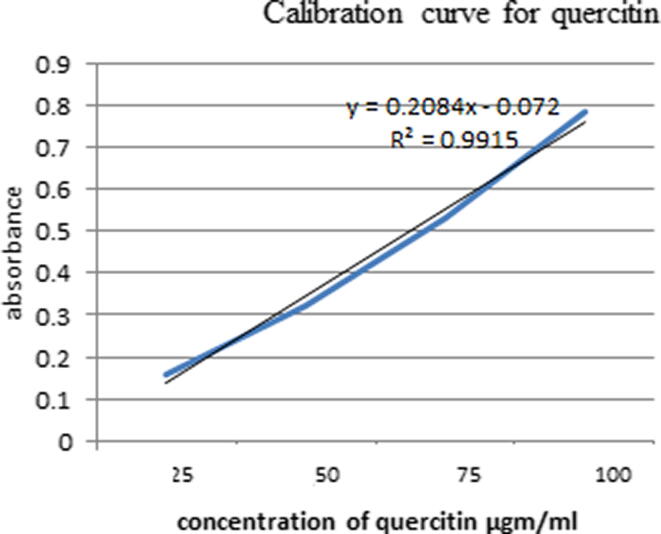
Results: The total phenolics of the methanol extract was 420 µg and that of chloroform extract was 265 µgwhile total flavonoid content in terms of quercetin was found to be 68 µg and 17.5 µg for methanol and chloroform extract respectively. Only methanolic extract exhibited significant (p < 0.001) analgesic activity by elevating the pain threshold starting from 15 min. The methanolic extract inhibited (p < 0.001) the edema in carrageenan induced model. The performance of higher dose (500 mg/kg) was better with reference to lower dose (250 mg/kg).
Conclusion: Outcome of the results show that the methanolic stem extracts exhibited significant analgesic and anti-inflammatory-like activity with reference to chloroform extract. Credit of which is given to flavonoids and phenolic content present in the methanolic extract. However, more research is suggested to establish the safety and effectiveness of the herbal drug to manage diseased states including pain and inflammation.
Keywords: Analgesic; Anti-inflammatory; Astragalus spinosus; Carrageenan; Hot plate.
© 2021 The Author(s).
Conflict of interest statement
The authors declare that they have no known competing financial interests or personal relationships that could have appeared to influence the work reported in this paper.
Figures

References
-
- Abd Elkader H.A.E., Abdou H.M., Khamiss O.A., Essawy A.E. Anti-anxiety and antidepressant-like effects of astragaloside IV and saponins extracted from Astragalus spinosus against the bisphenol A-induced motor and cognitive impairments in a postnatal rat model of schizophrenia. Environ. Sci. Pollut. Res. Int. 2021;28(26):35171–35187. - PubMed
-
- Alok M., Versha P., Deepak K. Quantitative estimation of Berberine content of Berberis asiatica from different altitude of Garhwal Himalaya. Asian. J. Pharm. Clin. Res. 2014;7(1):165–167.
-
- Arun K.J., Bahukhandi A., Dhyani P., Bhatt I.D., Rawal R.S., Nandi S.K. Impact of Altitudes and Habitats on Valerenic Acid, Total Phenolics, Flavonoids, Tannins, and Antioxidant Activity of Valeriana jatamansi. Appl. Biochem. Biotechnol. 2016;179(6):911–926. - PubMed
-
- Ashour M.A. Comparative chemical and biological investigations of three Saudi Astragalus species. J. App. Biol. Biotech. 2019;7(5):56–61.
Further Reading
-
- Durazzo A., Nazhand A., Lucarini M., et al. Astragalus (Astragalus membranaceus Bunge): botanical, geographical, and historical aspects to pharmaceutical components and beneficial role. Rend. Fis. Acc. Lincei. 2021;32:625–642.
-
- Kim Y.O., Kim S.K., Cho A.R., Ho J. Anti-inflammatory and anti-nociceptive effects of extract of Astragalus membranaceous. Ori.Pharma. Exper. Med. 2008;7(5):569–572.
-
- Maresca M., Micheli L., Cinci L., Bilia A.R., Ghelardini C., Mannelli L.C. Pain relieving and protective effects of Astragalus hydroalcoholic extract in rat arthritis models. J. Pharm. Pharmacol. 2017;69(12):1858–1870. - PubMed
-
- Naira N., Mohd I., El-Feky S.A. Effect of seasonal and geographical variation on the phytoconstituents and medicinal properties of Tribulus terrestris. Indo. Amer. J. Pharma. Sci. 2017;4(05):1045–1051.
-
- Shojaii A., Motevalian M., Rahnama N. Evaluation of anti-inflammatory and analgesic activities and the phytochemical study of Astragalus arbusculinus gum in animal models. J. Basic. Clin. Physiol. Pharmacol. 2015;26(4):369–374. - PubMed
LinkOut - more resources
Full Text Sources
