


Phytogenic compounds from avocado (Persea americana L.) extracts; antioxidant activity, amylase inhibitory activity, therapeutic potential of type 2 diabetes
- PMID: 35280591
- PMCID: PMC8913550
- DOI: 10.1016/j.sjbs.2021.11.031
Phytogenic compounds from avocado (Persea americana L.) extracts; antioxidant activity, amylase inhibitory activity, therapeutic potential of type 2 diabetes
Abstract
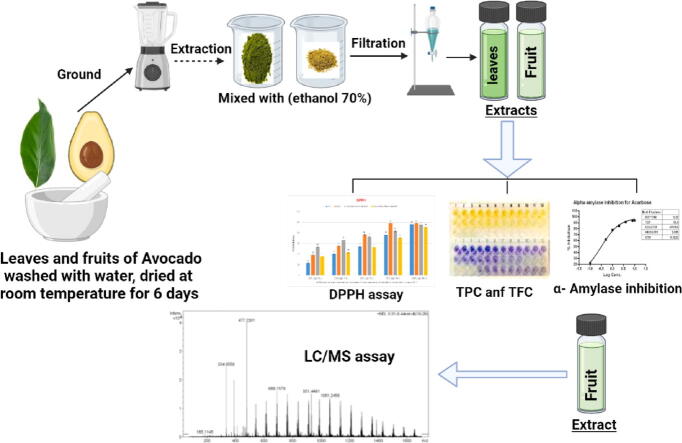
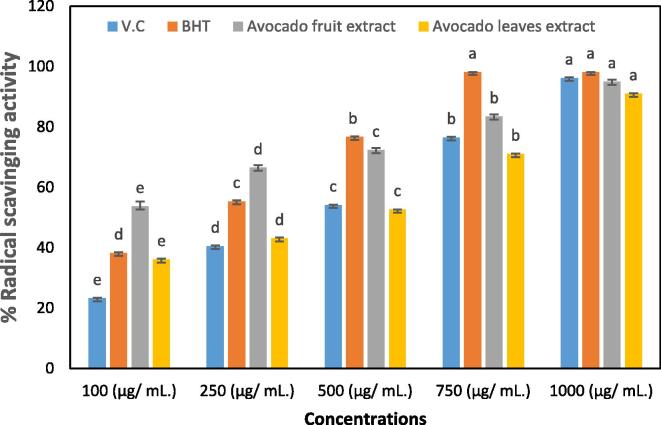
Diabetes is a worldwide public health disease. Currently, the most effective way to treat diabetes is to mitigate postprandial hyperglycemia by inhibiting carbohydrate hydrolysis enzymes in the digestive system. Plant extracts are rich in bioactive compounds, which can be used in diabetes treatment. This study aims to evaluate the polyphenols content in ethanolic extracts of avocado fruit and leaves (Persea americana Mill.). Additionally, their antioxidant activity using DPPH, while the inhibition ability of α-amylase was examined by reacting different amounts of the extracts with α-amylase compared to acarbose as standard inhibitor. The active compounds were detected in the extracts by LC/MS. The obtained results showed that the leaf extract recorded a significant content of total phenolic compounds compared to the fruit extract (178.95 and 145.7 mg GAE /g dry weight, respectively). The total flavonoid values ranged from 32.5 to 70.08 mg QE/g dry weight of fruit and leaves extracts, respectively. Twenty-six phytogenic compounds were detected in leaf and fruit extract by LC/MS. These compounds belong to fatty acids, sterols, triterpenes, phenolic acids, and flavonoids. The antioxidant activity of the extracts is due to the exist of phytogenic compounds, i.e., polyphenols and flavonoids. The antioxidant activity increased in a concentration dependant manner. Avocado fruit extract (1000 µg/mL) scavenged 95% of DPPḢ while leaf extract rummaged 91.03% of free radicals compared with Vit C and BHT. Additionally, higher α-amylase inhibitory activity was observed in fruit extract than the leaf extract, where the fruit and leaf extract (1000 μg/ml) inhibited the enzyme by 92.13% and 88.95%, respectively. The obtained results showed that the ethanolic extracts of avocado could have a significant impact on human health due to their high content of polyphenols.
Keywords: Amylase inhibition; Antioxidant activity; Avocado fruit; Extraction; LC/MS; Leaves; Phenolic compounds.
© 2021 The Authors.
Conflict of interest statement
The authors declare that they have no known competing financial interests or personal relationships that could have appeared to influence the work reported in this paper.
Figures
References
-
- Abdel Motaal A., Salem H.H., Almaghaslah D., Alsayari A., Bin Muhsinah A., Alfaifi M.Y., Elbehairi S.E.I., Shati A.A., El-Askary H. Flavonol Glycosides. In Vitro Inhibition of DPPIV, Aldose Reductase and Combating Oxidative Stress are Potential Mechanisms for Mediating the Antidiabetic Activity of Cleome droserifolia. Molecules. 2020;25(24):5864. doi: 10.3390/molecules25245864. - DOI - PMC - PubMed
-
- Abdel-Moneim A.-M., El-Saadony M.T., Shehata A.M., Saad A.M., Aldhumri S.A., Ouda S.M., Mesalam N.M. Antioxidant and antimicrobial activities of Spirulina platensis extracts and biogenic selenium nanoparticles against selected pathogenic bacteria and fungi. Saudi J Biol. Sci. 2021 doi: 10.1016/j.sjbs.2021.09.046. - DOI - PMC - PubMed
-
- Alkhalaf M.I., Alansari W.S., Ibrahim E.A., ELhalwagy M.E.A. Anti-oxidant, anti-inflammatory and anti-cancer activities of avocado (Persea americana) fruit and seed extract. J. King Saud Univ. - Sci. 2019;31(4):1358–1362.
-
- Arumugam G., Manjula P., Paari N. A review: Anti diabetic medicinal plants used for diabetes mellitus. J. Acute Dis. 2013;2(3):196–200.
-
- Aslan M., Orhan N., Orhan D.D., Ergun F. Hypoglycemic activity and antioxidant potential of some medicinal plants traditionally used in Turkey for diabetes. J. Ethnopharmacol. 2010;128(2):384–389. - PubMed
LinkOut - more resources
Full Text Sources
