. 2022 Mar 13;22(1):98.
doi: 10.1186/s12872-022-02544-6.

Conventional fluoroscopy-guided versus zero-fluoroscopy catheter ablation of supraventricular tachycardias

Affiliations

Conventional fluoroscopy-guided versus zero-fluoroscopy catheter ablation of supraventricular tachycardias

Tine Prolič Kalinšek et al. BMC Cardiovasc Disord. .

Abstract

Purpose: The aim of this study was to evaluate the safety and efficacy of zero-fluoroscopy (ZF) catheter ablation (CA) for supraventricular tachycardias (SVT).

Methods: 584 consecutive patients referred to our institution for CA of SVT were analysed. Patients were categorised into two groups; zero-fluoroscopy (ZF) group and conventional fluoroscopy (CF) group. The ZF group was further divided into two subgroups (adults and paediatric). Patient characteristics, procedural information, and follow-up data were compared.

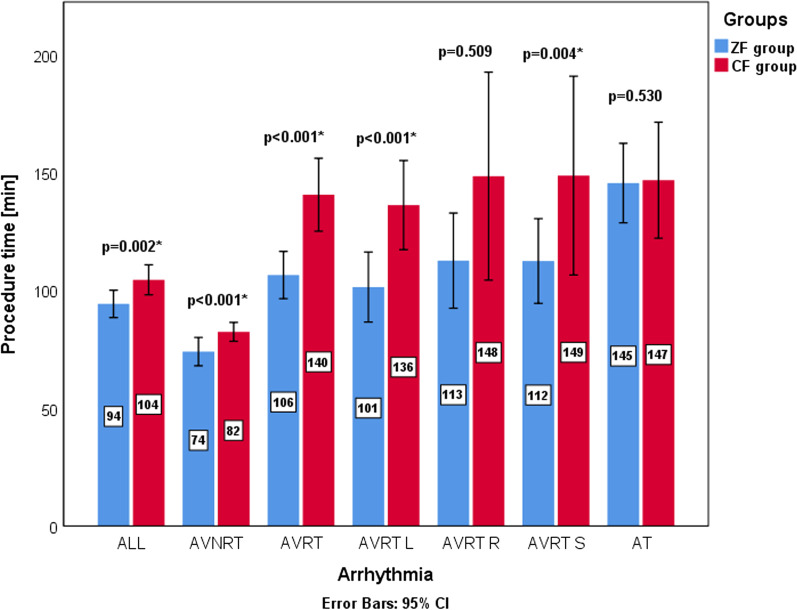
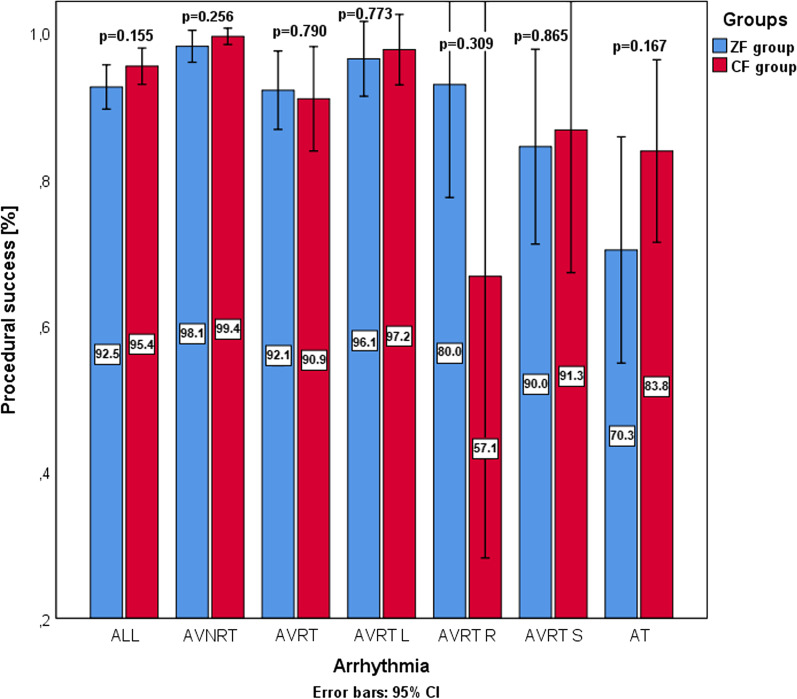
Results: The ZF group had a higher proportion of paediatric patients (42.2% vs 0.0%; p < 0.001), resulting in a younger age (30.9 ± 20.3 years vs 52.7 ± 16.5 years; p < 0.001) and lower BMI (22.8 ± 5.7 kg/m2 vs 27.0 ± 5.4 kg/m2; p < 0.001). Procedure time was shorter in the ZF group (94.2 ± 50.4 min vs 104.0 ± 54.0 min; p = 0.002). There were no major complications and the rate of minor complications did not differ between groups (0.0% vs 0.4%; p = 0.304). Acute procedural success as well as the long-term success rate when only the index procedure was considered did not differ between groups (92.5% vs 95.4%; p = 0.155; 87.1% vs 89.2%; p = 0.422). When repeated procedures were included, the long-term success rate was higher in the ZF group (98.3% vs 93.5%; p = 0.004). The difference can be partially explained by the operators' preferences.

Conclusion: The safety and efficacy of ZF procedures in adult and paediatric populations are comparable to that of CF procedures.

Keywords: Cryoablation; Intracardiac echocardiography; Paediatric population; Supraventricular tachycardia; Three-dimensional electroanatomic mapping system; Zero-fluoroscopy.


Conflict of interest statement

The authors declare that they have no competing interests.

Figures
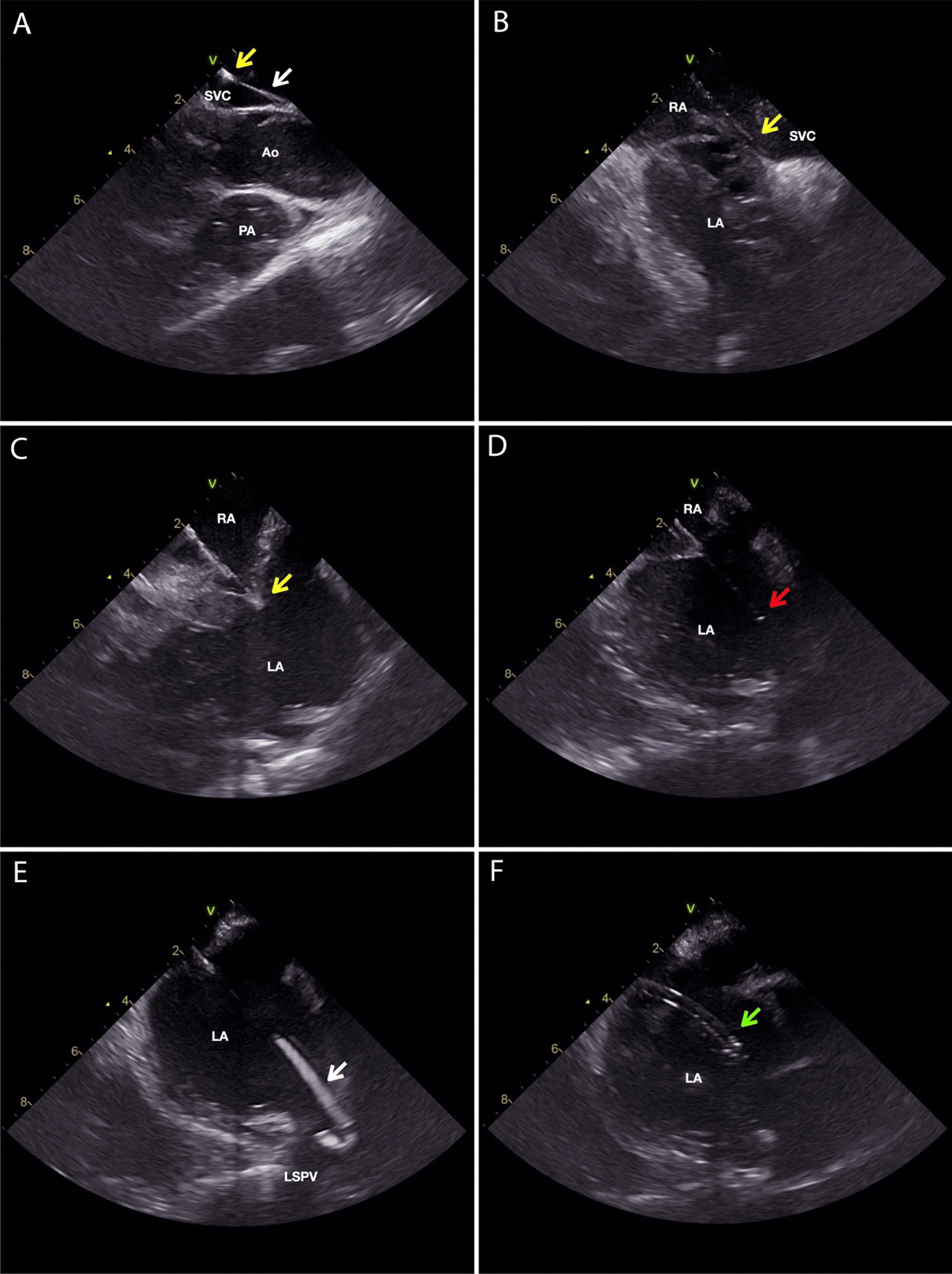
Fig. 1
Fig. 1
ICE images of the zero fluoroscopy transseptal puncture guided by ICE only. Guide wire is marked with a white arrow, the tip of the dilator is marked with a yellow arrow, the tip of the transseptal needle is marked with a red arrow, and the tip of the long sheath is marked with a green arrow. A The guide wire is advanced through the SVC and the long sheath with a dilator fully inserted is advanced over the guide wire into the SVC. The ICE probe is located in the SVC just above the RA and SVC junction. B The guide wire is removed and the transseptal needle is not fully inserted into the long sheath with 1–2 cm of the needle outside the sheath. The long sheath / dilator / transseptal needle assembly is pulled down from the SVC to the interatrial septum. C The tip of the dilator is positioned on the oval fossa. At this moment, a tenting of the interatrial septum can be observed. D the needle is pushed fully into the long sheath. Transseptal puncture is performed. E the transseptal needle is withdrawn and the guidewire is advanced through the dilator into the LSPV. F the guide wire and the dilator are withdrawn with the tip of the long sheath in the LA. Ao—aorta; LA—left atrium; LSPV—left superior pulmonary vein; PA—pulmonary artery; RA—right atrium; SVC—superior vena cava
Fig. 2
Fig. 2
A clustered bar graph for procedure time of different arrhythmias. The blue bars represent mean procedure time for the ZF group. The red bars represent mean procedure time for the CF group. The whisker bars represent 95% confidence intervals. The mean procedure time of each group is presented by the numbers superimposed on the bars. An asterisk next to a p value signifies a statistically significant difference (p < 0.05)
Fig. 3
Fig. 3
A clustered bar graph for the procedural success of different arrhythmias. The blue bars represent the percentages of arrhythmia-free survival in the ZF group. The red bars represent the percentages of arrhythmia-free survival in the CF group. The whisker bars represent 95% confidence intervals. There were no statistically significant differences between the groups
Fig. 4
Fig. 4
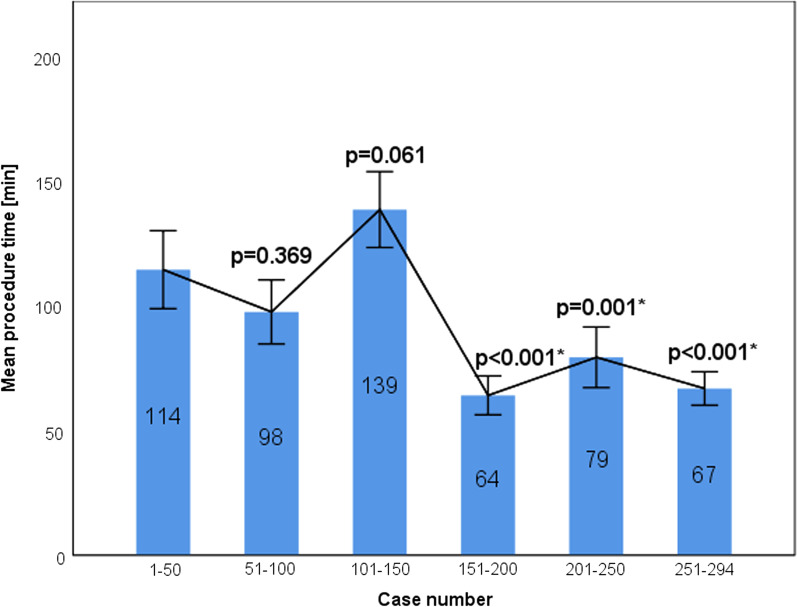
Graph displaying boxplots of mean procedure time per year and an interpolating line. A statistically significant difference was reached after 150 cases. Statistically significant procedure times are marked with an asterisk next to the p value. Mean procedure times are noted in each bar
Fig. 5
Fig. 5
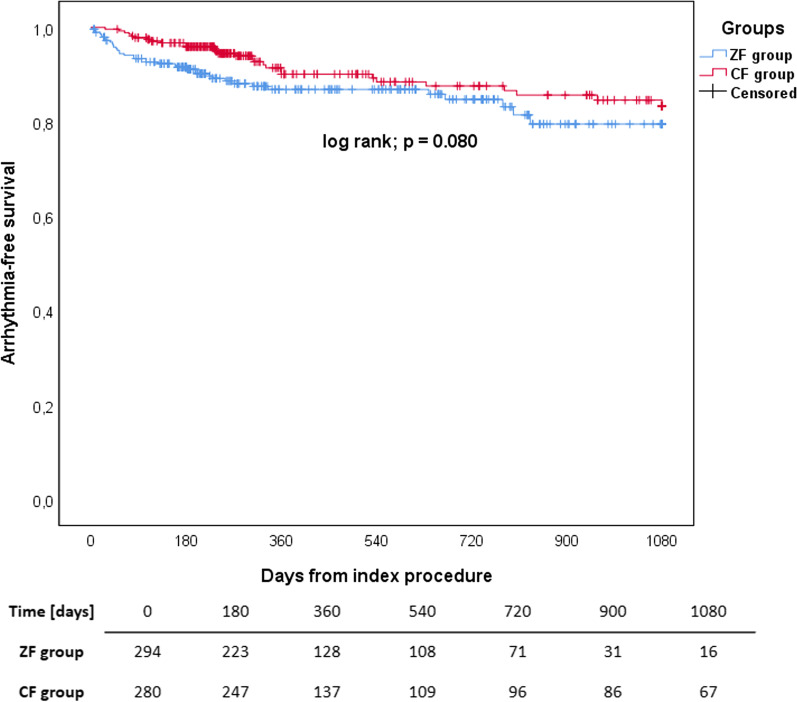
A Kaplan–Meier curve with the at-risk table of arrhythmia-free survival of the ZF and CF group after the index ablation. There were no statistically significant differences between the groups (ZF vs CF; 87.1% vs 89.2%; log rank p = 0.903)
Fig. 6
Fig. 6
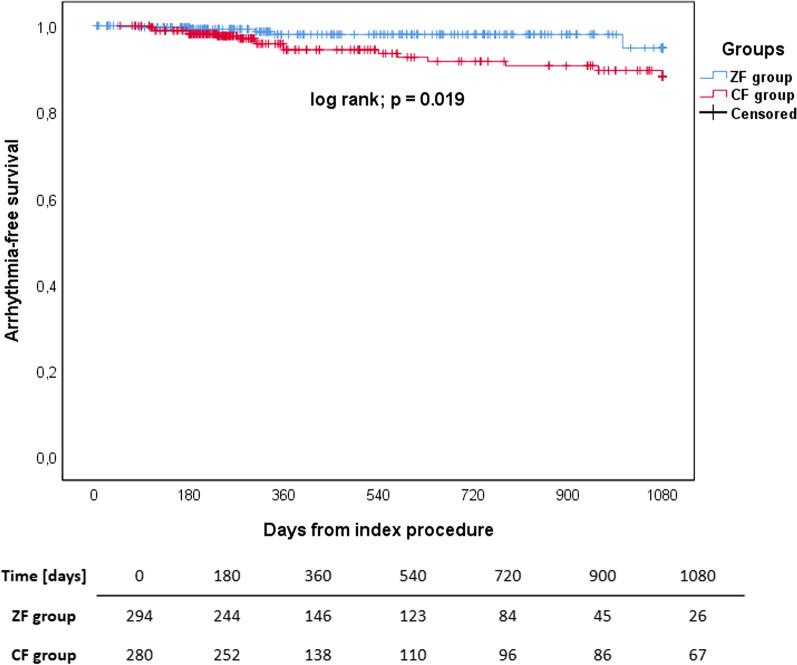
A Kaplan–Meier curve with the at-risk table of arrhythmia-free survival of the ZF and CF group after all procedures. There was a statistically significant difference between the groups (ZF vs CF; 98.3% vs 93.5%; log rank p < 0.001)

References

    1. Brugada J, Katritsis DG, Arbelo E, Arribas F, Bax JJ, Blomstrom-Lundqvist C, et al. 2019 ESC guidelines for the management of patients with supraventricular tachycardia. Eur Heart J. 2020;1(41):655–720. doi: 10.1093/eurheartj/ehz467. - DOI - PubMed
    1. Heidbuchel H, Wittkampf FHM, Vano E, Ernst S, Schilling R, Picano E, et al. Practical ways to reduce radiation dose for patients and staff during device implantations and electrophysiological procedures. Europace. 2014;16:946–964. doi: 10.1093/europace/eut409. - DOI - PubMed
    1. Hirshfeld JW, Ferrari VA, Bengel FM, Bergersen L, Chambers CE, Einstein AJ, et al. 2018 ACC/HRS/NASCI/SCAI/SCCT Expert consensus document on optimal use of ionizing radiation in cardiovascular imaging—best practices for safety and effectiveness, part 2: radiological equipment operation, dose-sparing methodologies, patient and medical personnel. J Am Coll Cardiol. 2018;71:2829–2855. doi: 10.1016/j.jacc.2018.02.018. - DOI - PubMed
    1. Casella M, Dello Russo A, Pelargonio G, Del Greco M, Zingarini G, Piacenti M, et al. Near zerO fluoroscopic exPosure during catheter ablAtion of supRavenTricular arrhYthmias: the NO-PARTY multicentre randomized trial. Europace. 2016;18:1565–1572. doi: 10.1093/europace/euv344. - DOI - PMC - PubMed
    1. Balli S, Küçük M, Bulut MO, Yucel IK, Celebi A. Transcatheter cryoablation procedures without fluoroscopy in pediatric patients with atrioventricular nodal reentrant tachycardia: a single-center experience. Acta Cardiol Sin. 2018;34:337–343. - PMC - PubMed

LinkOut - more resources