


EANM dosimetry committee recommendations for dosimetry of 177Lu-labelled somatostatin-receptor- and PSMA-targeting ligands
- PMID: 35284969
- PMCID: PMC9015994
- DOI: 10.1007/s00259-022-05727-7
EANM dosimetry committee recommendations for dosimetry of 177Lu-labelled somatostatin-receptor- and PSMA-targeting ligands
Abstract
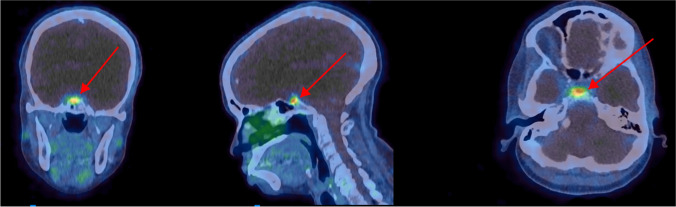
The purpose of the EANM Dosimetry Committee is to provide recommendations and guidance to scientists and clinicians on patient-specific dosimetry. Radiopharmaceuticals labelled with lutetium-177 (177Lu) are increasingly used for therapeutic applications, in particular for the treatment of metastatic neuroendocrine tumours using ligands for somatostatin receptors and prostate adenocarcinoma with small-molecule PSMA-targeting ligands. This paper provides an overview of reported dosimetry data for these therapies and summarises current knowledge about radiation-induced side effects on normal tissues and dose-effect relationships for tumours. Dosimetry methods and data are summarised for kidneys, bone marrow, salivary glands, lacrimal glands, pituitary glands, tumours, and the skin in case of radiopharmaceutical extravasation. Where applicable, taking into account the present status of the field and recent evidence in the literature, guidance is provided. The purpose of these recommendations is to encourage the practice of patient-specific dosimetry in therapy with 177Lu-labelled compounds. The proposed methods should be within the scope of centres offering therapy with 177Lu-labelled ligands for somatostatin receptors or small-molecule PSMA.
Keywords: Dosimetry; Lutetium-177; Neuroendocrine; PSMA-targeting ligands; Prostate adenocarcinoma; Somatostatin-receptor ligands.
© 2022. The Author(s).
Figures
References
-
- Kondev FG. Nuclear Data Sheets for A=177. Nuclear data sheets. 2019;159: 147–9. 10.1016/j.nds.2019.100514
-
- Berger MJH, J.H. Seltzer, S.M. Chang, J. Coursey, J.S. Sukumar, R. Zucker, D.S. Olsen, K. XCOM: Photon cross section database (version 1.5). http://physics.nist.gov/xcom National Institute of Standards and Technology, Gaithersburg, MD; 2010.
-
- de Jong M, Bakker WH, Krenning EP, Breeman WA, van der Pluijm ME, Bernard BF, et al. Yttrium-90 and indium-111 labelling, receptor binding and biodistribution of [DOTA0, d-Phe1, Tyr3]octreotide, a promising somatostatin analogue for radionuclide therapy. Eur J Nucl Med. 1997;24(4):368–71. - PubMed
MeSH terms
Substances
Grants and funding
LinkOut - more resources
Full Text Sources
Other Literature Sources
Miscellaneous
