


Quantifying the impact of environment factors on the risk of medical responders' stress-related absenteeism
- PMID: 35285544
- PMCID: PMC9544400
- DOI: 10.1111/risa.13909
Quantifying the impact of environment factors on the risk of medical responders' stress-related absenteeism
Abstract
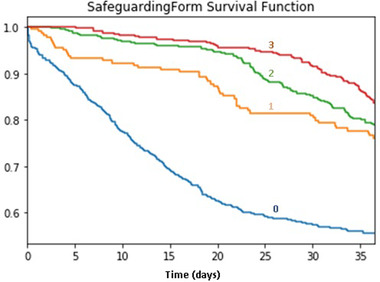
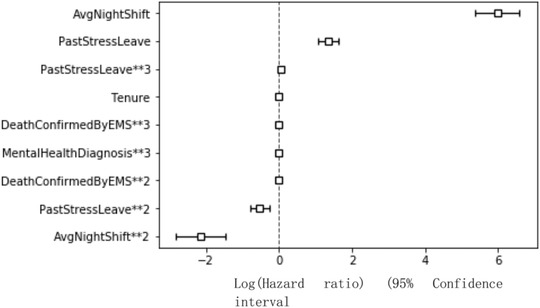
Medical emergency response staff are exposed to incidents which may involve high-acuity patients or some intractable or traumatic situations. Previous studies on emergency response staff stress-related absence have focused on perceived factors and their impacts on absence leave. To date, analytical models on absenteeism risk prediction use past absenteeism to predict risk of future absenteeism. We show that these approaches ignore environment data, such as stress factors. The increased use of digital systems in emergency services allows us to gather data that were not available in the past and to apply a data-driven approach to quantify the effect of environment variables on the risk of stress-related absenteeism. We propose a two-stage data-driven framework to identify the variables of importance and to quantify their impact on medical staff stress-related risk of absenteeism. First, machine learning techniques are applied to identify the importance of different stressors on staff stress-related risk of absenteeism. Second, the Cox proportional-hazards model is applied to estimate the relative risk of each stressor. Four significant stressors are identified, these are the average night shift, past stress leave, the squared term of death confirmed by the Emergency Services and completion of the safeguarding form. We discuss counterintuitive results and implications to policy.
© 2022 The Authors. Risk Analysis published by Wiley Periodicals LLC on behalf of Society for Risk Analysis.
Figures
References
-
- Antoniadis, A. , Lambert‐Lacroix, S. , & Poggi, J.‐M. , (2021). Random forests for global sensitivity analysis: A selective review. Reliability Engineering & System Safety, 206, 107312
-
- Alba, A. C. , Agoritsas, T. , Walsh, M. , Hanna, S. , Iorio, A. , Devereaux, P. J. , & Guyatt, G. (2017). Discrimination and calibration of clinical prediction models: Users' guides to the medical literature. Journal of the American Medical Association, 318(14), 1377–1384. - PubMed
-
- Boot, C. R. L. , Drongelen, A. v. , Wolbers, I. , Hlobil, H. , Beek, A. J. V. D. , & Smid, T. (2017). Prediction of long‐term and frequent sickness absence using company data. Occupational Medicine, 67(3), 176–181. - PubMed
-
- Brid, R. S. (Producer) . (2018). Introduction to decision trees. https://medium.com/greyatom/decision‐trees‐a‐simple‐way‐to‐visualize‐a‐d...
-
- Burns, C. , & Harm, N. J. (1993). Emergency nurses' perceptions of critical incidents and stress debriefing. Journal of Emergency Nursing, 19(5), 431–436. - PubMed
MeSH terms
LinkOut - more resources
Full Text Sources
Miscellaneous
